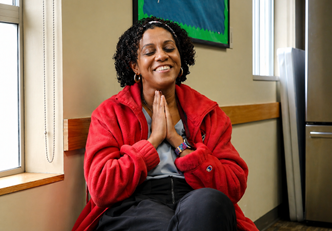
An ordinary morning at HealthPoint’s Kent Clinic quickly became something no one could have anticipated, and everything this team was prepared for.
In Washington state, millions of residents live in primary care shortage areas where geography, language, income, or immigration status stand between a person and the care they need. The consequences are not abstract. According to the Washington State Department of Health, those gaps directly shape maternal health outcomes, and in rural and underserved communities, local clinics are often the last line of response.
At HealthPoint’s Kent Clinic, a Federally Qualified Health Center founded in 1971 to expand access to care, one seemingly ordinary morning became something no one could have anticipated, and a testament to the incredible impact of local, accessible, responsive care.
When the clinic becomes the delivery room
Dr. Cecilia Gilmore, a Nurse Midwife at HealthPoint’s Kent Clinic, was checking in on a pregnant patient when she noticed the woman couldn’t sit still. As a trained nurse and midwife, she asked the question any clinician would: “How long have you been feeling this way?”
HealthPoint’s Kent Clinic is not a labor and delivery unit, but when her patient answered, “Since this morning. Contracting every fifteen minutes. Now every five,” Cecilia understood that was about to change.
“I walked out, went to one of our pods and just said ‘Hey, can someone call 911? We’re going to have a baby,” said Cecilia.
That morning, midwives, medical assistants, and nurses came together to safely bring a baby into the world, ensuring both mother and child were healthy. Not because they had the right equipment, but because they had the right instinct, to meet the moment in front of them, whatever it asked.
Healthy maternal outcomes are not only the product of a well-timed, well-planned birth. Mothers, families, and caregivers need to know that safe, responsive, quality care is accessible to them where they are, when they need it.
Washington needs more nurses
At the University of Washington School of Nursing, we advance nursing science and practice, educate future leaders, and pioneer improvements in health and healthcare. And in pursuing healthcare for all, we must ask: who is being left out, and what can we build for them?
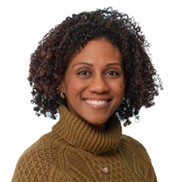
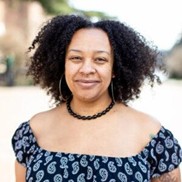
Cecilia Gilmore, DNP, CNM, ARNP, graduated from the University of Washington School of Nursing’s DNP Nurse-Midwifery program in March 2023. Letitia Salazar Monk, DNP, CNM, CLC, CH, ARNP, graduated from the same program in March 2022 and returned to the UW School of Nursing as faculty, where she now helps prepare the next generation of nurse midwives.
The UW Nurse-Midwifery program prepares graduates to practice at the highest level of clinical care. The choices Cecilia and Letitia have made in where and how they practice are exactly what that preparation makes possible. By showing up in community settings, responding to needs as they present, and modeling care that is accessible and grounded in the people they serve, they bring what was learned in the classroom into the communities that need it most. For students watching them work, that is its own kind of education.
“When a colleague told me that Ceci and Letitia had cared for someone who delivered her baby in the clinic, managing the situation with calm, grace, and care for everyone involved, my first thought was ‘of course they did.’ I have known both of them since arriving at UW and I know both to be excellent providers with the skill, compassion and awareness to handle any situation that comes their way. I’m so happy for the dyad they cared for. I know they were in amazing hands!” — Ellen Solis, DNP, CNM, FACNM, Specialty Director, Nurse-Midwifery DNP, UW School of Nursing
Considering the impact you could make?
If this story moved something in you, there may be a place for you in it. Visit our website to learn more about our graduate and undergraduate nursing programs, or sign up for an information session.