The Distance They Carry
In rural Tanzania, women are known to walk six miles or more to reach a prenatal clinic. Some carry infants on their backs while riding motorcycles at seven or eight months pregnant, bearing the entire weight of the distance between their homes and the care their growing babies need.
When Jessie Jimenez, a DNP student at the University of Washington School of Nursing, witnessed what those miles cost while working in Tanzania, she felt compelled to act.
Most of the women she saw making that journey had no guarantee of finding a provider when they arrived. In areas where ultrasound is unavailable, both providers and patients are often left to make critical decisions without accurate information about how a pregnancy is progressing or the ability to detect complications that require urgent care. The ordinariness of this specific gap, the basic need to monitor a pregnancy in a timely, accurate way, felt extraordinary to Jessie. She returned to Seattle with one clear goal: to purchase an ultrasound machine for St. Maria de Mattias Hospital in Manyoni, Tanzania.
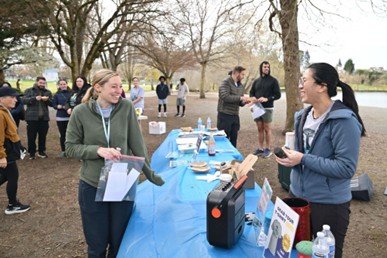
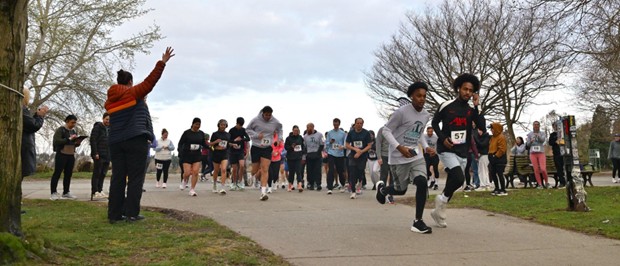
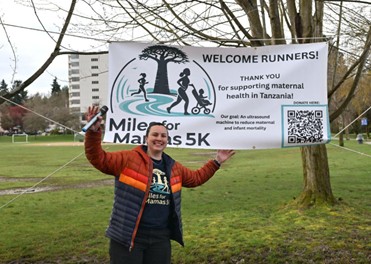
On March 29, the first Miles for Mamas 5K took place in Seattle. Dozens of runners and community members gathered to cover the distance for mothers who had traversed difficult journeys at every stage of their pregnancies to care for their growing families. Every dollar raised went toward purchasing the ultrasound. Every mile ran represented a hopeful outcome for the women Jessie met in Manyoni.
A need that belongs to everyone
Culturally responsive, clinically trained, and well-resourced nurses and birth workers remain among the most powerful interveners in cases of preventable maternal and fetal mortality. Accessible healthcare is still hard to come by in places where affordable transportation is scarce, equipment is outdated, and practitioners with broad scopes of practice are increasingly difficult to find. Stories like Jessie’s reflect a pattern: a nurse who saw more than a moment, more than a case, and built a pathway to safety where a barrier previously existed.
“People will go to great lengths to access care. The question is whether the system is willing to meet them part of the way.” – Jessie Jimenez
Jessie is currently pursuing her Doctorate of Nursing Practice in Population Health and Systems Leadership at the University of Washington School of Nursing.
Considering the impact you could make?
If this story connected with you, know that there is a place for you in it. Donations to the Miles for Mamas Project are still open on its GoFundMe website.
Learn more about global health nursing and graduate programs on our website, or sign up for an information session.