Build focused expertise and prepare for an independent research career through specialized predoctoral and postdoctoral training at the UW School of Nursing. These opportunities combine advanced research experience, interdisciplinary mentorship and career development with fellowship or scholarship support in areas including biology-to-society science, global health and healthy aging.
Predoctoral opportunities are available to eligible students in the UW PhD in Nursing Science program. Postdoctoral opportunities have separate eligibility and application requirements.
Biology to Society (B2S) research training
Examine health across biological, individual, family, community and population levels through the Biology to Society (B2S) research training program. Trainees build expertise in symptom science, omics, data science, systems science and multilevel approaches to health while gaining hands-on research experience with interdisciplinary faculty mentors.
Funded by the National Institute of Nursing Research (T32NR016913), B2S supports predoctoral trainees for two or three years and postdoctoral fellows for up to two years. Training includes specialized coursework, seminars, research experience and focused scientific and career development.
Eligibility
Applicants must be U.S. citizens or permanent residents.
- Predoctoral trainees: Must be accepted to the UW PhD in Nursing Science program.
- Postdoctoral fellows: Must be registered nurses and have completed a research doctorate in nursing science or a related field by the time of appointment.
Predoctoral trainees
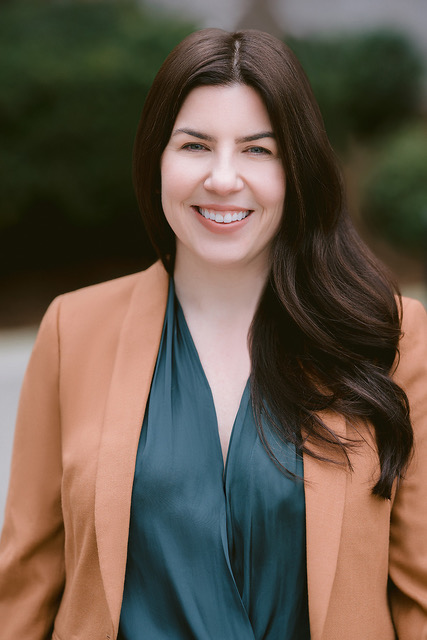
Amanda Hapenny, MSN
Amanda Hapenny is a board-certified psychiatric nurse practitioner who earned her Master of Science in Nursing (MSN) from Vanderbilt University in 2013. Since then, she has gained extensive experience across various settings, including in community mental health centers, specializing in the care of adults with serious mental illness.
She currently maintains a clinical practice in Seattle while pursuing her PhD in Nursing Science at the University of Washington. Her research there focuses on enhancing health outcomes for young adults with serious mental illness, with a particular emphasis on symptom science and implementation science.

Hector Valdivia, MN
Hector completed his BSN at Walla Walla University in 2009 and his Master of Nursing (MN) degree at the University of Washington in 2016. As a pediatric Clinical Nurse Specialist (CNS), Hector found his passion for nursing research through his work on pediatric delirium in the pediatric intensive care unit (PICU).
Hector’s research interests include delirium prevalence in non-ICU inpatient units, the relationship between nursing interventions to reduce the risk of delirium in PICU patients, and the association between biomarkers and delirium scores. By contributing to the current body of knowledge, Hector hopes to improve nursing care for hospitalized children.

Jessica Ziemek
Postdoctoral trainees

Angelita Utleg, MS, RN
Ms. Utleg has a BA in Biology, MS in Biomedical Science, an AS in Nursing, and a certificate in Biomedical & Regulatory Affairs. She has more than ten years of experience working in research laboratories with human samples.
Her current research interest is to use a metabolomics approach to understand the relationships among symptoms, the human microbiome, and dietary lifestyle. Her dissertation is focusing on investigating the relationships among diet, fecal short-chain fatty acid (SCFA) metabolic profile, bacterial taxa, and GI symptoms in healthy women and women with Irritable Bowel Syndrome (IBS). SCFA profiles may play an important role in inflammatory response and pain in a subgroup of patients with IBS. Comparing the fecal SCFA levels of healthy women and patients with IBS may shed light on the mechanisms underlying the IBS symptoms.
The goal of this line of research is to enable personalized dietary recommendations based on evidence-based data that could be tested in future clinical trials to reduce IBS symptoms. This work is funded by an Individual Kirschstein NRSA from NINR F31NR018794.
Caeli Malloy, PhD, RN
Dr. Malloy received her PhD in Nursing Science at Indiana University School of Nursing in 2024. Her dissertation work explored self-management behaviors and symptom clusters in adolescents and young adults with inflammatory bowel diseases (IBD) including Crohn’s disease and ulcerative colitis.
Dr. Malloy has been actively involved with the IBD community for years and volunteers annually with the Crohn’s and Colitis Foundation’s Taking Steps Walk to raise funding for IBD research. She is passionate about improving health-related quality of life and outcomes in young people with IBD.
In her postdoctoral fellowship, Dr. Malloy has focused on investigating factors that contribute to sleep disturbance and fatigue in this population, as well as patient and family preferences for symptom management. Her work will facilitate the development of a tailored symptom management intervention targeting poor sleep and fatigue in adolescents and young adults with IBD.
Alumni

Jonathan Auld, PhD, RN
Dr. Auld received his PhD in nursing science from Oregon Health & Science University, and Masters in Science degree and clinical nurse leader certification from the University of Portland. His career goal is to become an influential nurse scientist with an innovative and productive interdisciplinary program of research dedicated to understanding the interaction between heart failure symptom biology, patient behaviors, and patient outcomes.
A central aim of his research is to elucidate how symptom biology and the patient response to symptoms in people with heart failure differ in order to develop more targeted and effective interventions. Dr. Auld received RIFP grant funding for his research activities during his postdoctoral fellowship.
He completed his postdoctoral training in May 2020, and is now a tenure-track Assistant Professor at the University of Washington School of Nursing. He was awarded a K23 in September 2020 “Symptom Biology After Heart Failure Hospitalization” to continue this line of inquiry.
Eliana Gill
Dr. Gill completed her PhD in Nursing Science at the University of Texas at Austin in 2022. Working with Dr. Christopher Goss and the Cystic Fibrosis Research Translation Center, she is presently examining pulmonary exacerbations, antibiotic use, and outcomes in persons with cystic fibrosis.
Fatemeh Choupani
Dr. Choupani’s research focuses on the epigenetic and genetic factors associated with obesity and cardiovascular disease and intersections with social determinants of health. She is currently an Assistant Professor at Seattle University.

Karl Christie Figuracion, MSN, ARNP
Dr. Figuracion completed her PhD in Spring 2023. Her dissertation was funded by the Jonas Nurse Scholars Program, ITHS TL1TR002318, and multiple foundation grants and used radiomics approaches to evaluate the association between environmental factors and cerebral atrophy among brain tumor survivors. She is now a postdoctoral fellow at the Fred Hutch Cancer Center on the Biobehavioral Cancer Control and Prevention Training Grant (T32).
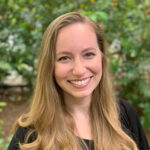
Elizabeth Frazier
Elizabeth’s research interests are understanding the biomarkers associated with atrial fibrillation symptom expression and symptom variability. She is particularly interested in understanding the factors that contribute to gendered differences in atrial fibrillation symptom burden. Elizabeth completed her BSN at the University of Arkansas in 2010 and her Master of Science in Nursing Education from Duke University in 2020. Elizabeth’s passion for improving the burden of cardiac arrhythmias stems from her clinical experience in critical care and the cardiovascular intensive care unit.
In 2023, Ms. Frazier was awarded an F31 predoctoral fellowship (F31NR020833) to study “Differences in Women and Men with Atrial Fibrillation.”

Jonika Hash, PhD, RN
Jonika Hash, PhD, RN, completed her PhD in Nursing Science at the University of Washington in 2017 and completed her postdoctoral fellowship in Winter 2020. Her research involves sleep health among young children and their parents experiencing adversity. She explores how sleep health relates to adversity, social-emotional development, and biomarkers and on promoting the health and wellbeing of children and their parents, particularly those in underserved communities. She received foundation research funding from Sigma International “Sleep health knowledge, attitudes, beliefs, and practices among underserved mothers with a history of prenatal depression” while a postdoctoral fellow.
She is now a tenure-track Assistant Professor at the University of Washington School of Nursing.
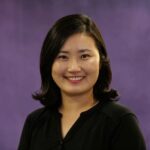
Hyejeong Hong, PhD, RN
Dr. Hyejeong Hong received her PhD in Nursing at Johns Hopkins University, and she earned her master’s degree in Family Nurse Practitioner at the University of Illinois at Chicago (UIC). Her dissertation work focused on developing a prediction model of aminoglycoside-induced hearing loss among multidrug-resistant tuberculosis (MDR-TB) infected individuals in South Africa.
Her research interest is tuberculosis susceptibility, bioinformatics, and global health. She expanded the work she completed as a doctoral student by pursuing a postdoctoral fellowship on the Omics and Symptom Science T32 training program at the University of Washington, Seattle, supported by the National Institute of Nursing Research (T32NR016913). As a postdoctoral fellow, Dr. Hong has had the opportunity to study host-pathogen interactions and genetic control of the innate immune response to Mycobacterium tuberculosis (Mtb) infection.
The goal of her current project is to identify mechanisms by which some individuals resist Mtb infection. Her clinical practice as a primary care family nurse practitioner encompasses health promotion, disease prevention, health maintenance, counseling, patient education, diagnosis and treatment of acute and chronic illnesses.
Dr. Hong is currently an Assistant Professor, Tenure Track, at the University of Pennsylvania.
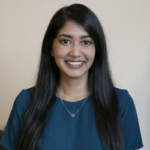
Sabrina Mangal
Dr. Mangal completed her PhD in Nursing Science at Columbia University in 2020 followed by a postdoctoral fellowship at Weill Cornell Medicine. She began a second postdoctoral fellowship at UW in 2022 where she is working with Drs. Jonathan Auld and Cindy Dougherty. Her work is focused on return of data to patients with cardiovascular disease emphasizing health literacy and numeracy.

Sarah Martha, PhD, RN
Dr. Sarah Martha received her BSN and PhD from the University of Kentucky, College of Nursing, and holds a BS in Biology from Portland State University. Her primary research interest is in advancing our understanding of the pathology of acute ischemic stroke (AIS) and the trajectory of recovery in order to improve patient symptoms, cognitive and functional outcomes, and quality of life.
Her passion for AIS research emerges as a result of her professional and academic background, blending her experiences in neurosurgical intensive care nursing with her training as a bench scientist. Dr. Martha’s dissertation research focused on understanding neuroinflammation and pathology relating to AIS outcomes in rodent models and patients. In 2018, she was selected to participate in the National Institute of Nursing Research Summer Genetics Institute. Currently, her research explores the potential of metabolomics for precision health in AIS pathology and associated symptoms and outcomes.
Dr. Martha was awarded a K23 in 2021 from NINR to further her research efforts in lipidomic mechanisms of symptom development following stroke. She is currently an Assistant Professor, Tenure Track, at the University of Illinois-Chicago.
Yvette Rodriguez, BSN, RN

Farah Schumacher
Farah Schumacher earned her BSN at Pacific Lutheran University in 2014, and has a background in progressive/critical care and procedural nursing. As a bedside nurse, she has had many mentors who sparked her curiosity and dedication to adhering to evidence-based best practices, which led to a new interest in how research directly affects treatments and patient outcomes. While at the University of Washington, Farah intends to focus her research on the relationship between stroke risk and PTSD, particularly in victims of violence and minority populations.
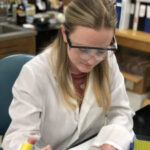
Alexi Vasbinder, BSN, RN
Alexi Vasbinder, BSN, RN completed her BS in Psychology from the University of Michigan in 2015 and her BSN from Michigan State University in 2016. Her research focuses on one of the most commonly reported symptoms in cancer survivors: fatigue. Radiation is hypothesized to cause fatigue through pathways of inflammation; however, the mechanisms driving long-term fatigue (LTF) after treatment has ceased, is less clear.
For breast cancer survivors, radiation can also cause reductions in heart function, which can produce LTF. Evidence also supports the role of oxidative stress in LTF. Given multiple pathways are likely involved in LTF in patients receiving radiation, biomarkers targeting different mechanisms may provide greater insight into the mechanisms leading to LTF and future interventions. In her dissertation, Dr. Vasbinder used samples from the Women’s Health Initiative (WHI) Life and Longevity After Cancer (LILAC) funded by an individual NRSA from NINR 1F31NR018588 as well as multiple foundation grants.
Following completion of a postdoctoral fellowship at the University of Michigan, Dr. Vasbinder returned to UW in 2023 as an Assistant Professor, Tenure Track.
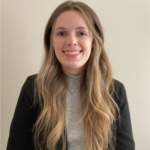
Samantha Winders
Dr. Winders completed her PhD in Nursing Science at the University of Florida in 2022. She completed her postdoctoral fellowship in 2023 focused on examining factors influencing sleep among persons with Inflammatory Bowel Disease. She now has a career as a Medical Editor.

Linda Yoo, BSN, RN
Linda Yoo, BSN, RN, completed her BSN at the University of Texas at Austin in 2018. As an undergraduate student, Linda found her passion for nursing research and academia through her work as a nursing honors student, a Junior Fellow, the president of UT Nursing Students’ Association, and a co-founder of the UT Health Advocacy Student Coalition.
Linda’s research interests are tracking the progression of Inflammatory Bowel Disease (IBD) through inflammatory biomarkers, exploring interventions key to maintaining remission in IBD, and understanding the effects of sleep on IBD symptoms. By contributing to the current body of knowledge, Linda hopes to improve the quality of life for those with IBD. Her dissertation is focused on self-management strategies that address biological and socio-ecological factors for IBD patients.
She was awarded an F31 in 2023 to investigate “Sleep-Wake Cycles of Individuals with IBD” including the potential association between IBD-related fatigue and disease activity and sleep (F31NR020426).

Tao Zheng, MN, RN
Tao Zheng started his nursing education at North Seattle College where he received his Licensed Practical Nursing and Registered Nursing degrees. With a passion for higher education and professional development, he then received his BSN degree from Olympic College in 2012 and his MN from the University of Washington Tacoma in 2014.
Clinically, Mr. Zheng has worked in the cardiothoracic intensive care unit and clinical cardiology. In his previous position as a Clinical Nurse Educator at the University of Chicago Medicine, Mr. Zheng was heavily involved in nursing research and evidence-based practice projects. He is interested in symptom science among patients and caregivers in the advanced heart failure population, particularly in individuals living with mechanical circulatory support devices.
For his dissertation, Zheng plans to focus on fatigue and sleep-related impairment and discovering interventions to promote positive patient and caregiver outcomes in this population. Mr. Zheng was selected as the 2021-22 Magnuson Health Sciences Scholar. He successfully competed for an individual F31, funded by NINR to complete his dissertation work (F31NR019924).
Apply to the PhD in Nursing Science program by the December 1 application deadline.
In the Research Focus statement of your PhD application, indicate that you would like to be considered for the Biology to Society (B2S) training program.
Applications for B2S postdoctoral fellowships are accepted on a rolling basis.
Applicants should submit:
- A cover letter describing your research interests and goals, what you hope to gain from the fellowship and how your interests align with B2S training
- A current CV
- One to two samples of scholarly writing, such as journal articles or essays
- Three letters of recommendation addressing your scholarly abilities, areas for growth and future potential. Letters should be sent directly by the recommender to the training program directors.
Send application materials electronically to B2S co-director Dr. Cynthia Dougherty at cindyd@uw.edu.
For questions about the program, contact Dr. Dougherty or co-director Dr. Margaret Heitkemper at heit@uw.edu.
Research in Nursing and Global Health (RiNGH)
Advance global health equity through interdisciplinary, team-based research with the Research in Nursing and Global Health (RiNGH) training program. Trainees develop the knowledge, research skills and collaborative experience to study complex health challenges and contribute to solutions across populations and settings.
Funded by the National Institute of Nursing Research (T32NR019761), RiNGH supports predoctoral trainees and postdoctoral fellows for up to two years. The program is coordinated by the School of Nursing’s Center for Global Health Nursing and Office of Diversity, Equity and Inclusion and includes advanced education, scholarly mentorship and career development.
Eligibility
Applicants must be U.S. citizens or permanent residents.
- Predoctoral trainees: Must be accepted to the UW PhD in Nursing Science program.
- Postdoctoral fellows: Must have completed a research doctorate in nursing science or a related field by the time of appointment and hold a bachelor’s degree or higher in nursing.
Prospective PhD students: Apply to the PhD in Nursing Science program by the December 1 application deadline. In the Research Focus statement of your PhD application, indicate that you would like to be considered for the Research in Nursing and Global Health (RiNGH) training program.
Current PhD students: Review the RiNGH predoctoral application materials and instructions.
For current application deadlines and funding availability, contact RiNGH Training Program Director Dr. Pamela Kohler at pkohler2@uw.edu.
Postdoctoral applications are accepted on a rolling basis. Contact RiNGH Training Program Director Dr. Pamela Kohler at pkohler2@uw.edu before applying to confirm current start dates and funding availability.
Applicants should submit:
- A cover letter describing your research interests and goals, what you hope to gain from the fellowship and how your interests align with RiNGH training
- A current CV
- One to two samples of scholarly writing, such as journal articles or essays
- Three letters of recommendation addressing your scholarly abilities, areas for growth and future potential. Letters should be sent directly by the recommender to the training program director.
Send application materials electronically to Dr. Kohler at pkohler2@uw.edu.
For questions about RiNGH, contact Dr. Kohler or Jillian Pintye at jpintye@uw.edu.
Predoctoral Scholarship in Gerontological Nursing
Support your doctoral research in healthy aging through the de Tornyay Center for Healthy Aging Predoctoral Scholarship in Gerontological Nursing. The scholarship is available to students pursuing a PhD in Nursing Science with an emphasis in gerontological nursing.
Recipients receive full tuition for autumn, winter and spring quarters, plus a small stipend or salary, for up to two years.
Apply to the PhD in Nursing Science program by the December 1 application deadline.
In the Research Focus statement of your PhD application, describe your interest in gerontological nursing.
No separate scholarship application is required. Applicants admitted to the PhD in Nursing Science program are considered for the de Tornyay Center Predoctoral Scholarship in Gerontological Nursing and are notified of an award with their admission offer.