Five decades after the founding of Parent-Child Relationship Programs at the Barnard Center (formerly NCAST, Nursing Child Assessment Satellite Training), the Barnard Center continues to advance a simple but transformative idea: relationships are fundamental to how children grow, develop and thrive.
Some of the earliest building blocks of health and emotional development can be found in the back-and-forth between a young child and their caregiver. Kathryn E. Barnard, PhD, RN, FAAN, a University of Washington nursing professor and pioneer in infant mental health, spent her career helping health professionals see those interactions and understand why they matter. Dr. Barnard once described the idea at the center of this work simply: “There’s a process of synchrony that’s extremely important—the ability of parent and baby to share emotions, [and] respond to one another’s cues.”
In 1976, Dr. Barnard founded what is now Parent-Child Relationship Programs (PCRP) at the Barnard Center at the University of Washington School of Nursing. Her research directly demonstrated the importance of parent-child interaction for children’s development and led to the development of tools that enabled the observation of cues exchanged between caregivers and young children. Just a few years later, more than 600 nurses learned to use the Nursing Child Assessment Satellite Training in the Feeding and Teaching scales through a series of satellite classes — an early effort to disseminate research innovations beyond the university and put it into the hands of professionals working with families.
That insight would help shape decades of research, education and practice in infant and early childhood mental health. A short UW School of Nursing video produced during Barnard’s lifetime offers a chance to hear more about the person behind the work and the legacy she helped build. Watch Dr. Kathryn Barnard reflect on her work.
Twenty-five years after PCRP was established, another chapter of that legacy began.
With the support of generous donors, the Center on Infant Mental Health and Development opened in 2001 as a multidisciplinary resource for research and training, with an initial focus on expanding the number of professionals equipped to provide therapeutic support for parents and infants in Washington state. In 2012, the Center was renamed the Barnard Center for Infant and Early Childhood Mental Health in honor of Dr. Barnard and her vision that shaped its work.
Today, Dr. Monica Oxford, MSW, PhD, Vice Chair for Research and the Kathryn Barnard Endowed Professor for Infant Mental Health in Child, Family, and Population Health Nursing and executive director of the Barnard Center, leads the Center as it carries that legacy forward — advancing research, preparing the infant and early childhood mental health workforce and translating evidence into programs and tools that support children, caregivers and communities.
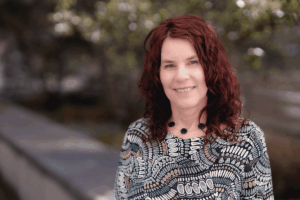
“Kathy was a force of nature. Fifty years ago, she had this amazing idea to take what we knew from our research on parents and children, translate it into practice strategies and disseminate those strategies by training community-based providers through satellite. She was truly one of the first, if not the first, ‘translational scientists.'”
As the Barnard Center celebrates 25 years and Parent-Child Relationship Programs marks 50 years of dissemination, the commitment to understanding relationships and translating research into practice remains at the heart of the work.
Building on Dr. Barnard’s Legacy
Barnard understood that supporting healthy development meant paying attention not only to a child, but to the relationships and environments surrounding them.
The Center’s newly released 2025–26 Annual Report offers a picture of just how far that work now reaches — and how Barnard’s legacy continues to evolve through research, workforce development, education and dissemination through the Parent-Child Relationship Programs at the Barnard Center.
“One of Kathy’s superpowers was that she was a connector. She had relationships with providers and scholars across the globe. It seemed like everyone knew and loved Kathy. To this day, I still meet people who were inspired by her work or connected to her in some way.” — Dr. Monica Oxford
During the 2025–26 academic year, the Center facilitated 101 training events reaching 4,236 professionals, with participants in the United States and internationally in Australia, Canada, South Korea, Mexico, Pakistan and Spain. Its free lecture series alone reached 1,713 professionals, providing education on topics ranging from Black grief and caregiver support after a NICU stay to the origins of empathy. In 2026, the Parent-Child Interaction Feeding and Teaching Scales also launched a self-study option to make training more accessible to professionals.
The report captures that impact alongside the people, partnerships and research carrying it forward — from professional training and international dissemination to new curricula and studies examining the role relationships can play across childhood.
Explore the Barnard Center’s 2025–26 Annual Report
Celebrating 50 years by looking forward
This year, the UW School of Nursing’s 2027 Academic Year Theme is “Care to Meet the Moment.” Barnard’s legacy reminds us that care includes paying attention, understanding what people and communities need and continuing to build the knowledge, relationships and tools to respond to those needs.
Fifty years after Parent-Child Relationship Programs (formerly NCAST) began, the research questions have expanded and the community carrying the work forward has grown, but the core of the work remains steadfast: when we understand relationships more deeply, we have more ways to support children, equip caregivers and help communities thrive.
Visit the Barnard Center website to learn more about the research, programs, people and partnerships carrying this legacy forward.