UW School of Nursing PhD student Charles Kwanin reflects on his experience attending the International Nursing Research Congress in Toronto, funded by a de Tornyay Center for Healthy Aging travel scholarship.
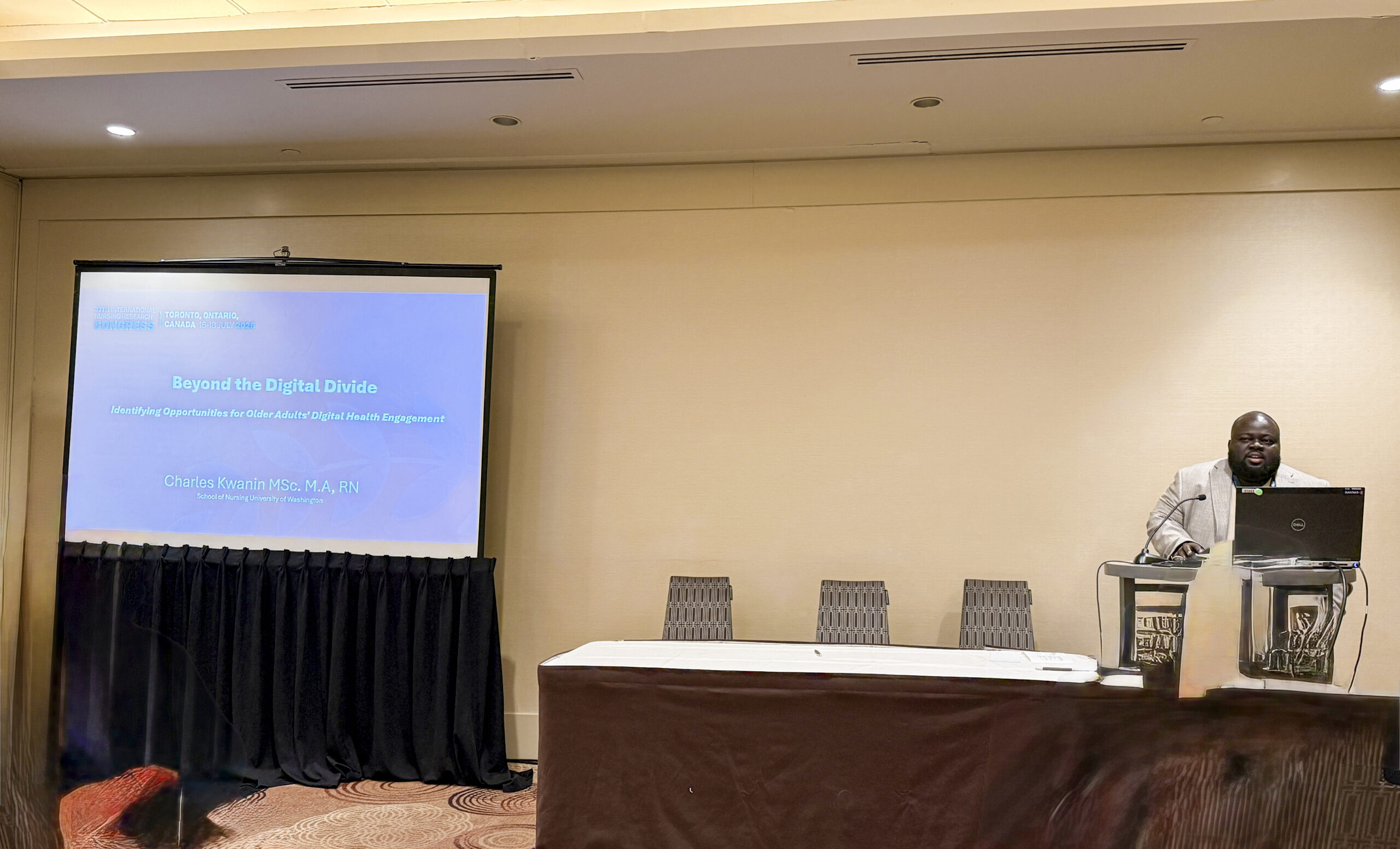
This summer, I had the opportunity to attend the International Nursing Research Congress in Toronto from July 16–18. The theme, “Discovery in Action: The Future of Nursing Research Starts Here,” captured the conference’s energy and the many conversations about where nursing science is headed.
One message that stayed with me came from the keynote address on nursing research in a rapidly changing world. The speaker emphasized the importance of remaining steady in our inquiry and building resilience in research so that nursing can continue to support a strong health workforce now and in the future.
The closing keynote offered an equally powerful challenge: “Nursing is at a crossroads, and now is the time to act.” The discussion centered on advocacy for nursing science and practice, AI, emerging and existing technologies, innovative care models, leadership, inclusion, diversity and collaboration. One statement especially resonated with me: we can publish and present our work, but its real impact is ultimately measured by the changes it creates for patients and communities. It was a reminder that research matters most when evidence moves beyond academic spaces and improves people’s lives.
I was also grateful for the opportunity to present my work, “Beyond the Digital Divide: Identifying Opportunities for Older Adults’ Digital Health Engagement.” My research challenges the idea that digital exclusion is simply a consequence of aging. Instead, the findings suggest that the divide can be linked to how particular technologies are designed and used. Age-equitable digital health is achievable. When older adults successfully engage with tools such as test-result portals, we can study what works—simple navigation, clear clinical value and technology that serves a meaningful purpose—and apply those lessons to other digital health tools.
One of my favorite parts of the congress was conversations and presentations about how technology can improve nursing work and patient care while remaining grounded in ethics and health equity.
Toronto was therefore much more than a trip to present my research. It was an opportunity to listen, learn, have meaningful conversations and connect with accomplished nurse scientists, researchers, clinicians and colleagues from around the world. Being in the same room with people whose work continues to shape nursing science was both inspiring and motivating.
I am especially grateful to the de Tornyay Center for Healthy Aging for the generous support that made my participation in the congress possible. I returned from Toronto with new ideas, new connections and an even stronger appreciation for the role that nursing research can play in shaping better, more equitable healthcare.