The UW de Tornyay Center for Healthy Aging’s annual Ignite Aging Symposium invites the public to explore healthy aging through connection, creativity and community.
Everyone is aging. Yet conversations about growing older often focus on what we might lose: mobility, memory, independence, hearing or vision. At the University of Washington School of Nursing’s de Tornyay Center for Healthy Aging, the conversation starts somewhere else.
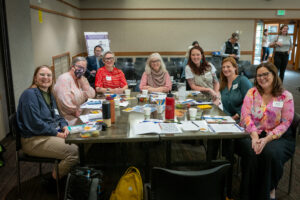
“What are the strengths of this process that we’re all experiencing? What can we learn along the way? How can we support others we care about?” asks Basia Belza, PhD, RN, FAAN, FGSA, director of the de Tornyay Center for Healthy Aging and host of the 9th annual Ignite Aging Symposium, a free, public event hosted at the UW Center for Urban Horticulture on Thursday, October 1, 2026.
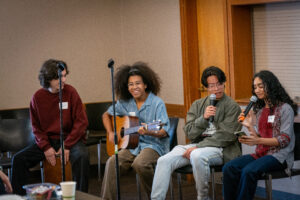
The annual event is an invitation to join together in community and explore aging more fully—not simply as a collection of losses to prepare for, but as a lifelong process shaped by health, creativity, culture, relationships, environments and community.
“When we created Ignite Aging nine years ago, we wanted to excite—to ignite—this topic rather than make aging feel dreary,” said Basia.
The idea is captured perhaps most notably in the Center’s own anthem, written several years ago by Marigrace Becker, MSW, director of the Memory Hub. Its refrain begins with a simple reminder: “I’m getting older, and so are you!” From there, the song celebrates research, education, community partnership and the possibility of changing how people think about growing older.
Connection as a pathway to healthy aging
This year, Ignite Aging turns its attention to social connection. A growing body of evidence connects social relationships not only with emotional well-being, but with physical health. The Centers for Disease Control and Prevention notes that meaningful social connection is associated with longer, healthier lives and reduced risk of serious health conditions, including heart disease, stroke, dementia, depression and anxiety.
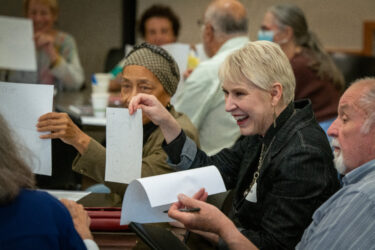
Paige Bartlett, public information specialist for the de Tornyay Center, describes social connection as a health behavior that belongs alongside other behaviors people may already recognize.
“We talk about things like diet, nutrition and exercise, but social connection is becoming recognized as another foundational pillar of health,” Paige said.
The program has been intentionally designed to help attendees practice connecting in real time. From the location to the facilitators and presenters, each part of the morning invites attendees to connect with themselves and others through movement, storytelling, sounds and art.
Presenters include Ellen Wanless, who will explore how stories can bring people together through “Spinning Tales; Weaving Connection”; Miriana Duran and Ziqing “Kaylin” Ji, who will explore cultural considerations in supporting Latino families; Julia Becke, MD, a physician, medical educator and dancer, who will explore creative connection through movement and brain health through her “Dancing Together” project for people living with dementia and their caregivers; and Leo Freedman, who will introduce us to soundscapes and their value in connecting with others.
Each presentation includes an interactive element, inviting participants to move beyond simply hearing about connection and experience it for themselves, and attendees will be invited to continue conversing while exploring the grounds after the program.
A de Tornyay way of thinking about aging
Established in 1998 through an endowment from Drs. Rheba and Rudy de Tornyay, the de Tornyay Center for Healthy Aging brings together research, education and community partnerships focused on healthy aging. That work exists alongside the University of Washington’s academic offerings, including the Adult-Gerontology Primary Care and Adult-Gerontology Acute Care Nurse Practitioner DNP tracks, which prepare advanced practice nurses to care for adults and older adults across primary, acute and complex care settings.
“On a practical level, we fund students and faculty, and work with our community partners, but it’s about serving as a catalyst,” Basia said. “We co-design initiatives, and look for opportunities to highlight and disseminate the transformative work happening in aging.”
Together, the preparation happening in academic programs and the research, scholarship and community engagement supported through de Tornyay reflect a comprehensive approach to the health and well-being of aging populations.
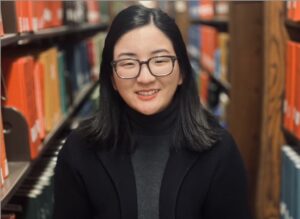
Sarah McKiddy, PhD, RN, a former de Tornyay predoctoral scholar and 2026 graduate of the UW PhD in Nursing Science program, explored ageism and the ways expectations about growing older can influence how people see themselves and what they believe they can—or should—do. Her work challenged assumptions about aging while encouraging more age-inclusive language, representation and engagement. Read more about Sarah’s journey in nursing science in this Scholar Spotlight.
Sarah’s later dissertation work extended that inquiry through a co-designed partnership exploring music and healthy aging for people living with memory loss—work that brought together the Memory Hub, Seattle Chamber Music Society and community participants.
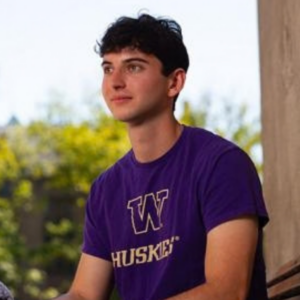
Leo Freedman, a 2026 UW graduate who contributed to that research on music and healthy aging for people with memory loss, is one of this year’s Ignite Aging presenters. His session, “Shared Spaces: Connecting by Listening,” will invite participants to experience connection through sound and listening. Learn more about his path to exploring music’s potential to improve the quality of life for people with memory issues, such as Alzheimer’s disease or dementia.
Come be part of the conversation
The de Tornyay Center and Ignite Aging are ultimately about more than any single symposium. Across the School of Nursing, students are preparing to care for adults across the lifespan; scholars are examining dementia, ageism and healthy aging; researchers are generating new evidence; and community partners are helping ensure ideas are designed with, not simply delivered to, the people they are intended to serve.
The invitation extends beyond the symposium: Listen differently. Tell a story. Meet someone new. Consider how culture shapes our experiences. And carry and act on the conversation about aging into your own family and community.
Because aging isn’t something that happens to somebody else.
It is something all of us are doing.
The 9th annual Ignite Aging Symposium: Social Connections will take place Thursday, Oct. 1, from 9 a.m. to noon at the UW Center for Urban Horticulture. The event is free and open to the public. Registration is required. Refreshments will be provided. The morning will include interactive activities designed to bring attendees into the experience.