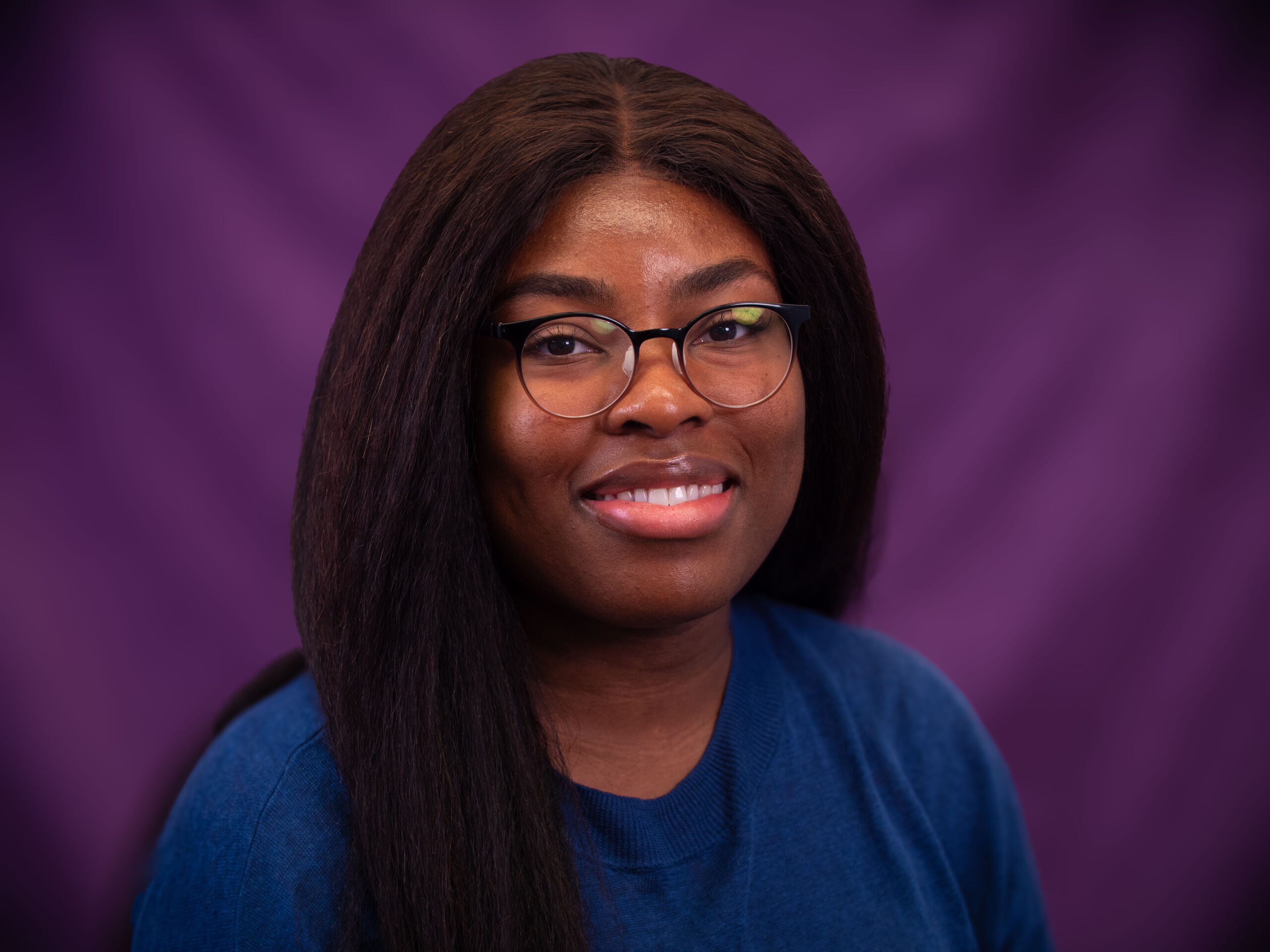
Ashley Gougouehi is a UW School of Nursing DNP student and one of the de Tornyay Center for Healthy Aging’s 2024–2025 Healthy Aging Doctoral Research Scholars. Her project is “Age-Friendly Health Systems Needs Assessment,” and her faculty mentor is Jamie Young. Gougouehi presented work from her project at a March 14, 2025 meeting of the Washington State Alzheimer’s and Dementia Research Network.
Why did you first choose nursing?
My dad had a back injury when I was younger, and I helped to take care of him. From this experience, I realized that I really like taking care of people, so I volunteered at a hospital that was across the street from my high school. From this volunteer experience, I realized how nurses were the go-to people in hospitals to give care, and I love that. So that’s how I found myself in nursing. I just love caring for people.
What interests you about healthy aging in particular?
I think because I’m an only child, I’ve been terrified at the idea of my parents aging and me being the only one to take care of them. It took a while for me to realize that you can age healthy. You don’t have to get older and expect to develop health issues. I think that’s why I got really interested in caring for older adults: it’s an opportunity to support older adults as they age in a healthy way, while also emphasizing preventative care so that people can live long, happy and healthy lives and not dread aging.
Could you briefly describe the project that you’re doing for the scholarship?
I’m working with the Washington State Health Care Authority and the Dementia Action Collaborative to do a needs assessment on age-friendly health systems in Washington. Essentially, we’re trying to get a sense of what health systems in Washington are recognized as being age-friendly, then get a sense of what kind of initiatives they have and what barriers they’re facing, so we can see how we can further support age-friendly health systems and hopefully expand these systems in the future.
What’s your role in the project?
My role is to identify age-friendly health systems, contact clinical leadership and then do interviews with clinical leadership to see what initiatives they have in place and what is needed to support the initiatives that they have.
I also added another component, which is to contact a health system that’s not recognized as being age-friendly to get a sense of what they know about age-friendly health systems and what barriers they can identify to age-friendly care. I added this component to get more data on what barriers there are to age-friendly health initiatives.
Why is this project important to do?
I think it’s important to identify what age-friendly health systems are out there and recognize the systems that have made an effort to be age-friendly. It is also important to get a sense of what initiatives are out there that support our older adults and see how we can support these health systems because we need more of them. Not every person is going to Google which health system is recognized as age-friendly. They’re just going to go to whatever system is closest to them. So, it’s really important for us to see what is needed to expand the age-friendly health systems and initiatives.
Is there anything surprising or interesting that you found while working on this project?
I think one thing that was surprising is that it’s hard to get in contact with clinical leadership, which has been a little surprising but has made me even more appreciative of the time clinical leaders take to help me with this project. I’ve had one interview so far, and learning how some health systems have been able to incorporate age-friendly initiatives into their electronic medical system has been really, really cool and inspiring.
How did they incorporate age-friendly aspects into an electronic health system?
So for this health system that I talked to, in Epic they created a smart phrase/template, which helps guide clinicians to do comprehensive geriatric assessments by asking geriatric-centered questions about medications, fall risk, nutrition and things related to the 4Ms of age-friendly care (what matters most, mentation, mobility, medication). So it’s essentially a smart phrase that prompts clinicians on how to assess an older adult and identify crucial needs for older adults. That was pretty cool to learn about.
What previous experience do you have working with older adults?
I have been a nurse for almost six years. I worked in acute care, and in acute care you work with a lot of older adults who are coming in for exacerbated chronic diseases. That’s where I interacted with more older adults and realized there’s a huge need to support older adults, manage chronic diseases, encourage preventative care and promote healthy aging.
Have you done primary care before, or is this program your switch into primary care?
This is the switch. My only experience with primary care has just been with my clinical rotation. I had one clinical rotation last quarter in primary care, and I absolutely loved it!
What are you looking forward to with primary care?
I think the continuity of care is what I’m really looking forward to, and then also promoting preventative care. I’m hoping to specialize in the care of older adults, specifically chronic disease management and preventative care.