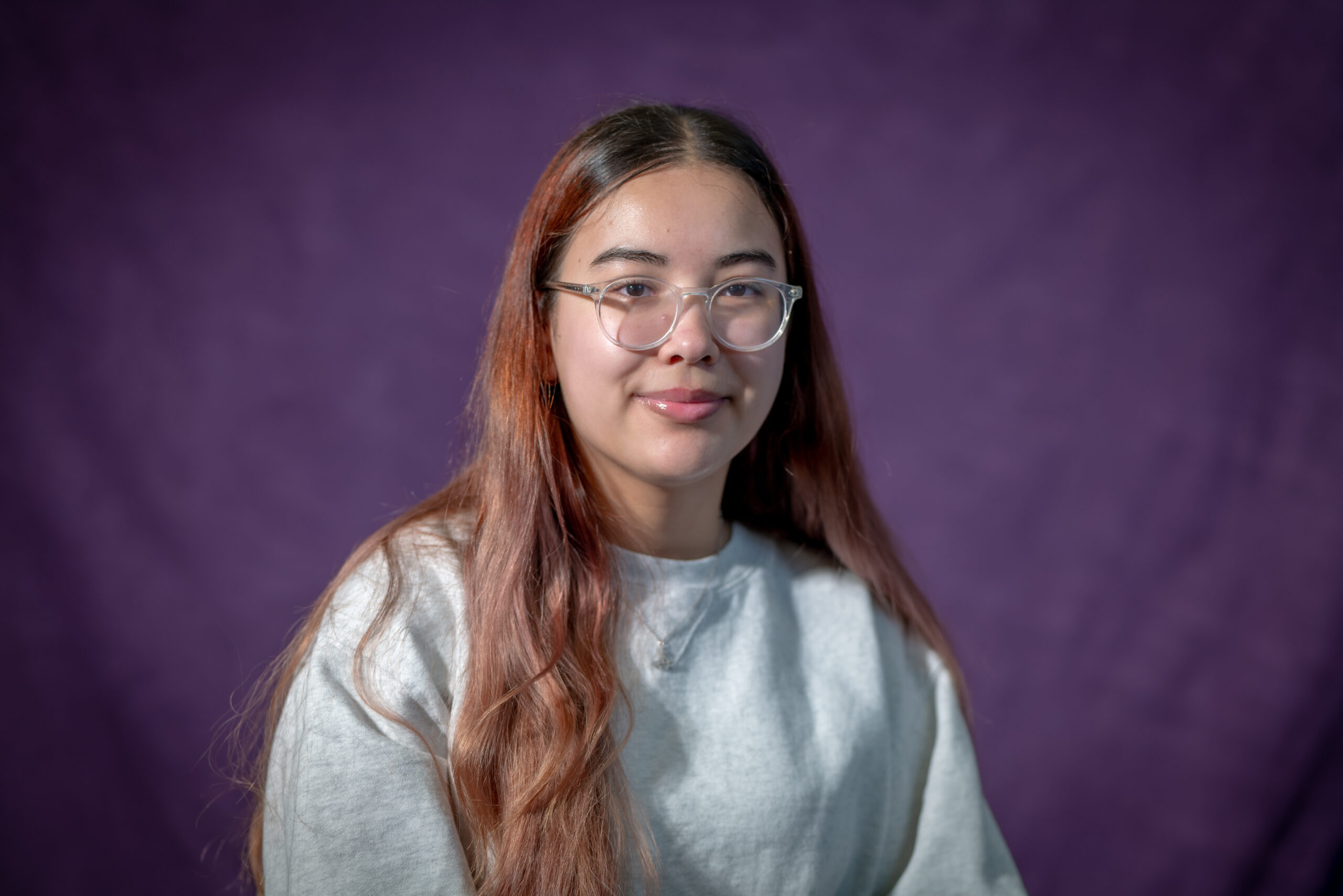
Amber Beeson is a BSN student and one of the center’s 2025–2026 Healthy Aging Scholars. Her project is on “Analyzing musician perspectives in co-designing music-based memory loss programming,” and her faculty mentors are Basia Belza and Sarah McKiddy.
Why did you choose to go into nursing?
One of the main things that brought me to nursing was watching my family members as they navigated the healthcare system. Growing up, I would go with my mom and my grandma to a lot of their appointments. They speak primarily Vietnamese, but they are able to speak a conversational level of English. They wanted to bring me with them because they were scared they wouldn’t get all of the information. When I did go with them, I noticed that providers would oftentimes default to speaking to me and having me relay information, or asking me information about my mom or my grandma without directly consulting them.
These experiences helped me realize how easy it is for patients to lose their own voice in their care, especially when there are those language barriers. It inspired me to become a nurse who advocates for people, giving them an environment to feel heard, respected and safe in healthcare.
What interests you about the area of healthy aging?
Going back to what drew me into nursing, the idea of helping people, keeping their voice and dignity in all of their healthcare choices is what also draws me to healthy aging. Growing up, I lived with my grandma my entire life. I watched her over time lose independence, and saw how detached she would get from the rest of us because of her lack of opportunities for engagement.
I realized that aging is more than managing people medically, but it’s also finding ways for them to keep maintaining their identity, their purpose, allowing for them to connect with the people around them.
I’m interested in finding ways to create environments where older adults are able to be supported, not only physically and medically, but also socially and emotionally.
Have you had past experience working with older adults before starting the nursing program?
I used to work as a CNA in a skilled nursing facility, and I worked in transition care. Working there, I realized how important it is to help these older adults maintain their independence, especially in that transitional care setting, where they’re relearning a lot of things.
Right now, I work as a patient care technician in the hospital. I work float pool, and I realized no matter where you work, every unit I go to, there’s always older adults.
How did your time working as a CNA and a patient care technician inform what you’re doing now in your nursing program?
Connecting it to my research project, my research focuses a lot on community-based engagement for older adults. Working with older adults, I’ve developed more of an interest in finding ways to support older adults, both socially and emotionally, and I think one of the best ways to do that is community-based projects.
Could you briefly describe your research project?
Sarah’s work focuses on the establishment of this partnership between the Memory Hub, which is a dementia-focused community center here, and the Seattle Chamber Music Society String Quartet-in-Residence, in order to help bring music-based programming to the Memory Hub. My project builds off of this, analyzing a focus group that Sarah conducted with the string quartet.
The goal is to understand the perspectives of the musicians in these partnerships and be able to provide recommendations for future collaborations. How can we support these musicians as they’re working with a new population for them? How can we provide recommendations for how these musicians can structure their programming, as well as their rehearsals, to be prepared to work with people living with dementia? How can they adapt their performances to accommodate these communities?
Why is the work that you’re doing on this project important to do?
Although there’s a lot of research coming out explaining the benefits of music-based programming for older populations, I haven’t been able to find a lot of research talking about the musicians and their experiences with this population. I think this project will help fill in that gap in research.
This will help us provide more evidence-based recommendations for how these programs can be structured in the future, not only focusing on what people living with dementia think, but also translating those concepts for musicians to implement them.