We would like to highlight the recent announcement by Dean Thompson regarding the sunsetting of the School of Nursing Impact Office.
Over the past several years, the Impact Office has supported a range of strategic initiatives, service agreements, and project-based work across the School. Effective October 12, 2026, the Impact Office will be retired as a centralized function. While the office itself will no longer exist, the services it provided will continue through established operational and strategic support structures across the School.
Service Agreements
Service agreement support will now be provided through a collaborative model between Finance & Accounting (F&A) and CFPHN and BNHI departments.
Finance & Accounting will provide:
Budget development and forecasting consultations
Pre-vetting, formal review, and signature coordination
Procurement support and customer invoice processing
Departments will provide:
Employee hiring, costing allocation management, and payroll accounting adjustments
Initiation of procurement and customer invoicing requests
Monitoring of project balances and financial activity
Faculty support through existing departmental processes and resources
Where do I start if I have a service agreement?
If you are considering a new service agreement, renewing an existing agreement, or have questions about whether a project qualifies as a service agreement, your first step should be to contact Finance & Accounting. F&A will provide initial guidance, coordinate the appropriate reviews, and help determine whether additional consultation is needed.
If there is uncertainty regarding whether an activity is a service agreement or a sponsored program, F&A will partner with the Office of Nursing Research & Innovation (ONR&I) to ensure the appropriate review pathway is identified.
What does not change?
Service agreements remain distinct from sponsored programs which should continue to follow the established process for proposal submission through ONR&I.
In some cases, the distinction between a service agreement and a sponsored project is clear. In other situations, additional review may be needed. Early review and determination help ensure that projects are appropriately budgeted, compliant with applicable requirements, and able to move efficiently through the review process.
A Note of Appreciation
Finally, as we transition away from the centralized Impact Office model, we would like to thank Ian Watson and recognize the many contributions made through the Impact Office over the years. Through the support of strategic initiatives, service agreements, operational improvements, and special projects, the office played an important role in advancing the School’s mission and supporting countless faculty and staff along the way.
We would also like to recognize Jessie Rehms for her many contributions to the School of Nursing. During her tenure, she was instrumental in the development and expansion of contract-based research support services, helping build a sustainable model that has supported researchers across the School. Although no longer serving in this role, Jessie continues to contribute her expertise through ad hoc proposal reviews and consultation.
We are grateful for the expertise, partnership, and dedication that have shaped this work and enriched our community. As these functions transition into their new homes across the organization, we thank all those who contributed to their success and look forward to seeing this important work continue in new ways across the School.
This Friday marks the 11th National Research Administrator Day, a day dedicated to recognizing the professionals who help make research possible. Research administrators and managers oversee grant applications, budgets, compliance requirements, reporting, and the stewardship of sponsored funds. Their work often happens behind the scenes, yet it is essential to advancing discovery, innovation, and impact.
At ONR&I, we are celebrating a remarkable team with decades of collective experience who help keep our research enterprise moving forward. What strikes me most about these individuals is not simply their expertise, but their deep commitment to the mission and genuine care for the people and work they support.
So I wonder: is research administration a noun or a verb?
Certainly, it is a noun. It is a profession, a field, and a collection of specialized knowledge. But for the ONR&I team, research administration is equally a verb. It is something they do every day in service of investigators, students, research staff, and the communities our work ultimately serves.
Research administration is digging through hundreds of pages of federal guidance to understand a new policy and its implications before an investigator ever feels the impact.
It is navigating a complex web of budgets, effort commitments, and accounting adjustments to ensure research projects remain compliant and financially sound. It is helping investigators interpret sponsor requirements, solve unexpected challenges, and find a path forward when regulations, funding mechanisms, or institutional processes become obstacles.
And sometimes, it is simply reassuring a researcher that they do not have to navigate the process alone. From proposal development to award management and closeout, research administrators are there every step of the way.
In many ways, research administrators are among the most curious and diligent people on campus. They are lifelong learners, problem solvers, translators, connectors, and stewards. They thrive in complexity, ask thoughtful questions, and consistently seek ways to make the research process more understandable and accessible for those they support.
While their contributions may not always be visible, their impact can be found in every successful proposal submitted, every award managed responsibly, every reporting deadline met, and every research project that moves forward.
This National Research Administrator Day, we extend our gratitude to the dedicated pre-award and post-award professionals whose expertise, persistence, and partnership make this work possible. Thank you for all that you do, for the care you bring to your work, and for the countless ways you help advance research every day.
Please join us in celebrating and thanking our Research Administrators this week.
Research administration may be a profession, but its true impact is found in the doing. And every day, our research administrators demonstrate exactly what that looks like.
Sarah Gimbel, CFPHN Professor, was supported by the UW SON ONR&I travel grant to present her work, “Optimizing Cross-site Collaboration Via the Implementation Research Logic Model,” at the 18th Annual Conference on the Science of Dissemination and Implementation in Health in National Harbor, Maryland, in December 2025. Several mentees of Dr. Gimbel, including Harriet Adhiambo, Megan Coe, Amanda Brumwell (seen directly below) and Carmen Hazim also presented their joint work. D&I is the foremost implementation science conference globally and, as the final photo attests, draws strong participation from UW faculty and graduate students alike.
Dr. Gimbel with F31 student Amanda Brumwell (PhDc in Global Health) Dr. Gimbel with student mentee Emily Callen (PhDc in pharmacy) Global Health research scientist David Katz, who works on Dr. Gimbel’s SAIA-MOUD study
Thanks to the generous support of a UW SON ONR&I travel award, I had the opportunity to attend and present at the annual Dissemination and Implementation Science Conference in December 2025, where I connected with funders, researchers and practitioners advancing the translation of evidence-based practices into real-world settings. The sessions deepened my understanding of current trends and methods in implementation science and sparked new ideas for my own work in this space.
Erin Blakeney, PhD, RN Research Associate Professor | UW Biobehavioral Nursing & Health Informatics
Strong research is built on strong partnerships. To better support faculty, students and research teams across the UW School of Nursing, ONR&I is pleased to introduce Warren and Lydia, who are now available for statistical consultation and research collaboration.
Warren Szewczyk, MS
I am excited to be a part of the Office for Nursing Research & Innovation (ONR&I) as a statistical consultant supporting research across the School of Nursing (SON)! I recently graduated from the University of Washington with an MS in Epidemiology and have been working at UW SON since 2019. I have experience analyzing complex datasets, longitudinal studies and clinical trials, and my research background spans diverse areas including psychiatry and mental health, cardio-oncology and health promotion.
In my role as an ONR&I consultant, I am available to SON faculty and PhD students to answer statistical questions and to talk through challenges at all stages of the research process—including study planning and design, data collection and management, analysis and dissemination. I am also happy to advise on statistical analysis plans and power calculations for grant applications. You can book free 30-, 60- or 90-minute consultations.
In addition, I’m excited to extend these consultation services to DNP students who are conducting research or quality improvement projects as part of their degree.
Lastly, faculty can buy out a portion of my FTE to support work on individual grants. This can include short-term work, such as conducting specific analyses or creating publication-ready figures and tables, as well as longer-term efforts, like establishing data management infrastructure for clinical trials. I look forward to working with you!
Lydia N. Drumright, PhD, MPH
I am truly delighted to join the Office for Nursing Research & Innovation’s Research Support Core as a statistical consultant where I can support colleagues in all of their creative research endeavors. For those of you who do not already know me, I am a Research Associate Professor in the Department of Biobehavioral Nursing and Health Informatics, where my work brings together epidemiology, biostatistics, health informatics, qualitative research and the analysis of complex clinical and longitudinal data.
Over the course of my career, I’ve had the opportunity to design and analyze observational studies, clinical trials and large multi-site cohort studies using a wide range of epidemiological methods and analytic approaches, including longitudinal modeling, survival analysis, causal inference, missing data methods and electronic health record data. Before joining the University of Washington, I held faculty positions at the University of Cambridge and Imperial College London, where I led multidisciplinary research both nationally and internationally and in clinical and community settings on a wide range of topics using my diverse epidemiological and health informatics skill set. My current work involves a range of epidemiological and statistical methods including longitudinal and repeated measures analyses, such as hazard modeling, generalized linear models, Markov multistate models and more, meta-analysis across diverse cohorts, use of routinely collected data, evaluation of clinical interventions and methods and evaluation of AI in processing data-intensive problems.
Whether you’re developing a new study, refining a statistical analysis plan, preparing a grant application, troubleshooting an analytic challenge or putting the finishing touches on a manuscript, I’d be delighted to work with you. Please don’t hesitate to reach out—I look forward to collaborating with investigators across the School of Nursing.
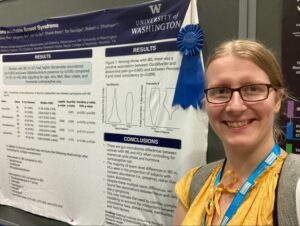
Support from the Office for Nursing Research & Innovation enabled my participation in the 16th Intrinsic Capacity, Frailty and Sarcopenia Research Conference for Healthy Longevity. At the meeting, our team presented two studies examining lifestyle and body composition outcomes among older adults with HIV. I presented the poster “Associations Between Physical Activity and Sarcopenia in Older People With HIV: Findings From the PROSPER-HIV Study,” and our team delivered an oral presentation titled “The Effects of High-Intensity Interval Training vs. Continuous Moderate-Intensity Exercise on Body Composition Among Older Adults with HIV: Secondary Results from the HEALTH Trial.”
These presentations included findings from the HEALTH and PROSPER studies, both led by Dr. Allison Webel at the University of Washington. The conference brought together leading investigators studying frailty, sarcopenia and healthy longevity, providing valuable opportunities to share our findings and engage with researchers working on aging and functional decline. Key takeaways included emerging approaches to assessing muscle quality and the growing recognition of physical activity as a central strategy for preserving physical function and promoting healthy aging.
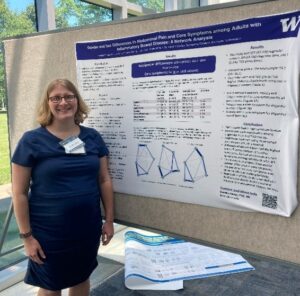
Inflammatory bowel disease (IBD) affects millions of people and can cause painful, disruptive symptoms such as abdominal pain and frequent diarrhea. While men and women develop IBD at similar rates, women often face more severe symptoms, lower quality of life and less effective treatment outcomes. One reason for these differences may be changes in hormones—especially estrogen—across the menstrual cycle.
Each month, levels of estrogen naturally rise and fall. Many women with IBD report that their symptoms get worse during their period—but we still do not fully understand why. This study aims to uncover whether these natural hormone changes are linked to shifts in inflammation and symptoms.
To better understand this connection, we will compare women with IBD to two other groups: women without digestive conditions and women with irritable bowel syndrome (IBS), a related but different condition. Participants will track their symptoms daily across one menstrual cycle, helping us understand their day-to-day experience. At key points in the cycle—when estrogen is higher and when it is lowest—participants will provide blood, stool and vaginal samples and complete an intestinal ultrasound to measure inflammation in the gut. By combining biological measures with daily symptom tracking, this study will provide one of the most detailed pictures to date of how hormones, inflammation and symptoms are connected.
If hormone changes are found to directly influence inflammation and symptoms, this research could transform how IBD is understood and treated in women—opening the door to more personalized care, better timing of treatments and improved quality of life.
Stay tuned as we begin participant recruitment and move this important work forward. We look forward to future opportunities to partner and collaborate as the study progresses.
Dear Friends of the Office for Nursing Research & Innovation (ONR&I) –
As this academic year comes to an end, I would like to recognize the many achievements of our SON faculty and students as well as the ONR&I staff who quietly power them behind the scenes.
In fiscal year 2026, 74 grant applications were submitted by faculty and students with the support of ONR&I pre-award staff and more than $20 million in grant funding was managed with the support of ONR&I post-award staff. In addition, six faculty received pilot funding through the Research Intramural Funding Program (RIFP), 16 faculty received funding for conference travel and three faculty received funding for ancillary research costs. Moreover, ONR&I supported the Western Institute of Nursing (WIN) Research & Information Exchange for 12 poster presentations, organized eight ‘Lunch & Learn’ research seminars, developed two specialized training sessions and conducted a writing support session.
ONR&I and the Digital Health Innovation Hub (DHIH) also helped convene the RAIN Summit (Reimagine AI in Nursing), which was a tremendous success. The summit drew 175 registered attendees, with an additional 50 on the waitlist, reflecting strong interest in the future of AI in nursing and healthcare. This highly interactive, forward-looking event brought together leaders across healthcare, academia, industry, policy and technology to explore how AI can responsibly strengthen care delivery and the health workforce. Focused on real-world use cases, workforce readiness and cross-sector collaboration, the summit emphasized practical impact and left participants with actionable insights and new connections.
This work highlights SON’s strong research infrastructure supporting faculty research through the grant lifecycle; an invaluable intramural funding program supporting the development of faculty research leading to extramural funding; and the provision of critical opportunities for research activities related to travel, training and scholarship, along with opportunities for meaningful collaboration and connection.
I would also like to thank Dr. Allison Webel for her unwavering leadership in the role of Associate Dean for Research and Innovation (ADRI) over the past five years. She has made enormous contributions to the SON and to each of us individually. She will be missed as we wish her well in her new role as the Dean of the University of Michigan SON.
Finally, I would like to express my gratitude for all the support that I have received in my new interim role as ADRI. I am honored to be in this position and look forward to doing all I can to carry on the mission. I feel energized and hopeful as we move forward together to meet the challenges of our times.
For most midwestern middle school students, a class trip to Washington, D.C., stands as a rite of passage. I was in sixth grade when our school bus from Youngstown, Ohio, pulled into D.C. It was the first (and only) time I climbed the Washington Monument. The first time I read the Gettysburg Address. The first time I was awestruck by the size and power of our Capitol Building. And though I’ve been to our nation’s capital hundreds of times since that first trip – I still look forward to revisiting my favorite memorials, being inspired by our shared history in the Library of Congress and discovering new truths about our national story with each visit. These are the reasons why I was excited to take my own school-age daughters on their first trip to Washington, D.C., this past spring. While we managed to hit all the highlights, it was revisiting the National Air and Space Museum that struck me the most.
It’s been more than 30 years since I last visited this particular museum, and experiencing the story of Wilbur and Orville Wright was surprisingly moving. I was struck by their iterative attempts to achieve their dream of taking flight; excitement, experimentation, courage and failure. Over and over again. They tried. They failed. They learned something new. They tried again and again until December 17, 1903, when they finally found success with the first airplane in Kitty Hawk, North Carolina. Yes, this is a story of human ingenuity, teamwork and tenacity, but it’s also a story of the global communities that supported them, encouraged them and inspired them to pursue their vision of aerospace progress – not for themselves but for all humankind.
This is my last column for the Office for Nursing Research & Innovation’s Weekly Research Roundup. As one does during transitions, I’ve reflected on why we started this newsletter, what we hope its impact has been and what that means for the future of nursing science and scholarship at the University of Washington School of Nursing.
We started this newsletter because throughout this community we saw scholars whose vision for the impact of their work was truly unlimited. We tried to lift up science that was often less visible but whose influence on the health of our most vulnerable is immense. And we wanted to build a community of scholars who recognize just how important their work is – but only if they work together, support each other and recognize one person’s success as everyone’s success.
What is often unsaid (and unprinted) is that success can only be achieved through failure, and that failure always feels personal and often isolating. Yet the story of the Wright brothers reminds us that persevering through the many failures that underpin progress requires a supportive community. In the five years I have worked at the University of Washington, I have submitted more than 30 grant proposals – most not discussed and only three funded. I have gotten some pretty scathing course evaluations. I have had abstracts rejected from important meetings and have been nominated for awards I did not receive.
With each failure, members of this community – faculty, staff, students, alumni and friends have supported me. With every cup of coffee shared, revision read, lunch initiated, flower gifted, every word of encouragement, walk accompanied, authentic conversation had and every happy hour we gathered at – you have supported me and reminded me that dreaming dauntlessly is why we get into this business. Higher education is largely centered on the practice of envisioning how our world can be better in both big and small ways across generations. At our best we are not only dreamers but also dream builders, working to help the seemingly impossible take flight. The crux of this work lies in our support of each other, our students and our community to envision a better future for all. The full embrace and support of this community in my pursuit of some truly audacious dreams over the past five years has changed me – for good.
As I prepare to transition to the University of Michigan, I hope that you will permit me one final request. This business is becoming increasingly tough. There are pressures to produce more students, articles, grants, new programs, revenue streams and there are dwindling resources. The value of our work faces increasing scrutiny from decision makers unfamiliar with and hostile to higher education. Tensions and divisions continue to grow. Tribalism and competition are a natural, albeit base human response to change and perceived scarcity; but they are not inevitable. My ask is that you support each other. Grow together. Treat the work and weight of the mission with seriousness but try not to take the failures personally. Dream together. Have fun. Help each other be the people you got into this business to be. If you can do this, I have no doubt that this community will emerge stronger than ever – changing all of us not just for good, but for the better.
The University of Washington School of Nursing recently welcomed a sold-out audience of nurses, researchers, health system leaders, educators, students and technology innovators to the inaugural RAIN Summit: Reimagining AI in Nursing and Health Care. Held May 15 at the UW Center for Urban Horticulture, the summit positioned nursing at the center of one of the most important conversations shaping the future of healthcare: how artificial intelligence can be responsibly integrated into clinical care, workforce development, education and health system operations.
Hosted by the UW School of Nursing’s Office for Nursing Research & Innovation (ONR&I), the Digital Health Innovation Hub (DHIH) and the Washington HIMSS Chapter, the summit brought together nationally recognized leaders from across nursing, industry, policy and digital health to move beyond hype and focus on practical implementation and responsible innovation.
“The energy in the room was incredible,” said Allison Webel, Associate Dean for Research and Innovation at the UW School of Nursing. “This summit demonstrated that nurses are not just adapting to AI, they are helping lead how it is designed, implemented and evaluated in real-world care settings.”
The day featured keynote presentations and panels from leaders including Dan Weberg and Tom Lawry in the opening keynote, Ryan Shaw from Duke, Perry Gee from Intermountain Health, Jennifer Mensik Kennedy from ANA and panels including leaders from UPenn, Vanderbilt, Columbia, PeaceHealth, Harborview, Providence Swedish, the Washington State Nurses Association and Joint Commission. Discussions focused on AI governance, workforce readiness, nursing education, ethical implementation and preserving clinical judgment in increasingly technology-enabled environments.
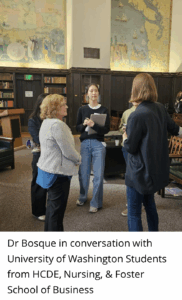
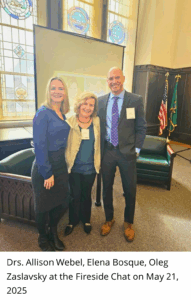
“This was intentionally designed as a practical and collaborative summit,” said Oleg Zaslavsky, Director of the Digital Health Innovation Hub. “We wanted to create a space where health systems, educators, policy leaders, frontline nurses and technology experts could have honest conversations about what responsible AI implementation actually looks like.”
The summit also highlighted UW’s growing leadership in digital health innovation and interdisciplinary collaboration. Through student ambassador programs, mentorship opportunities and cross-sector engagement, RAIN emphasized preparing the next generation of nurses to lead in a rapidly evolving healthcare landscape.
Participants repeatedly highlighted the summit’s emphasis on balancing innovation with trust, transparency and patient-centered care. As AI adoption accelerates nationally, RAIN reinforced a central message echoed throughout the day: nursing perspectives must remain essential in shaping the future of healthcare technology.
I recently had the opportunity, as a second-year postdoctoral fellow at the University of Washington School of Nursing, to attend the Western Institute of Nursing (WIN) annual conference and present a poster on one of my research projects. My poster focused on applying a One Health lens to infection prevention and control among Washington state dairy workers. The project highlights how partnerships, collaboration and an integrated approach that considers human, animal and environmental health can strengthen infection prevention efforts in animal agricultural settings.
My primary goal in attending WIN was to share research grounded in community partnerships and a framework that recognizes the interconnectedness of human, animal and environmental health. I also looked forward to learning about others’ research, networking and innovations in nursing education. However, the most meaningful takeaway for me was the sense of connection, reconnection and community with nurses and nurse scientists from across the country.
WIN provided the opportunity to reconnect with colleagues I have worked with as a nurse, doctoral student and postdoctoral fellow, and to engage in rich scholarly conversations. These interactions strengthened existing relationships and led to new connections that expanded my professional network.
As I approach the end of my postdoctoral training, I am grateful for this enriching experience and already looking forward to attending the WIN conference in Bellevue, Washington, in 2027.
Over my years at the UW School of Nursing, one phrase I have uttered more times than I can count is: nurses are the best innovators. And it’s true. Through various Office for Nursing Research & Innovation initiatives, we’ve highlighted and supported nurses who are dreaming, creating and testing novel solutions that strengthen the health, connection and collective well-being of our communities. Now artificial intelligence (AI) is reshaping how nurses and healthcare teams do our everyday work. There’s been plenty of excitement, skepticism and quiet curiosity about AI’s place in healthcare. But at its heart, AI is simply a tool, one with the potential to help all of us deliver the highest-quality care to every person we serve. That promise is what drives our 2026 Northwest Summit to Reimagine AI in Nursing and Health (RAIN).
Bringing together today’s and tomorrow’s leaders from healthcare, nursing, academia, industry, policy and technology, the RAIN Summit is designed to move beyond speculation, conjecture and fear and advance the conversation about how to best use AI to advance healthcare delivery. It is a hands-on, forward-looking forum where real-world use cases, workforce readiness and cross-sector partnerships take center stage.
Hosted by the UW Office for Nursing Research & Innovation, Digital Health Innovation Hub and HIMSS Washington Chapter on May 15, 2026, participants will gather for a full day of keynotes, expert panels and collaborative discussions that illuminate the future of AI in nursing and healthcare. Among the voices leading these conversations are some of the nation’s most respected innovators and thought leaders:
Speakers and Panelists at the 2026 RAIN Summit
Susan Alexander, DNP, ANP-BC; Vanderbilt University School of Nursing
Kenrick Cato, PhD, RN, CPHIMS, FAAN, FACMI; University of Pennsylvania
George Demiris, PhD, FACMI; University of Pennsylvania
Stephen Ferrara, DNP, FNP, FAAN; Columbia University
Perry Gee, PhD, RN, FAAN; Intermountain Health
Justin Gill, DNP, RN, ARNP; Washington State Nurses Association
Ken Grubbs, DNP, MBA, MN; Joint Commission
Michelle James, MBA, MM, BSN, RN, CENP; PeaceHealth
Jennifer S. Mensik Kennedy, PhD, MBA, RN, NEA-BC, FAAN; American Nurses Association
Keri Nasenbeny, MHA, BSN, RN; Harborview Medical Center
Renee Rassilyer-Bomers, DNP, EMBA, CMSRN, RN-BC, FAAN; Providence Swedish
Ryan Shaw, PhD, RN, FAAN; Duke University Health System
Tom Lawry; Second Century Tech
Dan Weberg, PhD, MHI, RN, FAAN; OSU College of Nursing
These leaders—clinicians, researchers, executives and innovators—bring perspectives shaped by real experience at the bedside, in boardrooms, in research labs and in the communities we serve. They will guide sessions that explore what responsible AI adoption looks like on the hospital floor, in community clinics, in nursing education and across health systems striving to meet the needs of increasingly complex populations. Attendees will examine how AI can reduce task burden, elevate clinical judgment, expand healthcare access and strengthen the nursing workforce while centering ethics, equity and the lived realities of nurses and our patients.
Attendees will leave not with abstract ideas, but with practical insights, new professional connections and clear pathways for translating AI into meaningful, measurable improvements in health.
Transformative moments do not come often—and when they do, they require us to rise to meet them. Our RAIN Summit is one of those moments. A timely and unique opportunity to shape the tools that will shape our sector’s future. To make sure the voice of nursing is not only included, but leading.
Tuberculosis (TB) is still the world’s leading infectious killer. Each year, more than 10 million people get sick with TB and over 1 million people die from it. Even though TB can be prevented and cured, many people struggle to finish the long treatment. Stigma, limited access to patient-centered care and overburdened health systems make it harder for people to take their medicine every day for the six to nine months needed for treatment.
Mental health challenges, such as depression and anxiety, affect up to 70% of people receiving TB treatment and make staying on treatment even more difficult. Very few tools exist that support both mental health and TB treatment, especially in settings with limited resources.
TB Treatment Support Tools intervention
To help address these problems, our team developed the TB Treatment Support Tools (TB-TST). This digital health intervention was built with input from TB survivors and frontline providers and was supported in part by the School of Nursing RIFP (Suzanne E. Van Hooser funds, 2017). TB-TST includes patient-friendly TB education, tools for tracking medications and side effects, a home urine test to check treatment progress, messaging with treatment supporters and a dashboard for healthcare teams. We tested TB-TST in an NIH-funded clinical trial across four public hospitals in Argentina, where more than 60% of the country’s TB cases are treated. TB-TST improved important outcomes such as treatment completion and cure rates. The study also showed that patients wanted more real-time support, especially after clinic hours, and more help with mental health.
Human-in-the-loop approach
Artificial intelligence (AI) may help meet these needs by giving patients support anytime, even when clinics are closed, and by helping healthcare teams that are already stretched thin. With support from RIFP (Van Hooser Research Fund, 2024) and the UW Dawg Tank award, and in collaboration with computer scientists and students from the UW Responsible Health AI Lab, we created Spanish-language large language model (LLM) chatbots to answer patient questions, give quick advice and provide clear, supportive messages. In the first phase of the project, we built and tested several chatbot versions.
TB experts then evaluated the chatbots and found that they were accurate and helpful in answering common patient questions. They also pointed out areas that could be improved, like reducing technical language and making sure the chatbots clearly explain the differences between active TB and latent TB.
Partial team gathering, June 2025. Front (L–R): Taryn Amberson*, Yvette Rodriguez, Shubhi Jain, Weichao Yuwen, Jennifer Sprecher; middle (L–R): Charles Kwanin, Priscilla Carmiol-Rodriguez, Kathleen Ashbaker, Sarah Iribarren*, Alfie Vidrio, Enrique Liang, Glen Sprecher; back (L–R): Daniil Filienko, Thomas Bombach, Steve Iribarren. *Taryn Amberson is a doctoral student in Health Administration; Dr. Iribarren serves as a committee member.
We are now improving the AI tools. We are strengthening the TB education feature and adding a skills-based program. This program teaches strategies to help patients manage stress, regulate emotions and communicate better with their healthcare providers. Because many people with TB experience stigma, guilt or shame, skills like mindfulness, acceptance and healthy communication can help reduce anxiety and depression during treatment. Soon, we will invite TB and mental health experts to evaluate the updated tools.
Our hope is that by combining accurate TB information, mental health support and real-time help, we can make TB treatment easier to complete and more centered on patients’ needs.
Prof. Richard FeynmanNobel Prize-winning American theoretical physicist
I was not a very good high school student. While I have always loved reading, I definitely lacked the discipline and focus required to get good grades in a public high school in the 1990s. Distracted by the many joys, adventures and challenges of adolescence, I graduated from Canfield High School with a solid 3.1 GPA, having repeated freshman algebra my junior year. An unremarkable student, there was nothing in my early years to indicate that I would eventually go on to have the academic career that I have been so very blessed with. But that is the power of American public education; a mediocre Midwestern student can find her passion as an undergraduate B1G student and go on to become a leading nurse scientist …ahem… years later.
My teenage image of a scientist was someone in a white lab coat, serendipitously making discoveries that lead to human progress. However, during college—through dedicated and graduated mentorship—I learned that scientific research is an intrinsically deep and interconnected process; a vehicle for those who understand the power of asking and answering questions to improve the human condition. These mentors helped me fall in love with science and learn the skills to truly distinguish a real scientific signal from the noise.
Three Pears by Paul Cézanne, 1878/1879
How humans understand what is true in the natural, social and applied worlds around us has rarely been clouded by so much noise. The volume, speed and exquisite tailoring of misinformation about our world are unparalleled. Yet the foundations of distinguishing an important signal from background noise—rigor and replicability—remain just as they did in Aristotle’s age.
According to Merriam-Webster, rigor has five definitions. The one that characterizes the scientific method is that of “strict precision and exactness.” Dating back to antiquity, rigorous empirical evidence relied on exacting research methods to determine truth in the natural world. The highest form of rigor is the systematic recording of direct observation—seeing and reporting the phenomenon happen over and again. It is telling that some of the earliest examples of scientific observation, analysis, inference and implications of data pertain to human health and illness. Precisely described observation to inform healthcare has not only existed but has been the standard of healthcare for millennia.
Replicability is often an underappreciated foundation of how science uncovers truth—it is the capacity to arrive at consistent answers when we ask the same question again and again. Consider something as common as, How does exercise affect physical function? Demonstrating that exercise improves function across ages, genders, municipalities, vocations and socioeconomic contexts does not happen by chance. It requires hard work, diligence, humility and an unwavering commitment to scientific investigation. While entire research careers may be devoted to replicating and refining scientific findings, it is the subtle patterns, the careful confirmations and the threads of evidence woven across studies, laboratories and continents that quietly propel healthcare progress forward. In the end, truth is rarely revealed in a single moment—it is built, patiently and collectively, through collaborative science that chooses rigor over convenience and curiosity over certainty.
One of the earliest and most persistent questions children ask is simply, why? And believe me, for parents juggling full schedules, that question is often exhausting. Yet it is also a powerful reminder of something fundamental: we are, by nature, curious beings, driven to make sense of the world and to seek what is true. To reveal that truth, we must cut through the noise, the distraction, the fear of failure and blinding hubris. Knowledge, after all, isn’t free—you have to pay careful and consistent attention to the world around us.
Somewhere along the way, many of us began to think of science as something distant or exclusive, reserved for people in lab coats with advanced degrees; we relegated truth-seeking to them. However, the fact is that science begins with simple, pure curiosity. The inflection point is often a “what if” or a “why” moment that leads us to apply rigor and replicability in our quest for understanding. In the end, when we choose curiosity over certainty and rigor and replicability over noise, we create a world where truth can not only be found but understood by all.
Happy New Year, Husky Scholars! We hope your 2026 is off to a great start. As you set goals for the year—whether personal or professional—remember that the Office for Nursing Research & Innovation is here to help you achieve your research ambitions. From planning and submitting grants to sharing your science on global stages and navigating post-award requirements, we’ve got you covered. Big (and manageable) changes are coming in 2026—new internal deadlines, updated NIH biosketch formats, Washington-mandated diversity in clinical reporting and research security training—so early planning is key. Whatever your resolutions, we are excited to be your partner in turning them into research success.
Grant Submissions in 2026: What You Need to Know
While submitting new research grant proposals is our most well-known service, institutional, state and federal changes necessitate early planning and outreach to our pre-award team. Big changes are here—new internal deadlines, updated NIH biosketch formats, diversity reporting and research security training requirements mean early planning is essential. If you’re a PI, Co-Investigator or Key Personnel on any proposal due after Jan. 24, 2026, start your new biosketch now—it combines NSF and NIH formats and includes a certification against foreign talent recruitment. Clinical trials submitted after Jan. 1, 2026 that fall within UW’s Diversity in Clinical Trials reporting requirements must meet the new reporting standards. NIH has also announced that Research Security Training will be required for senior/key personnel within 12 months of submission for applications with due dates on or after May 25, 2026. The good news? Our same outstanding pre-award team is ready to help you navigate every step.
Sharing Your Science: We’ve Got You Covered
Presenting your research is just as important as conducting it—and we offer practical ways to help you share your work widely. Beyond guidance on abstracts and manuscripts, we provide travel funding for UW School of Nursing Seattle faculty members to support conference presentations—last year we awarded almost a dozen faculty members to attend scientific meetings around the globe. We also provide opportunities to showcase your findings at our monthly Lunch & Learn sessions and a chance to reach the broader UW School of Nursing community through a featured column in our newsletter. These platforms amplify your impact, connect you with peers and ensure your science reaches the audiences who need it most. Let us help you turn your research findings into healthcare influence. For questions about any of these ONR&I services, please contact us.
Post-Award Support: Keeping Your Project on Track
We know many of you are anticipating your first NOA in the coming year. That should, and will, be celebrated by all of our team. However, securing extramural research funding is just the beginning—successful projects need strong follow-through to ensure that all promised project milestones are met. Our ONR&I post-award services go beyond technical support for budgets and project management. We provide a rigorous progress reporting process to ensure compliance with institutional, state and federal regulations, maintain accountability for predetermined milestones and offer tailored assistance for early-stage investigators or new investigators. Whether it’s navigating reporting requirements or troubleshooting challenges, we’re here to make sure your research stays on track and meets every obligation. With our team’s guidance, you can focus on the science while we handle the details that keep your project moving forward.
As we step into 2026, remember that resolutions aren’t just for personal goals—they can transform your research journey too. Whether you’re planning your first grant submission, preparing to share your findings on a global stage or navigating the complexities of post-award compliance, you’re not alone. The Office for Nursing Research & Innovation remains your committed and enthusiastic partner, ready to guide, troubleshoot and celebrate every milestone with you. So, as you set your sights on new research achievements this year, know that we’re here to make those ambitions possible—because when our Husky Scholars thrive, so does the future of nursing research.
There are many words that can describe the state of research over the past year, but the one that seems most apt is change. No matter how it’s explored, this year the American research enterprise—including in our own warm, sunny little corner of the Magnuson Health Sciences Building—experienced immense, rapid and often stunning change. Clearly, those of us who support the UW School of Nursing research mission were not the only people feeling this way; when we reflect back on our most-read Notes on Nursing Research & Innovation columns this year, the theme of change—anticipating it, preparing for it, acclimating to it and seizing the opportunity it brings—was evident in our dear readers’ analytics.
When launching our Weekly Research Roundup in early January, we reminded our community that nurses, at our very core, are among the most innovative, creative, caring and tenacious healthcare professionals. We shared with the UW School of Nursing and our allies that the science incubated in our walls is driven by our dedication to serving our fellow humans in their most vulnerable moments and that the resulting discoveries have transformed the lives of many. We were, are and (I believe) will continue to be limitless when guided by that north star. Read more about the remarkable work driving nursing innovation in our No. 5 most-read column of the year, “Limitless.”
The future of nursing science remains strong and full of promise, reflected in the five postdoctoral fellows who joined the UW School of Nursing scientific community this year. Driven by their voracious curiosity, these scholars are tackling critical questions spanning chronic illness, global health and One Health. Our feature on these incredible individuals ranked as the No. 4 most-read column of 2025. Take a moment to be inspired by their rigorous and highly relevant research in “Meet Our New Postdoctoral Fellows: The Future of Nursing Science.”
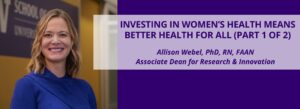
Women’s health has always been a cornerstone of the UW School of Nursing’s scientific mission. This year, as the importance of that work faced scrutiny, our community didn’t waver—we doubled down. We reaffirmed our commitment to advancing the health of all women through rigorous science, because we know this truth: when we invest in women’s health, everyone benefits. Dive into our No. 3 most-read story, part one of a powerful two-part series, “Investing in Women’s Health Means Better Health for All.”
One of the changes that we expected this year was an update to the NIH grant review framework. The NIH Center for Scientific Review had been undertaking a monumental, multiyear effort to revise its grant review criteria to reflect an emphasis on fairness, clarity and scientific impact expected in all reviews and proposals. Good grantsmanship has always necessitated that grant applicants carefully and compellingly explain why their proposals will achieve the priorities of the sponsor. Our community was clearly curious about these new changes to peer review and how they would impact their own proposals. To learn more about these changes, their implications for applicants and how the Office for Nursing Research & Innovation can help you integrate these changes into your proposal, check out our No. 2 story this year: “Demystifying the NIH’s Simplified Review Framework: What You Need to Know.”
Few topics sparked as much conversation this year as NIH’s unexpected policy shift: a new cap on grant submissions. While the idea had circulated for years, the official announcement came as a surprise to many: beginning with applications submitted for the Sept. 25, 2025 receipt date, investigators can submit no more than six new, renewal, resubmission or revision applications per calendar year. This change isn’t just procedural; it’s strategic. Researchers will need to rethink how and when they submit proposals, ensuring every application carries a clear purpose and impact. Adding to the buzz, NIH also signaled heightened scrutiny of artificial intelligence (AI) in grant writing, warning that AI-generated applications may be deemed noncompliant. Our community sees this as more than a limitation; it’s an opportunity to elevate the quality and value of every submission. Explore our most-read article of 2025 to learn what this means for investigators: “What the New NIH Grant Submission Cap Means for Researchers.”
As we close out 2025, we’d also like to take a moment to thank our many, many guest columnists this year; the entire Office for Nursing Research & Innovation team (particularly Erlene, Candy and Sarah), who ensure that the Weekly Research Roundup reflects our unit’s commitment to excellence each and every week; and you, our dear and mostly gentle readers. Each week when you read our newsletter, you engage with and help to build our strong community of scholars in both small and big ways. Thank you. Thank you for your support, your creativity, your energy, your resilience and your steadfast belief that science can be a powerful force for good.
With rare exceptions, all of your most important achievements on this planet will come from working with others—or, in a word, partnership.
Paul FarmerPhysician and global health leader
At the University of Washington School of Nursing, we know that advancing health outcomes for all children requires more than academic rigor—it demands deep, committed and reciprocal collaboration. Our November 13 Lunch & Learn with Drs. Debra Ridling and Elaine Walsh of the Seattle Children’s Center for Pediatric Nursing Research (CPNR) showcased exactly why academic-clinical research partnerships are not just beneficial but essential for shaping the future of nursing science.
Why Partnerships Matter
The Seattle Children’s Center for Pediatric Nursing Research exemplifies a model where research is woven into the fabric of clinical nursing care. Their mission is clear: to advance equitable pediatric health outcomes through innovative, nurse-led research. This is not research for research’s sake—it is research that transforms practice, improves patient and family experiences and addresses pressing health disparities. By leveraging interdisciplinary collaborations, CPNR fosters a culture of inquiry that empowers nurses at every career stage to lead studies and disseminate findings.
For UW School of Nursing faculty and students, this partnership opens doors to real-world impact. From onboarding processes that integrate our BSN, DNP and PhD students into clinical research teams to mentoring opportunities with nurse scientists, the collaboration ensures that academic learning translates into bedside innovation. This synergy strengthens both institutions: clinical partners gain access to cutting-edge evidence-based practices, while UW scholars engage in research that is deeply relevant to patient care.
A Model of Innovation and Impact
Though only one small measure of impact, their metrics speak volumes. Since 2014, CPNR has funded 71 grants, supported dozens of research projects and published over 20 peer-reviewed articles. These studies are not abstract—they tackle urgent acute care pediatric questions. For example, research on temperature measurement in critically ill neonates informs safer monitoring practices in NICUs. Investigations into sleep-disordered breathing in children with Down syndrome highlight the need for early diagnosis and intervention. Projects addressing care coordination for rural infants with complex heart disease underscore the importance of equity in access to specialized care.
These are exactly the kinds of inquiries that change lives, and they have inspired many early-career investigators to pursue research studies in this setting. They also illustrate why our UW School of Nursing strategic priority to “increase research productivity and impact” must include robust, trusting and reciprocal clinical partnerships. When research derives directly from the realities of patient care, its relevance and adoption accelerate.
Creating Pathways for Future Scholars
Another hallmark of this model is its commitment to developing nurse scientists. Through generous intramural grants, academic partnerships and fellowship programs, CPNR invests in the next generation of researchers. Nine RNs have enrolled in or completed PhD or postdoctoral training, and faculty from the University of Washington and other institutions actively collaborate on projects. This pipeline ensures that nursing research remains dynamic, diverse and responsive to evolving health needs.
Looking Ahead
The future is bright—and ambitious. CPNR’s strategic plan includes funding for three dedicated nurse scientists, innovation projects with potential for commercialization and expanded academic-clinical partnerships. Engaging in these initiatives could help position this partnership as a leader in translational research and equity-driven care.
Why This Matters for UW
This partnership is more than a collaboration; it is a blueprint for how nursing schools can amplify their impact. By aligning with clinical partners who share our values of compassion, excellence and innovation, we create a research ecosystem where ideas move swiftly from theory to practice. Together, we are not only advancing science—we are improving lives.
As we reflect on this session, one message stands out: when academia and clinical practice unite, the possibilities for discovery and transformation are limitless. For UW School of Nursing, this is not just an opportunity—it is a responsibility. And with partners like Seattle Children’s, we are ready to lead the way. To learn more about how to engage in research with the Seattle Children’s Center for Pediatric Nursing Research, please feel free to reach out to the Office for Nursing Research & Innovation, and we’ll be happy to help you navigate the opportunities.
December 1 marked World AIDS Day—a time to honor more than 44 million lives lost to HIV and reflect on the progress that transformed HIV from a fatal diagnosis into a manageable chronic health condition. It is also a day to reaffirm our commitment to ensure no one is left behind in the global HIV response.
The World Health Organization’s 2025 World AIDS Day theme, “Overcoming disruption, transforming the AIDS response,” calls for bold leadership, global collaboration and a steadfast focus on human rights to end AIDS by 2030. Nurses stand at the forefront of making this vision a reality.
UW School of Nursing attendees at the Association of Nurses in AIDS Care conference in Philadelphia, Pennsylvania, November 2025.
From the earliest days of the HIV epidemic, nurses led the way. Nurses provided direct care to individuals experiencing stigma, fear and uncertainty. The powerful documentary film 5B shows how trailblazing nurses and caregivers opened the first AIDS ward in the world in San Francisco, fighting for compassion and better care. They designed nurse-led HIV care models that expand treatment capacity and improve quality of care, especially where physician shortages persist. The Association of Nurses in AIDS Care carries on this legacy by uniting HIV nurses, advancing evidence-based practice and championing the voices of people most affected by HIV.
Nursing scientists continue to drive innovation in HIV prevention and care. They study how to ensure that proven interventions reach every person who needs them. They expand access to HIV testing, pre-exposure prophylaxis (PrEP) and antiretroviral therapy by designing programs rooted in diverse lived experiences. Nurses create solutions in partnership with communities that support real-world needs while strengthening trust and dignity in care. Nursing research also supports healthy aging for people living with HIV by addressing long-term wellness, chronic disease prevention and quality of life across the lifespan.
HIV research has changed more than HIV care. It led to breakthroughs in cancer treatment, helped create mRNA vaccines for COVID-19 and informed tools to fight hepatitis, Ebola and other global health threats. Work at UW, Fred Hutch Cancer Center and partner institutions shows how HIV science strengthens healthcare everywhere.
On World AIDS Day, we honor the communities leading the HIV response, remember those we’ve lost to HIV and thank the scientists, nurses and care teams who work every day to improve the lives of those affected by HIV. Their efforts not only improve HIV outcomes but also spark discoveries that benefit healthcare as a whole.
Despite tremendous progress, HIV remains a major global health challenge. We must keep investing in HIV research and programs that advance health for all. Our collective goal remains clear: deliver compassionate, evidence-based care to every person—with no one left behind.
Research funding is having a moment. The future state of our research enterprise has dominated discussions in many schools of nursing nationally. However, in talking with early- and mid-career researchers, I have been struck by how paralyzing the related anxiety has been for many.
While understandable, this paralysis is not insurmountable. There is always a degree of uncertainty with research funding; however, it’s also important to lean into the other, less prominent side of research—disseminating our results.
I’ve written a few manuscripts during my career, and I know it can be tempting to think that scientific writing comes easily to full professors. When I hear this sentiment from my mentees, I often share with them the story of my undergraduate thesis defense. After I defended the thesis, which I had spent two years researching and writing, my committee told me I indeed passed and would graduate with honors. Then they kindly, but firmly, told me that my writing needed work and I needed to focus on developing it if I was ever going to have a scientific career. As painful as it was to hear that at the time, it was a fair critique and one that forced me to learn how to write. It was a hard process, and I want to share a few tips that I’ve learned to help me write better scientific manuscripts.
Don’t Start with a Blank Page
Staring at a blank page can be intimidating—even for experienced writers. Instead of diving right into drafting your manuscript, start by outlining your ideas, writing a clear purpose statement, copying over your methods section (which you should edit later) and mocking up your tables and figures. These guideposts provide structure and motivation, making the writing process less overwhelming. As your manuscript evolves, revisit and revise these elements often to improve its clarity and focus.
Read. A. Lot.
Making time to read can become increasingly difficult as academic demands grow. More meetings, more courses, more travel, more emails. While CliffsNotes have been around for decades, with technology it’s easier than ever to just ask the computer to summarize the literature on a given topic rather than reading the systematic reviews and original sources yourself. But the process of reading and thinking about the literature is what allows one to engage in the most important thing in science—ask questions that lead to answers to help improve the human experience. Protect time to read and explore widely.
Write with Friends
One of the best parts of being a nurse scientist is writing with friends. Collaboration brings fresh energy, new ideas and broader perspective—and when it’s working well, that generosity flows both ways.
Whether drafting a manuscript or revising a grant proposal, writing alongside trusted colleagues makes the process more productive and enjoyable. If you have not experienced this yet, consider forming a writing group, building cross-disciplinary partnerships, organizing a writing retreat or setting up regular writing accountability calls. Invite constructive feedback, share your drafts early and be open to critique. Scholarship and scientific progress thrive in community—and writing with friends is one of the best ways to keep momentum strong.
Train Your Writing Muscle
Writing is a discipline—one that grows through practice, feedback, failure and persistence. With so many demands and distractions during the workday, carving out time to write isn’t just helpful—it’s essential. Protecting regular time to write is how we build the muscle that sustains scholarly productivity.
Many of us became nurse scientists because we’re energized by the process of thinking deeply about complex issues that impact human health. Writing, revising, resubmitting and revising manuscripts again and again are not just tasks to be checked off a list—they are a form of intellectual engagement. It is the process by which ideas sharpen, arguments evolve and science moves forward. Schedule your writing. Block the time needed and fiercely protect it. Writing is where your science will find its voice.
There are many great resources to help nurse scholars with writing manuscripts. A few that we often refer people to are Writer’s Camp by legendary nurse scholar Leslie Nicoll, The American Journal of Nursing‘s 2017 writing resource series and The American Nurse‘s Dissemination 101 article.
We would also love to hear and share some of your favorite tips and tools for writing manuscripts. Please send those to us and reach out any time to propose new services or programs that the Office for Nursing Research & Innovation can provide to help you disseminate your science.
The blessed work of helping the world forward, happily does not wait to be done by perfect men.
George EliotEnglish novelist and poet
Start now. Because your science, your words and your ideas can be the force that helps move the world forward.
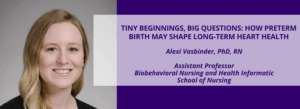
Preterm birth—when a baby is born before 37 weeks of pregnancy—is one of the leading causes of newborn illness and death around the world. In fact, more than 25% of all preterm births happen in sub-Saharan Africa.
As more babies survive thanks to better care, researchers are now asking a new question: What happens to the health of these babies—and their mothers—later in life?
In high-income countries, studies have shown that preterm birth can raise the risk of serious health problems like high blood pressure, type 2 diabetes and heart disease. But we still don’t know much about these risks in low- and middle-income countries, where most deaths from heart disease occur.
Our research team at the University of Washington is working to change that. With support from the UW School of Nursing Research Intramural Funding Program, we’re studying how preterm birth might be linked to early signs of heart disease in mothers and infants in Kenya. We’re focusing on two key biomarkers: telomere length and C-reactive protein (CRP). Telomeres are tiny protective caps on the ends of our DNA that get shorter as we age. CRP is a marker of inflammation in the body. Both are connected to heart health and may help explain how early life stress affects long-term wellness.
To explore these questions, we’re using dried blood spots—small samples collected from a simple finger prick—from over 4,000 mother–infant pairs in an ongoing study in Kenya. For this pilot project, we’re analyzing samples from 50 mother–infant pairs (25 preterm, 25 full-term) at six weeks postpartum. Our lab partners at the UW Center for Studies in Demography and Ecology will measure telomere length and CRP using advanced testing methods designed for these small samples.
Our goals are simple but important: First, we want to describe telomere length and CRP levels in Kenyan mothers and babies. Second, we want to see if these levels are different in families who experienced preterm birth. We believe that preterm birth may be linked to shorter telomeres and higher CRP—signs of more inflammation and faster biological aging.
This study is the first of its kind in sub-Saharan Africa. It brings together experts in heart health, global maternal-child health and epidemiology from the UW School of Nursing and the CSDE. The results will help us build a stronger case for future research—and ultimately, better care for families affected by preterm birth.
At the time of publication, lab testing was expected to begin soon, and we were excited to see what the data would reveal. Tiny beginnings can raise big questions, and we’re committed to finding answers that matter.
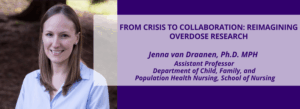
October is National Substance Use Prevention Month—a time to honor lives lost, support those affected and reflect on how research can better serve communities facing the overdose crisis. While recent CDC data shows a nearly 24% drop in overdose deaths nationwide, overdose is still the leading cause of death for Americans ages 18 to 44. In 2023, about 76% of overdose deaths involved opioids. These numbers show both progress and the urgent need to keep going.
Overdose research has changed over time. It used to focus mostly on individual behaviors, but now it looks at bigger issues like housing instability, racism, criminalization and lack of access to healthcare. Researchers are starting to understand that overdose isn’t just a medical problem—it’s also a social one. That shift has opened the door for community-based research that centers lived experience and focuses on fairness and equity.
Another exciting direction is using harm reduction in research design. Instead of treating harm reduction as a separate tool, we can build its values—like dignity, compassion, non-judgment and empowerment—into how we ask questions, collect data and share results. This approach makes research more relevant and helps build trust with communities that have often been left out. By respecting the experiences of people who use drugs and focusing on their safety and choices, harm reduction-informed research can better reflect real life.
At the University of Washington, our team created READU (Research with Expert Advisors on Drug Use), a group made up of researchers, clinicians and people with lived and living experience of substance use. Our model is built on shared decision-making, two-way learning and real engagement. We aim to make research more useful and build trust and growth among team members.
One of our biggest projects is the ORCID study—Overdose Response Centering Inequity and Diversity. This study looks at changes in emergency medical services (EMS) in King County, Washington. We’re following up to 500 people who survived a nonfatal overdose and doing interviews to learn how EMS programs—like leave-behind naloxone, trauma-informed care and warm hand-offs to treatment—affect outcomes. We’re also linking data across EMS, public health and legal systems to build tools for long-term equity tracking. The study is co-led by community researchers from READU, making sure lived experience guides every step.
Looking ahead, overdose research must continue to challenge power imbalances. That means funding community-led studies, supporting researchers with lived experience and pushing for policy changes based on evidence. It also means being honest about the limits of academic institutions and working to make them more accountable.
As we mark National Substance Use Prevention Month, we feel hopeful. The field is shifting toward more inclusive, responsive and justice-focused research. There’s still a lot to do, but together, we can move from documenting crisis to building real solutions.
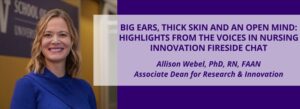
On Tuesday, Oct. 7, 2025, we kicked off our 2025–2026 Voices in Nursing Innovation Fireside Chat series with energy, laughter, humility and inspiration. Held in the Peterson Room at Suzzallo Library, this fall’s Fireside Chat brought together students, faculty and community partners for a powerful conversation about nurse-led entrepreneurship and digital health.
Oleg Zaslavsky, PhD, and Jo Masterson, CEO of 2Morrow, converse on problem-solving in clinical practice.
A Journey from Bedside Nurse to CEO
Our featured guest was Jo Masterson, RN, MBA, CEO and co-founder of 2Morrow, a Kirkland-based digital health company that helps people change health behaviors through app-based programs. In conversation with Dr. Oleg Zaslavsky, director of the UW School of Nursing Digital Health Innovation Hub, Jo shared her journey from bedside nurse to tech entrepreneur.
In reflecting on what sparked the initial idea for what would become 2Morrow, Jo described something common to all nurses and entrepreneurs—how a moment of frustration in her daily clinical practice inspired creative problem-solving. That spark, coupled with a pragmatic problem-solving approach inherent in almost all nurses, grew into a company that now partners with the Washington State Department of Health, employers and health plans—and has helped over one million people.
Lessons in Innovation and Leadership
Jo’s story was full of practical wisdom. She talked about blending behavioral science, education and technology to close gaps in healthcare. She shared how NIH-funded research helped build credibility for her products and how she learned to scale those products responsibly while staying true to her mission of working to improve healthcare for all people.
Allison Webel, PhD, offers the opening remarks to attendees.
One of the most memorable takeaways? Jo’s reflection on what it takes to lead and innovate: “Big ears, thick skin and an open mind.” That phrase stuck with many of us in the audience—especially our students—because it captures what nurse-led innovation really requires: empathy, resilience and a willingness to learn.
Building Bridges and Creating Space
We’re grateful to Jo for her honesty, humor and insight—and to Oleg for guiding such a thoughtful conversation. We also extend a heartfelt thank-you to Jessica Roberto and the Buerk Center for Entrepreneurship for co-sponsoring this event and helping us build bridges between nursing, healthcare and entrepreneurial leadership.
Explore the Digital Health Innovation Hub
If you haven’t yet explored the UW School of Nursing Digital Health Innovation Hub, now is the time. Our Digital Health Innovation Hub is a collaborative space where nurse scientists, students and entrepreneurs can create, test and scale digital health solutions. It’s designed to support bold ideas and practical tools—because innovation in nursing isn’t just possible, it’s already happening and improving healthcare locally and globally.
Looking Ahead
As we looked forward to the winter Fireside Chat, we carried the energy and insights from this event with us. Thank you to everyone who joined us and helped launch the 2025–2026 series.
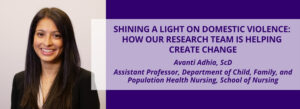
October is Domestic Violence Awareness Month—a time to raise awareness about a serious issue that affects millions of people and to explore ways we can help. Domestic violence (DV) isn’t just physical harm. It can also include sexual, emotional, psychological and financial abuse. Most often, it is committed by a partner. Nearly half of women and over 40% of men in the U.S. have experienced contact sexual violence, physical violence and/or stalking by an intimate partner at some point in their lives. And it often starts young: more than 70% of female victims and more than 60% of male victims first experience intimate partner violence before they turn 25.
DV can have lasting effects on survivors’ physical and mental health. It can also impact families, communities and even future generations. Research can help us better understand DV, find ways to prevent it and support survivors.
At the University of Washington, we have been studying how laws and policies—including those in schools, workplaces and legal systems—can go beyond short-term fixes and make a real difference. For example, most states have passed laws addressing teen dating violence in secondary schools. These laws can mandate schools to write policies, teach students about healthy relationships, train staff and involve families. But just having a law isn’t enough. Our researchshows that how schools actually put these policies into practice matters. If schools don’t follow through, even strong laws may not help as much as they could.
We’re also studying other policies that support survivors who are experiencing DV. One example is “safe leave,” which lets people take time off work to deal with DV-related issues, like going to court, seeing a doctor or finding a safe place to stay. Another policy allows survivors to ask courts for protection orders that can stop abusive partners from having firearms. Research shows that firearm-restriction policies that include relinquishment provisions are associated with lower intimate partner homicide rates. While policies can positively shape experiences of violence, how they are carried out in practice makes a big difference.
Our research is most meaningful when it centers survivors and the communities most affected by DV. Using trauma-informed approaches, we try to respect the experiences and honor the needs of those who’ve experienced abuse. Ending DV isn’t just about responding to violence—it’s about preventing it before it starts. To find solutions that work across systems, we must bring together experts from different fields like law, education, healthcare and social services.
As we recognize Domestic Violence Awareness Month, we want to highlight the role research plays in creating real change. By studying what works and where improvements are needed, research can help build safer communities and stronger support systems for survivors.
Imagine a bridge between being a student and becoming a leading scientist. That’s what postdoctoral training is—a time when nurse scientists take everything they’ve learned in their formal education and begin building their research careers that will shape healthcare for years to come. It’s a chance to ask bold questions, test new ideas and work closely with mentors and research teams. At the University of Washington School of Nursing, we’re proud to support postdoctoral fellows who are passionate, curious and ready to make a difference. This year, we’re excited to welcome five outstanding postdocs whose work spans chronic illness, global health, sleep science and even the connection between humans, animals and the environment.
Bethany Armentrout, PhD
Dr. Armentrout is a nurse scientist with a PhD in nursing from Case Western Reserve University Frances Payne Bolton School of Nursing. Her research examines how circadian rhythms—our body’s natural sleep and wake cycles—affect health in young adults with type 1 diabetes. She’s especially interested in how these rhythms impact blood sugar levels. Before becoming a researcher, Bethany worked as a neurocritical care nurse and earned awards for her excellent care and teaching. Her goal is to connect research and clinical practice to help people with chronic illnesses live better lives.
Nanyombi Lubimbi, PhD
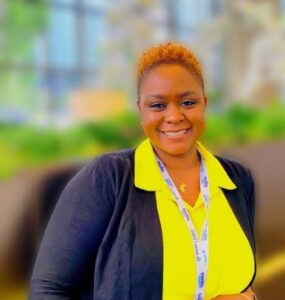
Dr. Lubimbi is a global health nurse leader with 20 years of experience in clinical care and teaching. She earned her PhD in Nursing Science from the University of Illinois Chicago. Dr. Lubimbi has worked in medical-surgical nursing and led health programs in countries with limited resources. Her research focuses on building strong and lasting global health partnerships. She was a Fulbright Scholar in Rwanda, where she studied what makes global health programs sustainable. At UW, she works on HIV prevention research, especially looking at long-acting HIV treatments for pregnant women. Dr. Lubimbi is sharing her findings through conferences and publications and plans to use implementation science to guide her future studies.
Caeli Malloy, PhD
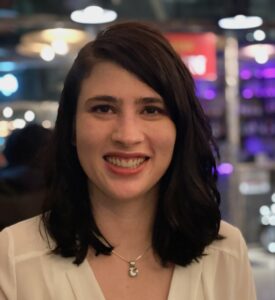
Dr. Malloy earned her PhD from Indiana University School of Nursing and is now part of the Biology to Society T32 Program. Her dissertation research focused on symptom clusters like sleep problems, pain, anxiety, depression and fatigue in adolescents with IBD. For her postdoctoral training, Dr. Malloy has focused on sleep and symptom management interventions for individuals with IBD, including adolescents. Dr. Malloy is passionate about helping people manage their symptoms and improve their quality of life. In her free time, she enjoys knitting and hiking with her miniature poodle, Bellatrix.
Natalie Rejto, PhD
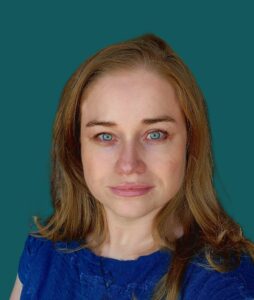
Dr. Rejto is an interdisciplinary nurse researcher who uses the One Health framework to study how human, animal and environmental health are connected. Her current work looks at trauma-informed care for people experiencing housing insecurity, including how to provide care for both humans and animals. She also works with a team studying how to prevent infections—especially those that spread between animals and humans—in farming and agriculture settings.
Linda Yoo, PhD
Dr. Yoo is a postdoctoral fellow in the Biology to Society T32 Program. She earned her BSN from the University of Texas at Austin and completed her MSN and PhD at the University of Washington. Her research focuses on helping adolescents and young adults manage inflammatory bowel disease (IBD). Linda’s earlier work looked at sleep-wake cycles in adults with IBD. She is also the head research assistant in the Gastrointestinal Health and Wellness Lab, where she shares her passion for IBD research with others.
These five postdoctoral fellows bring fresh ideas, strong skills and a deep commitment to nursing science. We’re proud to support their work and excited to see how they will help shape the future of health and healthcare. Welcome to UW School of Nursing!
With so many awareness months in healthcare, it’s easy for meaningful observances to get lost in the shuffle of emails, ribbons and reminders. But October stands out—it’s Patient-Centered Care Awareness Month, a time dedicated to honoring healthcare that truly listens to and respects the needs, values and choices of patients across every setting where nurses lead. At the heart of nursing research and scholarship is this very commitment: advancing knowledge that improves patient outcomes and centers the human experience. Whether we are nurse scientists, DNP or PhD students or faculty shaping the next generation of care, our work is often powered by clinical data. That’s why we’re excited to highlight recent updates to UW Medicine’s use of clinical data for research purposes—changes that will help fuel innovation, collaboration and impact across our academic community.
What’s Changing?
All research-related data sets involving identified and/or de-identified UW Medicine clinical data must be checked by a Neutral Intermediary or “Honest Broker” to ensure the data set matches the approved IRB and is accurately de-identified when applicable. See the definition of an Honest Broker below.
Honest Broker Options
Research IT can pull the data set and/or review an already pulled data set to ensure compliance with the approved IRB for a small fee.
Affiliated developers or analysts who have completed annual Honest Broker training and attested to the rules of the road can pull and/or check data sets for research.
Outlines the rules of the road for anyone acting as an Honest Broker.
Describes core principles, annual training requirements and duties and responsibilities to assure compliant release of UW Medicine clinical data to researchers.
Describes the circumstances when UW Medicine may disclose Protected Health Information (PHI) for research purposes.
Introduces the concept of “clinical data,” which is broader than the definition of PHI, and describes the centralized and values-based approach for reviewing and responding to requests to use or share UW Medicine clinical data for research.
Describes research data stewardship obligations that fall outside patient privacy and security requirements, including UW Medicine institutional standards, the requirement to execute data use agreements and how to report unforeseen events that involve data.
Why Is This Changing?
Over the past few years, UW Medicine has closely examined how its clinical data is managed across the system. These assessments revealed opportunities for improving policies and processes that will improve data security and consistency. In response, UW Medicine launched the Honest Broker Program—a new initiative designed to strengthen data stewardship and reduce risk while making it easier for researchers to access clinical data responsibly.
What Is an Honest Broker?
An “Honest Broker” is a Neutral Intermediary—whether a person, software system or team—who helps researchers access clinical data from UW Medicine patient records in a secure and compliant way. Acting under approved protocols and IRB authorization, the Honest Broker provides either identified or de-identified data in alignment with UW Medicine policies and privacy standards. Serving as a Neutral Intermediary between the clinical data system and the research team, the Honest Broker plays a critical role in maintaining HIPAA privacy and security while enabling responsible data use for research.
Honest Broker Toolkit for Researchers
Research IT has been developing an accessible repository for the research community, including Data Use Agreement (DUA) templates, a how-to library with guides and checklists, registry lists for owners and data stewards and language to include in new proposals. A specialized Epic-integrated instance of REDCap is under development, along with a growing tool library for a self-service option.
We hope this overview helps clarify the updated process for accessing UW Medicine clinical data and highlights the role of the Honest Broker Program in supporting secure, streamlined research. We’d also like to note that nurse-led research at UWMC should loop in the Supporting Practice Advancement, Research and Knowledge (SPARK) committee, led by Dr. Nancy Wiederhold, who directs UWMC Clinical Nurse Research.
As always, the Office for Nursing Research & Innovation is here to assist you in navigating these systems and advancing patient-centered research. Whether you’re exploring new questions, building interdisciplinary collaborations or translating findings into practice, we look forward to partnering with you every step of the way.
One of the hardest parts of conducting research as a student is figuring out how to pay for the related expenses, such as survey license fees and participant incentives. But you are not alone. The UW School of Nursing has fantastic mentors and research professionals who have successfully navigated many student grant applications.
But the most important part of any grant application is knowing your why. Why apply for this grant, and how does your why align with the sponsor’s priorities? Certainly, applying for a research grant as a student offers benefits that extend far beyond financial support of a research project. Some research grants, such as NIH F31 applications and AHA Predoctoral Fellowships, can help cover essential costs such as tuition, stipends, supplies and travel for conferences. In addition, funded research projects often lead to opportunities for publication and presentation, allowing students to raise their professional visibility through published manuscripts, posters and conference talks. These experiences not only build academic credibility but also connect students with faculty mentors and research teams, helping to foster valuable professional collaborations.
Grant-funded, student-led research offers more than academic enrichment—it’s a gateway to professional development and long-term career connections. Students involved in funded projects gain experience in research design, data analysis, writing and project management—valuable skills across nursing and healthcare roles. Just as important, working under the close guidance of a dedicated research mentor provides tailored support, expert insight and a model for professional growth. Having a strong research mentor helps students navigate challenges, refine their ideas and build confidence as emerging nurse scholars.
No matter your nursing program or track, exploring research funding opportunities early can be a game-changer for those interested in advancing nursing science. It allows budding nurse scholars to start building a research portfolio, further refine their academic interests and access exclusive programs tailored for future leaders in the field.
Scholarships vs. Sponsored Programs: What’s the Difference and Why It Matters
Sometimes navigating the grant funding ecosystem can feel more complex than decoding an ECG at 3 a.m. Perhaps you’ve already encountered terms like scholarships, grants and sponsored programs, sometimes used interchangeably. While they may sound similar, they’re not the same. Understanding the difference can save you time, frustration and missed opportunities.
Let’s start with the basics. If you’re applying for something called a scholarship, it’s easy to assume it’s just that—a scholarship. But at the university level, the term “scholarship” has a specific meaning tied to how the funding flows and what obligations come with it.
Scholarships typically refer to funding awarded directly to an individual student. These are often merit- or need-based, and you can usually submit these without institutional approval. Think of them as personal awards: you apply, you receive and you report only if the funder asks you to. Questions about scholarships can be sent to the Office of Student and Academic Affairs (OSAA) at sonscholarships@uw.edu.
Sponsored Programs, on the other hand, include grants and contracts that support your scholarship. Here, the funding is awarded to the University, not the individual. These applications often require institutional sign-off, so your proposal will need to go through a formal review and approval process, which can take three or more weeks. These proposals receive support from ONR&I grant managers to help with:
Interpreting the request for applications (RFA)
Navigating UW and sponsor policies
Completing required sponsored forms
A great example is Sigma Theta Tau International (STTI), which offers both scholarships and grants. Depending on which one you’re applying for, the process and the level of institutional involvement can look very different.
So how do you know which path you’re on? When in doubt, reach out to ONRHelp@uw.edu. We can help determine whether institutional sign-off is needed and guide you through the appropriate steps.
Understanding these distinctions isn’t just academic—it’s practical. It helps you plan your timeline, gather proper documents and connect with the right people. Most importantly, it ensures your application gets the attention and support it needs.
ONR&I Pre-Award Support: We’ve Got Your Back
Now that you’ve identified your first research grant, work with ONR&I pre-award services for comprehensive support throughout the proposal development, budgeting and compliance process. We coordinate with institutional offices, especially the Office of Sponsored Programs (OSP), to ensure that your submission is properly authorized and timely. For a successful proposal, students should start early, ask questions and tailor their applications to the funder’s mission. Clarity, conciseness and storytelling are key to making a compelling case. Most importantly, students should lean on the student research support resources available to them to craft polished, fundable proposals that reflect both their passion and potential.
Post-Award Support: Keeping You on Track
Once your research proposal is funded, you will work with a member of the ONR&I post-award professional team: Cheery, Tessa, Ron or Renée. As your post-award grants specialist, we will initiate setup of your budget in the official systems. Then we’ll work with you to track your grant spending by providing monthly reports and forecasting. We encourage regular planning discussions so any purchases you need can be accomplished in plenty of time and using official UW financial channels rather than with your own personal funds. We’ll also review reporting requirements and sponsor deadlines with you and help you navigate any required changes to your grant.
The Office for Nursing Research & Innovation (ONR&I) is here to support you in preparing strong, competitive research proposals. We’re enthusiastic about partnering with you and committed to being a resource in your academic and professional success. Whether you’re just getting started or refining your ideas, don’t hesitate to reach out to ONRHelp@uw.edu for general questions; we’re here to help!
We hope your summer was filled with well-earned rest, inspiration and maybe even a little adventure. Now that the academic year is in full swing, we’re thrilled to welcome all of our new subscribers to Weekly Research Roundup to our vibrant community of nursing scholars!
For those returning, you might notice that our research enterprise has evolved since spring quarter wrapped. This edition of Notes on Nursing Research & Innovation highlights key updates from the UW School of Nursing, the broader university and federal research funding agencies over the past three months. Let’s dive in.
University of Washington School of Nursing
Spring Research Intramural Funding Program (RIFP) Awardees
The most recent cycle of RIFP reviews awarded $100,000 to UW School of Nursing faculty members. These four incredible projects are truly pushing the boundaries in nursing science—read more about the spring 2025 RIFP awardees. The fall 2025 RIFP cycle was expected to be released in early October.
University of Washington Digital Health Innovation Hub (DHIH)
This summer the DHIH was busy with three new initiatives. These included new seed funding, the fall quarter Voices in Nursing Innovation Fireside Chat featuring nurse innovator Jo Masterson on Tuesday, Oct. 7, 2025, and the AI Advancement in Nursing: Education, Research, and Practice Symposium scheduled for Friday, May 15, 2026, from 9 a.m. – 3 p.m.
Transitions
This summer we said goodbye to two longtime ONR&I team members, Ken Pike and Kaletra Welch. We are grateful for all of their contributions to the UW School of Nursing and their steadfast dedication to supporting our community in our shared mission to elevate nursing science.
We are also excited to welcome two new team members to our unit. Warren Szewczyk is a research scientist who is available for statistical consultation, and Ron Craig has joined our post-award management team. Please extend a warm welcome to both Warren and Ron. Warren’s Lunch and Learn session was scheduled for Monday, Oct. 13, 2025.
ONR&I Lunch and Learn
Our Lunch and Learn seminar series returned with a stellar lineup of nine of our colleagues sharing their incredible work. From best practices in sample size estimation to research collaboration opportunities at Seattle Children’s Hospital to using AI to determine when a patient is at risk for pneumonia, the 2025–26 speakers were bound to inform and inspire all in attendance.
University of Washington Office of Research
Required Training for Principal Investigators
Research training requirements vary by sponsor and research activities. All UW principal investigators who apply for or receive externally funded grants or contracts are required to complete Grants Management for Investigators. Additional requirements may include Good Clinical Practice, Financial Conflicts of Interest and Research Security Training, depending on the sponsor and project. Please double-check your training transcript to make sure applicable requirements are up to date.
Grant Proposal Submission Deadlines Are Changing
Federal changes are increasing sponsor demands and regulatory requirements, prompting earlier and more detailed proposal reviews. To meet these evolving expectations, the UW School of Nursing is updating its internal proposal submission deadlines: final business elements are due 14 business days before the sponsor’s deadline, and all final documents must be ready 7 business days prior. ONR&I pre-award staff will begin adjusting timelines with investigators this fall, with full implementation effective for proposals due on or after Jan. 1, 2026.
Workday Finance Tools for the Research Community
Stay on top of your research grant spending with ease by getting familiar with the PI Dashboard in Workday. This 19-minute video will provide you with clear instructions for how to access and navigate the PI Dashboard to get answers to specific questions about your award. The dashboard offers a clear snapshot of your research portfolio, start-up funds and RIFP expenses all in one place and lets you drill down into the details that matter most.
New Diversity in Clinical Trials Requirements Effective Jan. 1, 2026
A new University of Washington policy requires researchers to submit a Diversity Plan for all research that meets the definition of a clinical trial where UW employees or agents are responsible for or engage in recruitment or consent activities. This policy is aimed at improving enrollment of underrepresented groups in clinical trials. Key components might include culturally tailored recruitment strategies, translation and interpreter services, e-consent options and tracking enrollment metrics. Investigators should plan for associated costs during their proposal development. Resources to support compliance include the UW Health Sciences Library, ITHS Recruitment Support Service and UW Translation & Interpreter Services. For other guidance, contact HSD at hsdinfo@uw.edu or review their planning and budgeting guidance.
We know, it’s a lot and we’re sure you have questions. Please know that the Office for Nursing Research & Innovation is here to help you navigate these changes. Throughout the year, we’ll be working with Faculty Council, our departments and others to make sure that you are kept up to date on these—and all future—sponsored project updates. From everyone at the Office for Nursing Research & Innovation, we wish you a wonderful academic year.
There are few phrases more familiar—or feared—by those of us in higher education than publish or perish. Our professional success is often built on a sustained track record of high-impact, peer-reviewed, published scholarship (in addition to excellent teaching of course). And as nurse scientists, our scholarship is rooted in service—to our patients, our communities and our broader mission to improve the health of all. That’s why the NIH’s updated Public Access Policy, NOT-OD-25-047, matters more than ever. Starting July 1, 2025, NIH-funded Author Accepted Manuscripts accepted for publication on or after that date must be freely available to the public upon publication. No delays. No embargoes. No excuses.
What’s New?
The NIH now requires that your Author Accepted Manuscript (AAM)—the version of your article that’s been peer-reviewed and accepted—be deposited in PubMed Central (PMC) upon acceptance and made accessible to the public without embargo upon the official date of publication. This ensures that the knowledge we generate through our research reaches the people who need it most: nurses, healthcare providers, patients, caregivers, advocates and community health leaders.
What’s an AAM?
It’s the version of your manuscript that includes all revisions, figures and supplemental materials, but not the publisher’s final formatted PDF. In some cases, publishers may instead make the final published article available through an open-access arrangement.
What Costs Are Allowed?
NIH permits reasonable publication costs, including Article Processing Charges (APCs) for open access publishing, when they comply with applicable NIH cost principles and result in a publicly available product. However, fees for peer review services when there is no resulting publicly available product or fees charged solely for depositing your AAM in PMC, which is free, are not allowable. For details, review the NIH’s explanation in NOT-OD-25-048.
If a publisher tries to charge you a “NIH compliance fee,” all investigators can confidently say, “That’s unallowable under 2 CFR 200.403(c).”
Protect your rights with a copyright addendum when signing publisher agreements.
Partner with our UW Libraries colleagues—they’re great allies in navigating open access and compliance.
Why This Matters for Nursing
Nursing research often addresses real-world health challenges that center our most vulnerable citizens—chronic disease management, health equity, symptom science and patient-centered interventions. Making our findings immediately accessible means frontline nurses, community health workers and patients themselves can more quickly benefit from the evidence we work so hard to generate. This new policy is not just about compliance—it’s about real-life impact.
Final Thoughts
This policy shift is a call to action and it will help to make our science open, accessible and actionable. By embracing public access, we’re not just meeting NIH requirements—we’re advancing the health of the communities we serve. If you have any questions at all, please don’t hesitate to reach out to the Office for Nursing Research & Innovation as we navigate these new opportunities together.
Disclosure: Allison Webel also serves as editor in chief of the Journal of the Association of Nurses in AIDS Care, published by Lippincott Williams & Wilkins, which had no part in developing this article.
Basketball desk figure belonging to Mr. John Webel.
You miss 100% of the shots you don’t take.
Wayne GretzkyCanadian former professional ice hockey player
While I am certainly not a hockey player, I am a child of the ’90s and, like many households in my generation, my parents had motivational art in their office. On my dad’s desk was a little statue of a basketball that said, “You’ll always miss 100% of the shots you don’t make.” In hindsight, seeing that empowering message every day influenced my approach to my own work in myriad ways. Submitting grant proposals is hard, time-consuming and deliberate work, with the peer review process often feeling capricious. However, a strategy many investigators—including myself—have adopted to increase our chances of funding is to submit many grants a year; in other words, taking as many shots as we can.
That strategy must now change. Among the flurry of new announcements from the National Institutes of Health recently released, one stood out that may impact our UW School of Nursing scholars broadly. In a significant shift, the National Institutes of Health (NIH) will limit the number of grant applications a principal investigator (PI) can submit each year. Effective September 25, 2025, each PI—whether applying solo or as part of a multiple PI team—will be limited to six new, renewal, resubmission or revision applications per calendar year.
Why the Change?
The NIH frames this policy shift as a move to protect the integrity of the peer review process and ensure a level playing field. The surge in high-volume submissions, perhaps aided by AI tools, has created an imbalance among investigators. The new cap is designed to encourage thoughtful, high-quality proposals rather than a quantity-driven approach.
What’s Included—and What’s Not
The six-application limit applies to all standard NIH research grant mechanisms, including new submissions, renewals, resubmissions and revisions. It covers both single and multiple PI applications. However, T-series training grants and R13 conference grant applications are exempt from the cap.
Importantly, the policy is not retroactive. Applications submitted before September 25, 2025, will not count toward the 2025 total. The full-year cap will apply starting January 1, 2026.
Implications for UW School of Nursing Investigators
For most investigators, this change may have little practical impact. But for those who have relied on a high-volume strategy—submitting numerous variations of similar ideas, designs and methods across multiple institutes—this is a major shift. It will require a different approach to strategic planning and prioritization.
What Should PIs Do Now?
Review your submission plans: Review your pipeline for 2026 and beyond and ensure you’re not exceeding the submission cap.
Focus on quality: With fewer chances to submit, each application must be strong, original and responsive to the funding opportunity.
Use artificial intelligence wisely: It is clear from the announcement that NIH is watching for the use of AI. Applications “substantially developed” by AI may be deemed non-compliant and could trigger misconduct investigations.
Coordinate with collaborators: Multiple PI applications count toward each PI’s total, so communication is key.
This policy shift is an opportunity for investigators to think deeply and submit NIH grant proposals with purpose and demonstrable value for the health of all. There’s another Gretzky quote that feels applicable to this shift: “A good hockey player plays where the puck is. A great hockey player plays where the puck is going to be.” As we navigate this changing research funding climate, we must proceed strategically, thinking about not only where we are currently but where we want to be.
In higher education these days, it’s not very often we get to give money away—even to the most impactful and innovative projects. But thanks to the generous support of our longstanding donors and our incredible peer reviewers, this past spring the UW School of Nursing Office for Nursing Research & Innovation was able to award $100,000 to four rigorous research projects from UW School of Nursing investigators.
The Research Intramural Funding Program (RIFP) is designed to enhance the research environment within the School of Nursing by providing faculty with seed funding to initiate innovative studies and collect pilot data that will lead to advancements in our understanding of clinically relevant issues. These foundational efforts aim to support future applications for extramural funding and foster a culture of scholarly excellence within the UW School of Nursing.
We are proud to recognize the 2025 RIFP awardees for their visionary projects
Associate Professor, Child, Family, and Population Health Nursing Research study:Does exposure to air pollution accelerate pubertal development in girls? Supported by: Suzanne E. VanHooser Endowed Nursing Research Fund
Assistant Professor, Child, Family, and Population Health Nursing Research study:Development of a nurse-led implementation strategy to reach individuals at high risk of an opioid overdose with high-quality treatment services Supported by: Dean’s Nursing Research Fund
Assistant Professor, Biobehavioral Nursing and Health Informatics Research study:Monitoring biomarkers of metabolic health among mother-infant pairs using novel dried blood spot assays Supported by: Suzanne E. VanHooser Endowed Nursing Research Fund
Associate Professor, Child, Family, and Population Health Nursing Research study:Rapid Redesign of IBIAS™ Implementation to Support Adoption in an Evolving Higher Education Climate Supported by: Troop Endowed Nursing Research Fund
As we celebrated and supported these outstanding scholars, we were equally eager to explore the insights emerging from recently concluded RIFP-funded projects. Throughout the 2025–2026 academic year, the ONR&I Lunch and Learn series provided opportunities for members of our vibrant research community to share their findings, discuss their impact and chart the path forward for research that improves the health and well-being of Washingtonians and beyond.
There is a resonant rhythm to life in higher education—one that I’ve always cherished. Fall arrives full of energy in the air, as campuses come alive with the excitement of new beginnings: New Student Convocation, homecoming festivities and the roar of our Husky community cheering on our football, soccer and volleyball teams. Winter settles in with its short, dark days, where classrooms glow with learning and late-night study sessions are fueled by hot drinks with friends. Then comes the whirlwind of spring, a season of transformation as students wrap up final projects, dream about the future and walk across the stage at their commencement ceremonies. Amid this joyful, fast-paced academic cycle, we often lose the quiet moments needed to reflect on, prepare and write about the science we’re so passionate about.
For faculty who have summer salary, the summer months offer an opportunity to step back from the academic year’s hustle and invest in the long-term growth of their research programs. Whether you’re an early-career investigator or an established scholar, the following ten strategies can help you make the most of the summer months and return in the fall with renewed scholarly momentum.
Planning to apply for federal research funding? Now’s a great time to create or update your SciENcv—a streamlined electronic CV system used by federal research agencies, distinct in purpose and form from Interfolio. It saves you from re-entering the same information for every grant or report, and a polished profile not only preps you for future applications but also helps you track your professional growth.
3. Articulate Your Impact
Potential investors and collaborators want to know the “so what” of your work. Use the summer to reflect and craft a compelling narrative about the significance of your program of research on the lives of our community members. What problems are you solving? Who benefits from your findings? A clear, concise impact statement can strengthen proposals, publications and public-facing materials.
4. Set Up Your Workday PI Dashboard
Stay on top of your research grant spending with ease by getting familiar with the PI dashboard in Workday. This powerful tool helps you track your grants, gifts, deadlines, sponsored staff and budget projections—all in one place. The dashboard offers a clear snapshot of your research portfolio expenses and lets you drill down into the details that matter most.
5. Stay Informed on Open PAs, RFAs and Policy Changes
Keep an eye on open Program Announcements (PAs), Requests for Applications (RFAs) and any changes in funding agency language or priorities. Sign up for the UW School of Nursing Weekly Research Roundup and review it for new grant opportunities, subscribe to newsletters from major funders in your field and set alerts for keywords relevant to your field. When you’re tuned into the next opportunity early, you will be better prepared to submit a successful proposal.
6. Plan for Fall Grant Deadlines
Many major grant deadlines fall in the early fall, including NIH opportunities, the Royalty Research Fund (RRF) and the Research Intramural Funding Program (RIFP). Use the summer to map out your submission calendar, gather materials and begin drafting. Early planning reduces last-minute stress and improves the quality of your proposals. Remember to submit your planned proposals to the ONR&I Grant Proposal Intake Form as soon as possible.
7. Draft a One-Pager on Your Next Research Step
Clarify your vision by writing a one-page summary of your next big research or scholarly program idea. This exercise helps you distill your goals, identify gaps and communicate your plan to mentors, collaborators and funders. It can also serve as a foundation for diversifying future proposals.
8. Stay Connected to ONR&I
The UW School of Nursing Office for Nursing Research & Innovation (ONR&I) is a valuable resource throughout the year. Reach out to learn about internal funding, proposal development support and strategic initiatives. Building a relationship with ONR&I can help you navigate the research landscape more effectively.
9. Explore International Research Opportunities
Global collaboration can open new avenues for funding and innovation. As the federal government updates its policies on funding global collaboration, use the summer to identify potential international partners, understand relevant regulations and explore funding mechanisms that support cross-border research.
10. Read Widely and Voraciously
Finally, make time to read beyond your area of scholarly expertise. Reading broadly can inspire new ideas, uncover emerging trends and spur interdisciplinary connections. Whether it’s journal articles, white papers, lay articles, books or poetry, reading is a powerful way to nourish your intellectual curiosity.
By engaging with some or all of these ten strategies, faculty can use the summer not just to recharge but to strategically advance their program of research. The quieter months offer a chance to reflect, recalibrate and invest in your research goals—so that when the academic year resumes, you’re not just prepared for the new academic year, you’re ahead.
Across multiple settings and throughout history, established norms tend to be pretty closely adhered to—perhaps nowhere more so than higher education. I’d venture a wager that there is not a nurse alive who has not had a supervisor, instructor or mentor in the clinical setting tell them, “That’s just the way we do it.” While norms serve valuable societal functions, they often limit ingenuity, innovation and, ultimately, progress.
On May 21, 2025, the hallowed halls of the Smith Room at the University of Washington’s Suzzallo Library buzzed with energy as nurses, students, researchers and community members gathered for the inaugural Voices in Nursing Innovation: A Fireside Chat. Hosted by the UW School of Nursing’s Digital Health Innovation Hub and Office for Nursing Research & Innovation, this event marked the beginning of a quarterly series designed to spotlight nurse-led innovation and its transformative potential in healthcare.
The heart of the event was an intimate and inspiring conversation between Dr. Oleg Zaslavsky, director of the Digital Health Innovation Hub and Aljoya Endowed Professor in Aging, and Dr. Elena Bosque, a seasoned neonatal nurse practitioner at Seattle Children’s Hospital and award-winning inventor. Their conversation offered a rare glimpse into the personal and professional journey of a nurse innovator.
Dr. Bosque, who has spent four decades blending academic and clinical practice, shared how her early experiences helped shape her path. From her beginnings as a BSN student at the University of San Francisco to earning her PhD at UCSF, she spoke candidly about the adventures and misadventures spanning her career as an innovator. During her time as a PhD student, her passion for improving neonatal care led her to develop a prototype alarm system for pulse oximeters using fuzzy logic—an early example of her commitment to combining clinical nursing expertise with technological innovation that improves the lives of our most vulnerable patients.
When asked what inspired her to invent, Dr. Bosque credited both necessity and intuition. “Nurses are content experts,” she explained. “We see the problems firsthand every single day. That gives us a unique—and highly valuable—perspective that can enable us to create elegant, effective solutions.”
Throughout the discussion, Dr. Zaslavsky guided the conversation, drawing out insights that resonated deeply with the audience. He emphasized the importance of iteration in the innovation process, noting how Dr. Bosque’s multiple patents reflected a commitment to continuous improvement. “Innovation isn’t a one-and-done,” he said. “It’s a journey of learning, testing and evolving.”
One of the most memorable and quietly powerful moments of the evening came when Dr. Bosque was asked what advice she would offer to future nurse innovators and entrepreneurs. Rather than providing a list of tips or strategies, she shared a story—simple, personal and revealing. She recalled a moment from her undergraduate years, during the high-stress final exam period. Her roommate, seemingly unfazed, was curled up with a novel—reading for pleasure. Dr. Bosque, focused on the academic grind, challenged her: “But we don’t do that,” she said, echoing the established norm that finals week was for studying, not reading for pleasure. Her roommate looked up and replied, gently but firmly, “Of course we do.”
That moment stayed with her. It was more than a comment—it was a quiet rebellion against the idea that discipline and creativity must be at odds. It was a reminder that innovation doesn’t come from following the rules—it comes from questioning them. If ever there was a call to action for nurses to dream, to create and to innovate, that was it.
Whether by choice, curiosity or necessity, nurses have always been—and always will be—the best innovators.
In support of their work and inspired by Hewlett-Packard’s “Rules of the Garage,” the vision of the UW Digital Health Innovation Hub is to dismantle barriers to innovation like bureaucracy, isolation and self-doubt that often hinder nurses from scaling their innovations. As attendees mingled afterward, many expressed excitement about engaging with the Digital Health Innovation Hub and the promise of nurse-led innovation and entrepreneurship. With a focus on equity, evidence and empowerment, the University of Washington Digital Health Innovation Hub is poised to become a national leader in transforming healthcare through nursing research and innovation.
The UW School of Nursing Voices in Nursing Innovation fireside chat series has officially launched—and if this first event is any indication, the future is bright, bold and nurse-led.
Rules of the Garage
Believe you can change the world.
Work quickly, keep the tools unlocked, work whenever.
Know when to work alone and when to work together.
Share—tools, ideas. Trust your colleagues.
No politics. No bureaucracy. (These are ridiculous in the garage.)
The customer defines a job well done.
Radical ideas are not bad ideas.
Invent different ways of working.
Make a contribution every day. If it doesn’t contribute, it doesn’t leave the garage.
In a significant shift aimed at improving fairness, clarity and scientific focus in peer review, the NIH implemented its Simplified Review Framework (SRF) for the majority of competing research project grant applications with due dates on or after January 25, 2025. This shift is the result of years of community input, advisory council deliberations and pilot testing. For our UW School of Nursing applicants, understanding what’s changed—and what your reviewers are now being asked to prioritize—is essential to crafting a competitive research proposal.
Why did the NIH make this change?
The Simplified Review Framework was designed to address prominent concerns in the peer review process. These included:
Overemphasis on technical minutiae in the research approach.
Inadequate attention to significance and innovation.
Bias toward well-known investigators and institutions, which may have disadvantaged new or less-established applicants.
Review fatigue from administrative and compliance-related distractions.
By streamlining the criteria and refocusing reviewers’ attention on core scientific questions, the NIH aims to better identify high-impact research while reducing reputational bias and reviewer burden.
Focus on the three core factors
Previously, NIH reviewers scored applications based on five criteria: Significance, Investigator(s), Innovation, Approach and Environment. Under the Simplified Review Framework, these have been reorganized into three core factors:
Importance of the Research – Should this research be done? If so, why?
Rigor and Feasibility – Can it be done well? If so, how?
Expertise and Resources – Are the right people and resources in place to do it?
Each of the first two factors is scored on a 1–9 scale. The third is evaluated for sufficiency rather than receiving an individual numerical score. Reviewers must explain identified gaps in expertise or resources. All three factors are considered in determining the overall impact score.
What this means for applicants
1. Make the case for importance
The first and arguably most critical question reviewers will ask is: Should this research be done and why? Applicants must clearly articulate the scientific importance of their work—not just its relevance to public health. This means:
Framing the research question in a compelling way.
Demonstrating how the work addresses a significant gap in knowledge.
Avoiding jargon and making the case accessible to a broad scientific audience.
A clear, persuasive rationale for the study’s importance can set the tone for the entire review.
2. Demonstrate rigor without getting lost in the weeds
Reviewers are being encouraged to focus on whether the proposed approach is rigorous and feasible. Applicants should:
Present a well-structured, logical plan.
Anticipate potential challenges and describe how they’ll be addressed.
Emphasize methodological soundness without overwhelming the reader with excessive detail.
The goal is to instill confidence that the research can be executed effectively, even if every contingency isn’t fully mapped out.
3. Show that the team and resources are ready
The third factor—Expertise and Resources—is no longer numerically scored, but it still matters. Applicants should:
Clearly describe the qualifications of the team as they relate to the project.
Highlight access to necessary facilities, equipment and institutional support.
Avoid over-relying on reputation; focus on relevance and readiness.
This change is designed to reduce reputational bias by focusing the assessment of investigators and institutional resources on what is needed to carry out the proposed research.
Additional considerations: Less is more
The Simplified Review Framework also streamlines several additional review elements. Human subjects protections, vertebrate animal protections, biohazards and applicable resubmission, renewal or revision considerations can still affect the overall impact score.
Other items, including authentication of key biological and/or chemical resources and the budget and period of support, remain part of the review but are considered separately and do not affect the overall impact score. Review of certain other policy considerations has shifted from peer reviewers to NIH staff, allowing reviewers to focus more closely on scientific and technical merit.
Final thoughts
The NIH’s Simplified Review Framework represents a cultural shift in how grant applications are evaluated. For all of our investigators, the message is clear: focus on the science. Make a strong case for why your research matters to science and people, show that it can be done well and demonstrate that your team is equipped to do it. By aligning your application with these priorities, you’ll be better positioned to succeed in this new era of NIH peer review.
Please remember that the Office for Nursing Research & Innovation is available to partner with you as you design, write and rewrite your proposals. Feel free to reach out to our team at any time for assistance during your grant-writing journey.
Curiosity is inherent to humanity. Indeed, it is curiosity about others—their ailment, their treatment and particularly their lives outside of the healthcare setting—that draws many of us to nursing. Yet, aspects of professional nurse training can often make it seem that the nursing profession, and the settings in which we work and learn, do not value this essential curiosity.
I did not pursue nursing school to become a nurse scientist; however, during a two-year experience as an undergraduate honors student, I learned to love the process, potential and discipline of research. Under the dedicated mentorship of my advisers, most of whom are still dear colleagues and friends, I learned how to ask a discrete research question that would improve the health of patients living with heart failure; create a survey to collect data; analyze that data; and transform numbers on a symptom scale into clear recommendations for improving nursing care. While most of my cohort of undergraduate honors students did not go on to pursue scientific careers, undoubtedly, they learned how our practice can, and should, be guided by high-quality, rigorous, patient-centered evidence.
Each year, approximately a dozen UW School of Nursing seniors elect to participate in a yearlong honors research program. They engage in a weekly seminar and work in nurse-led research laboratories where they contribute to a variety of research activities—all tailored to their unique academic interests. This work culminates in a public presentation of their year’s work at the University of Washington Undergraduate Research Symposium.
The symposium was held on Friday, May 16, 2025, where 16 senior honors nursing students presented 11 posters as part of an event featuring more than 1,500 undergraduate researchers. On this joyful occasion, I spoke with a few of these graduating seniors to learn how their yearlong research immersion impacted their time at the University of Washington.
Janna Putnam embarked on a timely research project under the mentorship of Dr. Omeid Heidari, exploring how social media shapes dietary habits. Her study, Curating Diets: A Thematic Analysis of Eating Behaviors in “What I Eat in a Day” TikToks, delved into the subtle yet powerful ways digital content influences food choices and perceptions of health.
What made Janna’s journey notable was the independence she was encouraged to take on from the very beginning. Dr. Heidari challenged her to design and lead a completely new research project—an ambitious task for someone new to qualitative methods. Learning how to connect thematic analysis to broader research aims was no small feat, but Janna rose to the challenge with determination and curiosity.
Through this process, she not only developed a strong foundation in qualitative research but also deepened her understanding of the intersection between media, behavior and health. Reflecting on the experience, Janna shared:
The [important] role of research in healthcare sparked a stronger interest in evidence-based practice. It also reinforced my goal of becoming a nurse who actively integrates research into clinical decision-making.
Janna PutnamUW School of Nursing senior student
Janna’s work highlights the growing relevance of digital literacy in healthcare and the importance of equipping future nurses with the tools to critically evaluate the media-driven narratives that shape patient behaviors and expectations.
Jun Heo undertook a powerful and emotionally resonant qualitative research project under the mentorship of Dr. Anita Souza, exploring the differences in healthcare access, social integration and aging-related needs between older veterans and non-veterans living in permanent supportive housing. Jun describes the experience as “tough, but inspiring”—a phrase that captures both the emotional weight and transformative nature of the work.
Interviewing older adults with histories of chronic homelessness presented unique challenges. Many participants shared stories marked by trauma, isolation and deep-rooted distrust in systems meant to support them. Navigating these conversations required not only sensitivity but also a commitment to ethical and trauma-informed research practices. Jun and Dr. Souza grounded their approach in trauma-informed interviewing, engaged in regular debriefing sessions and maintained reflexivity through detailed field notes—ensuring that participants’ voices were honored with care and respect.
This experience profoundly shaped Jun’s understanding of what it means to provide care. Listening to how housing instability, system navigation and long-term marginalization impacted participants’ well-being shifted their perspective from bedside care to a broader, structural view of health. Some participants even described the interviews as therapeutic—an unexpected reminder of the healing power of being heard.
Reflecting on the experience, Jun shared:
I now see myself working not just at the bedside but also in roles that address structural determinants of health, especially in gerontology, trauma-informed care, and housing-based healthcare solutions for older adults.
Jun HeoUW School of Nursing senior BSN student
Jun’s journey illustrates how research can be a catalyst for empathy, advocacy and a reimagined vision of nursing—one that bridges clinical care with social justice and systems change.
Antonia Cai made a meaningful contribution to the ongoing PROSPER-HIV study, which explores how physical activity and diet quality influence symptom experiences among older adults living with HIV. Under the guidance of Dr. Vitor Oliveira, Antonia conducted a secondary data analysis examining how lifestyle factors—such as daily step count, moderate-to-vigorous physical activity and diet quality, measured by the Healthy Eating Index—correlate with symptom burden in this population.
One of the most significant challenges Antonia faced was navigating complex statistical methods with limited prior experience in quantitative research. Learning to interpret regression analyses and control for covariates like age and sex initially felt daunting. However, with Dr. Oliveira’s mentorship—including a tailored data analysis workshop and hands-on practice with statistical software—Antonia steadily built her confidence and competence.
Despite the steep learning curve, Antonia emerged from the experience with strengthened analytical thinking, enhanced data literacy and a deeper appreciation for evidence-based reasoning. She reflected on the value of this opportunity, stating:
As a future nurse, especially one interested in critical care or research-based roles, these skills will be essential. They will help me evaluate interventions critically, contribute to quality improvement, and advocate for patient-centered care that includes both medical and lifestyle-based approaches.
Antonia CaiUW School of Nursing senior BSN student
Antonia’s journey highlights the transformative potential of research engagement in nursing education—equipping future clinicians with the tools to bridge science and practice in meaningful, patient-centered ways.
Curiosity carefully nurtured can be transformative. A core mission of higher education is to inspire students to cultivate their curiosity and experience transformative learning that contributes to building a healthier society for all. The undergraduate honors program at the UW School of Nursing helps us fulfill this goal. We are so fortunate to have remarkable undergraduate students who will undoubtedly become remarkable nurses. As one student reflected:
Research taught me how to listen more deeply, think more critically, and hold space for complexity—all of which directly support the kind of nurse I want to be.
Women comprise half the U.S. population, own approximately 40% of American businesses, educate most of our nation’s children, lead about 10% of Fortune 500 companies, establish a growing number of startup companies and provide a disproportionate share of paid and unpaid care to older adults. While we clearly have a detailed understanding of women’s demographic characteristics and their significant economic contributions, we still know relatively little about their health. When most people think about women’s health, they think of pregnancy and childbirth and breast, ovarian and uterine cancers. This is understandable because the most evident differences between women and men are these reproductive organs, yet it is also an oversimplification of the range of health issues impacting women every day.
In 2018, heart disease, cancer, stroke, chronic lower respiratory diseases and Alzheimer’s disease were the five leading causes of death among U.S. women. Yet few people outside of the healthcare industry realize just how prevalent these diseases are in women. Women’s health is not mysterious or inexplicable; rather, at best, it has been rigidly compartmentalized and, at its worst, woefully ignored.
This week, we continue our Investing in Women’s Health series by profiling the work of three University of Washington School of Nursing investigators who are dedicated to examining how to prevent and mitigate often overlooked health conditions in women.
Maria Bleil, PhD
Puberty is not a topic many people enjoy thinking or talking about, but Dr. Maria Bleil has spent decades trying to demystify how and what happens to girls during puberty and the impacts on their health over the course of their lives. Maria discovered that girls who experience earlier puberty are more likely to face certain health issues such as obesity, diabetes, heart disease and even early death. These problems can be triggered by factors such as being overweight or having difficult experiences during childhood.
Maria leads a research team that aims to help all women by identifying ways to support girls before they enter puberty. Focusing on targeting these prepubertal risk factors, her goal is to discover new ways to ensure a healthy pubertal transition, which will contribute to better health for women in the long run. Her work is supported by research grants from major health organizations, including four institutes within the National Institutes of Health.
Though this is difficult work under the best of circumstances, Maria and her team are motivated by the importance of developing new knowledge that improves women’s health. Although women tend to live longer than men, they often suffer from more health problems and disabilities. She believes her research can make a difference for all women, helping them live healthier lives.
Looking ahead, Maria hopes that healthcare providers and institutions will consider puberty as a key factor when treating girls and women. By assessing early puberty signs and assisting girls who experience accelerated pubertal maturation, long-term health issues including heart disease and stroke may be prevented. Through her groundbreaking work, Maria strives to ensure that women not only live longer but also enjoy better quality lives.
Kendra Kamp, PhD Presenting her research at NIH
Tackling research on neglected health conditions is hard and often thankless work, but Assistant Professor Kendra Kamp has never been daunted by the unknown. Dr. Kamp’s program of research is focused on making gut health better for everyone, especially for people living with inflammatory bowel disease, including ulcerative colitis and Crohn’s disease, and irritable bowel syndrome. Using funding from the UW School of Nursing Research Intramural Funding Program and the National Institutes of Health, her team has discovered that symptoms like diarrhea, bloating, abdominal pain and fatigue are worse during menstruation. They also found that women with inflammatory bowel disease go through menopause earlier than those without the disease. By studying menstrual cycles and menopause, Dr. Kamp hopes to understand how reproductive hormones, symptoms and biomarkers interact and affect all women.
Dr. Kamp is motivated by her experiences as a wife, mother, granddaughter and caregiver. She has seen how women’s health affects the whole community and has witnessed friends and family suffer in silence because of cultural taboos and stigmas around discussing bowel problems or vaginal pain. She and her team are working to change this and ensure all women receive compassionate, evidence-based care. Looking ahead, Dr. Kamp envisions a future “where there is a strong focus on investing in women’s health. Women no longer have to suffer in silence.”
Oleg Zaslavsky, PhD
Last, but certainly not least, Associate Professor Oleg Zaslavsky is pioneering ways to support caregivers of older adults. Dr. Zaslavsky’s research is creating and testing novel digital tools to support cognitive, emotional and physical well-being in older adults, particularly women who face greater risks of emotional disturbances and caregiving burden. By combining behavioral science, user-centered design and technology, Dr. Zaslavsky and his team aim to promote healthy aging by creating accessible, evidence-based tools that support aging well and resilience in older adults. Dr. Zaslavsky’s work has received over $2 million in funding from the National Institutes of Health and private foundations. This support helps his team develop novel, evidence-based tools that are easy to use and accessible to many people.
As the largest funder of basic research in the United States, the federal government has been instrumental in the discoveries described in this series. However, continued slowdowns in NIH and other federal funding are likely to threaten future progress. Despite these challenges, the knowledge generated by our passionate investigators will significantly improve women’s health—but this knowledge must be understood within the broader social, historical, economic and community contexts of women.
With future funding in question, the University of Washington School of Nursing remains steadfast in its commitment to advancing women’s health research. Our vision is a future where all women—across all communities—have access to high-quality healthcare. We will continue to seek out bold, mission-driven partners who will work with us to support research that enables women to live their entire lives with prosperity, independence, dignity and liberty. Our dedicated faculty, staff and students are united in their efforts to generate high-quality evidence and innovations that advance science and transform this vision into reality.
— Allison R. Webel, PhD, RN, FAAN Associate Dean for Research & Innovation
Yes, women are daughters and mothers, but they are also critical innovators, creators, caregivers, community leaders, consumers and chroniclers, and they hold many critical societal roles that underpin humanity’s progress and overall state of being. When women are healthy, we are all healthier, yet research into the holistic health of women has often lacked the same focus, resources and attention as men’s health. For over 40 years, an unwavering commitment to enhancing women’s health has driven UW School of Nursing scientists to pursue groundbreaking research—a mission that remains central to our efforts today.
The breadth and depth of our collective women’s health research in the UW School of Nursing is so vast that, to do this work justice, this anthology is split into two parts. Building on the Go Global event, Part 1 focuses on our research to improve health before, during and after childbirth, as well as childrearing. Part 2 explores research focused on chronic diseases that differentially affect women.
Childbearing and rearing
American women who seek to become mothers, are in the process of becoming mothers or have recently become mothers face shocking disparities in maternal morbidity and mortality compared to women in other similarly resourced countries around the globe.
Two of our Nurse-Midwifery faculty members, Dr. Clare Sherley and Dr. Ellen Solis, are leading the H.E.A.L.I.N.G. Midwifery Together project. This transformative initiative examines the current state of midwifery practice and education in the United States through qualitative, community-driven research. By building relationships and fostering repair within and between midwifery professions, this project will create a more inclusive and supportive midwifery education system. Such efforts are critical for improving the health of women everywhere, ensuring that midwives are well-equipped to care for women, newborns and all patients needing sexual and reproductive healthcare.
Generously funded by the Skyline Foundation, which provides $200,000 per year for three years, the project underscores the importance of the UW School of Nursing’s dedication to supporting midwives and will ultimately translate to better women’s and family care. Looking ahead, this project will co-create an implementation plan for an educational program that supports all midwifery professions, sharing knowledge and healing wounds to better support patients and families. This work is about more than just education; it’s about creating a sustainable profession that will make a profound impact on women’s health and overall well-being.
Another champion in this field, Associate Professor Dr. Jillian Pintye, began her path to becoming a leading women’s health researcher in Botswana. While serving as a Peace Corps volunteer, she witnessed the devastating effects of HIV and STIs on women and children. This experience ignited her passion for research focused on these vulnerable populations. Determined to make a difference, Jillian became a nurse scientist, channeling her experiences into advancing health for all women. Her international research team develops new evidence-based tools that improve access to effective HIV and STI prevention and treatment, particularly for young women and pregnant populations. Their focused and united efforts tackle health issues that affect women hardest, amplifying the impact and reach of their work.
Supported by more than $14M in grants from NIH and the Gates Foundation, Jillian’s research is backed by distinguished sponsors. This funding not only advances HIV and STI prevention and treatment but also trains the next generation of bold, innovative women’s health scientists. Despite current challenges, Dr. Pintye is optimistic. Advances in HIV science bring the possibility of ending the HIV epidemic within our reach. She hopes her research will inform health policies and clinical practices, creating an HIV-free generation.
Many women face significant barriers to attending critical postnatal appointments, including socioeconomic challenges, lack of transportation and cultural or language barriers. Assistant Professor Kaboni Gondwe was recently awarded Washington Learning Health System Embedded Scientist Training and Research (LHS E-STAR) funding to address these barriers.
This new funding will enable her to generate valuable knowledge that will help healthcare providers understand the factors contributing to disparities in maternal and infant outcomes, particularly how social determinants of health and systemic factors affect access to quality postnatal care. By identifying and addressing these obstacles, Dr. Gondwe’s team can develop targeted interventions to improve postnatal care and support for women across Washington state. Her E-STAR project with Kaiser Permanente Washington seeks to uncover the reasons behind low uptake of postnatal care and develop solutions to ensure that all birthing people have a positive and supportive experience during the perinatal period. Dr. Gondwe’s ultimate goal, like many of our UW School of Nursing investigators, is to create a more equitable healthcare system that provides safe and effective care for all women after birth.
The health of women and their families does not stop at postpartum care. For decades, Dr. Monica Oxford, executive director of the Barnard Center for Infant and Early Childhood Mental Health, has focused on trauma-informed, strength-based approaches to support parents, especially mothers, who have faced adversity. At the Barnard Center, Dr. Oxford’s team bridges research, clinical practice and policy to ensure that the voices of parents with trauma histories are centered and prioritized in family interventions and support systems. Her efforts have garnered nearly $25M in funding from NIH, philanthropy and workforce development contracts with state and local entities over the past decade.
As she describes it, Monica’s dedication stems from decades of research showing that early relationships shape our brains, bodies and futures. Her team works to support all caregivers in fostering deep emotional connections with their children, laying the foundation for lifelong health and well-being. Looking ahead, Monica envisions a future where human connection is prioritized, enhancing emotional bonds not just between parents and children but also between providers and clients, students and teachers and leaders and communities. Her work is pivotal in shaping a supportive and connected society for all families.
Together, the collective work of these scholars is a testament to the power of passion and dedication, transforming women’s health and inspiring future scientists. In reviewing this body of work, it becomes clear that this science embodies the nursing code of ethics, which includes a provision that the nurse promotes, advocates for, and protects the rights, health, and safety of the patient. Today, as in the previous four decades, UW School of Nursing scientists are dedicated to using every available tool of science to ensure that women around the globe are no longer held back by gaps in scientific knowledge.
At the University of Washington School of Nursing, fostering innovation and supporting our researchers at every career stage remains a cornerstone of our mission. Over the years, the Office for Nursing Research & Innovation has sought to mature our philanthropically supported funding mechanisms to better support the unique needs of our pioneering research community. One such effort was expanding the eligibility pool of our Research Intramural Funding Program (RIFP) to include postdoctoral scholars—a move intended to create more opportunities for early-career investigators to grow and thrive.
Our initial attempts at better supporting these early-stage nurse scientists were promising, with several postdoctoral scholars leveraging their RIFP funding to embark on cutting-edge research. For example:
Kendra Kamp, PhD, RN, an early recipient of RIFP postdoctoral pilot funding, is an assistant professor in the UW School of Nursing Department of Biobehavioral Nursing & Health Informatics.
Kendra Kamp used pilot funding through the Center for Innovation in Sleep Self-Management (CISSM) to conduct a feasibility study on “Sleep Symptom Science in Inflammatory Bowel Disease,” advancing knowledge in symptom management and patient care.
The RIFP’s supportive yet rigorous review process led to improvements in their research protocols. Both Dr. Auld and Dr. Kamp exemplify the vast potential of UW School of Nursing postdoctoral scholars when provided with resources to address pressing research questions. Their success demonstrates the impact of pilot funding in advancing both individual careers and the broader research community.
Building on these successes and lessons learned, we are excited to launch a new Postdoctoral RIFP Award, supported through the dean’s reinvestment funds. This pilot initiative, approved for one year, is designed to better address the unique needs of postdoctoral researchers in the current funding environment and enhance our research community’s funding mechanisms.
The Postdoctoral RIFP Awards will augment the current Research Intramural Funding Program and provide a tailored funding opportunity that aligns with the career stage and research goals of our postdoctoral colleagues.
Key details of the program
Duration and funding: Awards are limited to a one-year duration with funding ranging from $5,000 to $7,500.
Process: The program follows the same familiar call, submission and review structure as the standard RIFP.
Investment: The Office for Nursing Research & Innovation expects to fund two to three awards annually, totaling up to $20,000 during this pilot phase.
This program underscores our unwavering commitment to supporting postdoctoral researchers by providing targeted funding to advance their work and foster their growth as independent investigators. We look forward to seeing the innovative contributions this pilot program will inspire.
Elon Musk is not one, but two, four-letter words…. The global businessman is causing ongoing waves across the federal landscape in his quest to rein in federal government spending through the Department of Government Efficiency (DOGE). This effort continues to have far-reaching effects on health science, including impacts on units and investigators that are close and longstanding partners to those of us in the School of Nursing. History, and likely the judiciary, will have the final evaluative word on these efforts. Though nestled much closer to the T Wing of the Magnuson Health Sciences Building, the Office for Nursing Research & Innovation has engaged in a timely and careful review of our work in response to these efforts to ensure the highest stewardship of Washington state, federal and university resources. Each week, we intentionally close the Weekly Research Roundup with our guiding principles. To fully manifest our commitment to accountability, collaboration and service orientation, we want to share that review with our community.
Our mission is to elevate nursing science across the research lifecycle. It is a mission everyone on our team derives immense satisfaction from carrying out. In FY25, our operating budget is $1.76M and is proposed to be $1.74M for FY26. In FY24, our team supported extramural awards of approximately $33.5M in our grant portfolio. This comprises more than 150 award budgets across three continents, which employ dozens, if not hundreds, of research staff around the globe. This portfolio exceeds the School of Nursing’s annual operating budget ($23.6M), indicating that our research enterprise eclipses our educational enterprise.
One marker of a unit’s efficiency is its output divided by input (time, money and raw materials). Though these numbers are rough approximations, using the total portfolio size as the output and our unit’s total annual budget as the input, we yield a ~19-fold return on investment. Now, this is just a quantitative measure and ignores the impact on science, the community and human beings whose lives are touched by the innovations being developed through these grants—which many of us place superior value on.
Indeed, the public service orientation of our work may be better characterized by its effectiveness. The hardest part of determining a unit’s effectiveness is choosing the corresponding measures of that effectiveness. Is it the total or year-over-year growth of grant dollars we support? Satisfaction with our services? The proportion of faculty who submit, manage or are being funded, in some part, by research grants? The diversity of our school’s grant and sponsored projects portfolio?
While we hope the ongoing strategic planning process will identify highly valued indicators of the effectiveness of the Office for Nursing Research & Innovation, the internal metrics we use are the total dollar amount of grants supported ($33.5M), growth in the number of grants submitted (currently a 15% increase year over year) and the number of Seattle faculty who are supported by ONR&I services. Currently, 40 of our 45 tenure-line and research faculty (89%) serve as investigators on extramural grants that we help support. Additionally, the office supports nine research and training grants led by PhD students (e.g., NIH F31 grants, foundation grants).
As these metrics demonstrate, we are meeting or exceeding reasonable expectations. Yet, the management of these grants is not simply transactional—every single research project has monthly financial reports to be calculated and shared; modifications that must be created, processed and diligently tracked; and growing compliance and cross-institutional coordination that require extensive familiarity, expertise, curiosity, communication, tracking and independence across dozens of faculty and staff. The UW School of Nursing is incredibly lucky to have more than 100 years of collective grant management experience across our grant support team, who often seamlessly orchestrate this detail-oriented and nuanced work behind the scenes.
Finally, in what can be the hardest to measure, equity is perhaps the raison d’être for a localized grant management team. Every grant and every investigative team is vastly different. They have different terms, structures, needs and varying levels of experience. There is no assembly-line approach to responsible grant management in an organization as productive and diverse as ours. While a seasoned investigator who has decades of NIH grant experience may not require proportionally more staff time to carry out a simple R01, another equally seasoned investigator with multiple subcontracts and dynamic reporting requirements across continents may need exponentially more support. Within this context, we strive to provide tailored, professional, accurate and equitable support so that each of our scientists can dedicate themselves wholly to the science and not the business complexities of their grants.
Unique within the School of Nursing, the Office for Nursing Research & Innovation budget is funded by both federal (55%) and Washington state funds. These are taxes paid by hard-working men and women who, through legislative processes, entrust us to do work that promotes the public good. We are committed to upholding the highest standards as stewards of these funds. We also hold an intrinsic belief that stewardship is best measured by both quantitative and qualitative metrics that illustrate the full impact of the UW School of Nursing’s research. To that end, we will continue to highlight the impact of the research we support on the public who underwrite our work. We encourage you to read each week’s Notes on Nursing Research and Innovation to fully understand the remarkable breadth and depth of this work and hope that you will engage with us to disseminate this impact across all sectors of our community.
The first time I attended a professional nursing conference was in November 2001. The National Student Nurses Mid-Year Conference was held in Reno, Nevada (my first and only time in a Nevada casino). As a junior nursing student from Youngstown, Ohio, traveling across the country for “work” was novel and exciting. It was just shy of two months since the 9/11 terrorist attacks. Despite the specter of that tragedy, I distinctly remember the strength, sense of purpose, community and optimism held by the hundreds of nursing students from across the United States who attended that conference. In the decades since, I have attended hundreds of professional and scientific meetings globally. Whether held locally or in exotic, faraway places, the undeniable value of scientific exchange, creative energy, serendipity, collegiality and friendship generated in these meetings is constant.
Office for Nursing Research & Innovation Spring 2025 Travel Awardees
As a formal process by which to know truth, science began centuries ago, and convening scientists from around the globe to share and debate their findings is almost as old. Observation, experimentation, reason and dissemination are creative, disciplined and rigorous processes. The value of scientific gatherings lies in exchanging ideas with colleagues, which not only refines and enhances existing concepts but also stimulates new research ideas, questions methodologies and generates support, enthusiasm and creative energy for ongoing scientific inquiries.
Twice a year, the Office for Nursing Research & Innovation is honored to distribute philanthropically supported travel gifts that support research-related travel for our faculty. For our spring 2025 awardees, the range of conferences is impressive, covering meetings traditionally attended by our faculty, including the Western Institute of Nursing and the AACN Doctoral Conference. However, UW School of Nursing faculty are also presenting their science to specialty communities, including simulation professionals, exercise and aging audiences in both Brazil and France and transplantation.
The intention of these awards is primarily for the attendees’ professional development. They provide an opportunity to share their science, gain visibility as leaders in their fields, broaden their professional networks and form new research collaborations—all experiences that are required for academic promotion. A secondary intention is for attendees to share the knowledge gained at these meetings with our broader UW School of Nursing community. As they return from these meetings, each attendee will share lessons learned with us via the Weekly Research Roundup. By sharing the knowledge gained at conferences, these faculty will empower our UW School of Nursing community to learn, innovate and grow together, fostering a culture of high-impact research and scholarship that will underpin our collective success.
Every day, nearly 2,500 people in the U.S. die from cardiovascular diseases (CVD)—heart attacks, strokes, sudden cardiac arrest and other conditions. Cardiovascular disease is a leading cause of morbidity and mortality in the U.S. and around the globe. But many more Americans and their families work to reduce the causes, symptoms and consequences of cardiovascular disease across populations. In recognition of American Heart Month, this week we highlight the innovative science of three UW School of Nursing investigators working to reduce CVD across settings. As we reflect on their scientific contributions, one consistent theme emerges—the unwavering dedication of nurse scientists to amplify the voices and experiences of those living with or affected by heart disease.
Assistant Professor Alexi Vasbinder, PhD, RN, studies cancer survivors in the United States, particularly those who have or are preparing to undergo a bone marrow transplant, which increases their risk of cardiovascular complications and long-term cardiovascular disease. Alexi says she is “passionate about this work because these individuals have already fought so hard for their health, and I want to help ensure they live long, healthy lives beyond cancer.” Her work, which has been published in various high-impact scientific journals, seeks to inform clinical guidelines for tailored treatment, monitoring and prevention strategies for cardiovascular complications in cancer survivors. By identifying cancer survivors at the highest risk for CVD, Alexi’s work is laying the foundation for personalized interventions to catch heart issues early, provide better long-term monitoring and ultimately prevent cardiovascular disease in this vulnerable and resilient population.
Similarly, as people increasingly develop multiple chronic health conditions, UW School of Nursing investigators are trying to develop novel interventions to help patients manage their cardiovascular risk factors using patient-centered strategies. Research Assistant Professor Vitor Oliveira was recently awarded one of the school’s Research Intramural Funding Program grants to conduct a proof-of-concept study developing a behavioral intervention to improve the cardiovascular health of people living with HIV. Motivating this work, Vitor notes that “today HIV is treated as a chronic condition and cardiovascular disease is the leading cause of death among these patients.” He is dedicated to shedding light on these often-overlooked co-occurring health issues by generating novel evidence in studies funded by NIH, NORC and many other sponsors. His goal is to empower this population with the knowledge of how to effectively use lifestyle interventions, like physical activity and nutritional supplements, to combat heart disease.
In Mozambique, Professor Sarah Gimbel is exploring ways to reduce high blood pressure in adults living with HIV in low-income settings. She emphasizes the dual importance of this issue: high blood pressure is widespread, and HIV care is the only chronic healthcare platform in sub-Saharan Africa. Her team believes that integrating other chronic diseases into this platform is efficient and could create a scalable model for the entire population. Sarah encapsulates the impact of her research by stating, “Cardiovascular health is crucial for everyone. When properly managed, it can mitigate numerous other illnesses.” Her work, along with the work of Drs. Vasbinder and Oliveira, underscores the transformative potential of prioritizing heart health, not just for individuals but for entire communities in the United States and throughout the world.
Many of you have been asking about ways to diversify your research and innovation portfolios. Service agreements can be wonderful mechanisms for supporting much of the scholarly work at the UW School of Nursing. A service agreement at the University of Washington is a formal contract where faculty or university resources provide specific, well-defined services to an outside entity. Unlike traditional sponsored programs, such as grants, which aim to generate new knowledge and contribute to academic scholarship and/or create intellectual property, service agreements are focused on delivering practical outcomes, typically in response to the needs and specifications of the requesting party. Learn more about the distinction between sponsored programs and services.
In the context of service agreements, the faculty member’s role is often to perform tasks such as data analysis, report generation, technical consulting or other specialized services. These services are provided without the expectation of creating generalizable knowledge or publishing findings. Instead, the deliverable might be a final report containing factual data, testing results or professional assessments tailored specifically for the external entity’s use.
Faculty should note that when external partners request reports or services requiring faculty expertise, it is essential to distinguish whether the activity constitutes a service agreement or falls under the scope of a sponsored program. Understanding this distinction ensures that projects are categorized correctly, enabling UW to meet compliance requirements and deliver impactful services to external partners.
Within the School of Nursing, service agreements are generally routed through the Impact Office, while sponsored programs are routed through the Office of Sponsored Programs (OSP). If you are unsure how to categorize an incoming project, please contact the Impact Office at son-impact@uw.edu.
For the past six months, my daughter has been obsessed with the Percy Jackson book series based on Greek mythology. In these stories, an underdog character is chosen to embark on an adventure that requires courage, danger and a potential loss of livelihood, limb or life for themselves or those they love. Should the adventurer survive and achieve their conquest, honor and legendary status are conferred—and perhaps even a place among the stars. This is a wholly human narrative, and its motifs appear throughout the history of storytelling: Greek mythology, Augustan propaganda, religious texts, Arthurian legends, all manner of motion pictures and even the story of Florence Nightingale.
Nursing has many socially constructed myths. Racial, class and even gender superiority; more credentials being akin to more expertise; nursing as a calling, not a job; and the idea that sacrifice and martyrdom by nurses are required to maintain our profession’s nobility—but noticeably no one else’s. While all interconnected, it is the first myth, the myth of racial superiority, that the Manning Price Spratlen Center for Anti-Racism & Equity in Nursing was created to dismantle. Initially under the direction of Dr. Butch de Castro and most recently under the leadership of Dr. Monica McLemore, the scholarly work of this center over the past four years has been wide-ranging, provocative and inspirational.
In a recent conversation with Dr. McLemore, we discussed her proudest moments as MPS CARE director and her hopes for the future of the center. A common theme emerged—her unfailing belief in science.
“When I was a clinical nurse, I realized that science would be forever.”
This realization is what motivated her to pursue a scientific career and to lead the Robert Wood Johnson Foundation report, Mapping the Landscape of Anti-Racism in Nursing, characterizing current efforts and potential scientific pathways for nurses to dismantle racism within our own profession, thereby enabling more equitable healthcare for all. Yet, not unlike mythological heroes, Dr. McLemore knows that while what we as scientists describe and discover will inevitably be eclipsed, the knowledge gained from our scientific journey will outlast us all.
In January 2025, the University of Washington said goodbye to Dr. McLemore as she departed to undertake a new leadership role at the NYU Rory Meyers College of Nursing. Her leadership will be missed. However, the work of dismantling mythology in nursing extends far beyond the work of one individual or one center. It is the work of all of us, and science offers tools to allow us to accomplish this work. Audre Lorde said, “And that visibility which makes us most vulnerable is that which also is the source of our greatest strength.”
Science brings visibility to truths previously unseen. Gravity, entropy, microbial fermentation and CRISPR were all invisible until the tools of science transformed them into some of the greatest forces on earth. Nurse scientists have applied and continue to apply systematic observation, experimentation and reason to reveal proof and illuminate how we can innovate physical, biological, social and digital tools to help all people achieve their best possible health. Yet despite their paramount importance, observation, experimentation and reason are currently being undervalued and undermined to an extent not seen in decades. We, as a community, with our practice firmly rooted in science, must come together to defend these keystones of knowledge. It is imperative that we not only seek scientific data but also increase our ability to articulate the impact of our work broadly across all communities in which we practice, collaborate and serve. As nurses, we occupy a unique vantage point, often situated at the intersection of science and humanity. Perhaps this unique perspective serves as our greatest strength, enabling us to draw back the curtain on many long-standing myths and turn toward the source of scientific truth.
Death. Taxes. Change. These are among the few certainties in life that, at best, can evoke feelings of discomfort and, at worst, finality. Over the past few weeks, in response to the whiplash changes directed to federal sponsors, many members of our research community have reached out expressing emotions from across the spectrum. As nurses and nurse allies, we are trained experts at helping people manage transitions associated with change. Hard change. Existential change. Permanent change. Though much remains to be adjudicated, we at the Office for Nursing Research & Innovation have no doubt that the federal research landscape is undergoing a permanent transformation.
Mourning what used to be and experiencing anxiety and fear of what might become is a normal response in times of great change. What remains steady in the wake of this shift is our unfailing commitment to continuing to pull together and support the research needs across our communities. Indeed, President Cauce’s January 27 message detailed a number of resources to support our principal investigators, which we encourage everyone to take advantage of.
As we continue to navigate this evolving landscape, know that the Office for Nursing Research & Innovation is working closely with the UW Office of Research. We will continue to monitor all federal administrative developments for implications affecting the School of Nursing research portfolio. At this time, we have no evidence that our portfolio is being impacted; however, if that changes, please know that we are here to work with your research teams to navigate that change. We will reach out directly to investigators (please, please read your emails) if we have evidence indicating an impact on the School of Nursing, but we also encourage you to reach out to us if you have any questions or concerns about any aspect of your current or hoped-for future research. To this end, we launched weekly Open Zoom Offices to help researchers navigate ongoing federal administrative changes affecting the research lifecycle of their projects.
We know many of you have an urge to do something, anything during times of tumult. While it might be challenging due to the distractions arising daily, to the extent possible, we encourage you to stay focused on conducting your approved research. Completing high-impact, quality science and communicating how your study advances the public’s health is the single best action we can take at this moment. As scholars, nurses and community leaders, it is up to us to define our scientific impact and not let others define it for us.
Another certainty in life is that the sun will rise. From the darkest point of night, the sky gradually transitions through twilight, eventually yielding as dawn arrives in spectacular and predictable fashion. As we transition to the dawn of a new era of research, please know that we are here to support you, your research teams and the diverse communities our research serves every step of the way.
Oleg Zaslavsky, PhD Director, Digital Health Innovation Hub Aljoya Endowed Associate Professor in Aging Biobehavioral Nursing & Health Informatics School of Nursing
Partnering to Scale Nurse-Led Innovation
As we begin the new year, I’m excited to highlight how the University of Washington School of Nursing Office for Nursing Research & Innovation is building partnerships to scale nurse-led innovations into solutions that create a tangible impact on patient care. One project exemplifying this vision is our recent NIH Phase I Small Business Technology Transfer (STTR) proposal, which leverages collaboration between the School of Nursing, the Digital Health Innovation Hub, our UW School of Nursing Simulation Center and our industry partner Crimson Medical Solutions.
The project focuses on the IV Manager, a patented tool from Crimson Medical Solutions designed to enhance safety in IV line management by reducing medication errors, particularly in critical care settings. This solution addresses a pressing issue for multiple patient populations and specifically for geriatric populations, where age-related changes and polypharmacy increase vulnerability to adverse drug events. By improving IV labeling and organization, the IV Manager has the potential to significantly enhance patient safety without disrupting nursing workflows.
Our Simulation Center plays a pivotal role in advancing this innovation. In a high-fidelity simulated critical care environment, ICU nurses will evaluate the IV Manager’s effectiveness in reducing errors and its impact on workflows. This collaboration exemplifies the value of harnessing the school’s cutting-edge resources to refine innovations before clinical scale-up, ensuring they are both evidence-based and practical.
At the Digital Health Innovation Hub, we envision partnerships like these—blending nursing expertise, simulation technology and business development—as the future of healthcare innovation. By collaborating with the Simulation Center and industry partners, we aim to turn transformative ideas into scalable solutions that improve care delivery across communities. I invite our nursing community to think about how we can expand these efforts, exploring new opportunities to work across disciplines and sectors. Together, we can drive meaningful change in healthcare, translating nurse-led innovation into real-world impact.
Associate Dean for Research & Innovation Aljoya Endowed Professor in Aging
“Everybody can be great, because everybody can serve…. You only need a heart full of grace, a soul generated by love.” — Martin Luther King Jr.
January 20 marked the 40th observance of Martin Luther King Jr. Day. This moment is an opportunity for many of us to reflect on how we can be of service to our communities by continuing to deepen and shape our collective impact.
The question of what we, as nurses, are doing for others is in many ways foundational to our profession’s existence. We chose nursing to serve our community members in their time of need, to be of use to humankind and to make the gifts of time and education matter. Yet, as many of us transition from practicing clinical nurses to nurse scientists and innovators, that raison d’être can often become obscured.
The UW School of Nursing’s philanthropically supported Research Intramural Funding Program (RIFP) is an opportunity to expand our horizons through research impact. This week we want to highlight recipients of the UW School of Nursing’s RIFP. A common thread throughout these proposals is a deep dedication to using science to improve the health and well-being of our community’s most marginalized people.
Recognizing that children of parents living with cancer are often overlooked during their parents’ treatment journeys, Dr. Fran Lewis and Dr. Bethanny Rolf Witham will adapt their successful Enhancing Connections programs for Spanish-speaking families. Older adults with dementia are among society’s most vulnerable and are hard to study. Yet, these challenges have never daunted Dr. Oleg Zaslavsky—a pioneer in digital health innovations for those experiencing dementia. His RIFP will allow him to develop a cloud-based artificial intelligence system for early detection of pneumonia in individuals living with dementia who reside in long-term care facilities. Our third RIFP recipient, Dr. Vitor Oliveira, will develop a hybrid exercise intervention to improve the health of adults living with HIV and heart failure. Nonpharmacological strategies to manage chronic diseases, including heart failure, are promising but often overlooked strategies for healthy aging.
Each of these investigators is centering members of our community who are often overlooked in traditional research. They demonstrate the audacity of nurses to innovate and improve systems in service of our patients—a hallmark of our profession.
Nelson Mandela once said, “A good head and a good heart are always a formidable combination.” How fortunate we are to have colleagues, teachers, scientists and friends right here in the UW School of Nursing who have never doubted, and continue to employ, this formidable combination as they develop tools to improve the lives of our community’s most vulnerable.
Impact. This is the answer to so many customarily asked questions in higher education. Why did you choose nursing? Why did you pursue a career in science? Why did you choose the University of Washington? The shared desire to improve our collective existence is simultaneously an overstated yet under-recognized motivation for why so many of us are here together, in this place, at this time.
Impact also stands as the inspiration for many sponsored projects that transcend traditional boundaries, sparking creativity that extends beyond bureaucratic constraints. It is in support of these projects that the University of Washington School of Nursing created the first-of-its-kind Impact Office. A distinct yet integral component of the Office for Nursing Research & Innovation, our Impact Office provides a suite of services that robustly support audacious projects that bring significant value not just to the University of Washington School of Nursing, but to the larger community we serve.
The Impact Office is a fee-for-service support unit that provides à la carte infrastructure to projects that don’t align with the traditional definition of a sponsored project. Whether you’re looking to stand up a governmental service contract, a philanthropic training initiative, a community-based analysis in service of our community’s health or other daring ideas, the Impact Office is here to support your work. Learn more about the Impact Office’s services, the types of projects it supports and how to work with the team.
Transforming words and ideas into meaningful action is the cornerstone of high-impact scholarly projects. If you and your research team are ready to make a difference through an innovative, high-impact project, please reach out to the Impact Office today.
“I’m through accepting limits, because someone said they’re so.”
As nurses, we’ve all experienced moments of desperation. Desperation for ourselves, for our colleagues, for our patients and even for the families and loved ones we provide care for. We often find ourselves driven by a want to solve the problem before us, yet we are limited by a lack of the tools needed to do so. We are regularly faced with wondering what future advancements might someday improve treatments and patient quality of life. In these moments of overwhelming desperation, frustration and empathy for our fellow humans, that is when the seeds of innovation take root, branching out into advancements in care and treatment, revolutionizing the patient care continuum.
Innovation has always been a key component of nursing practice, education and science. For decades, scholars here at the University of Washington School of Nursing have been at the vanguard of generating science that impacts every setting in which nurses practice. We conducted the first research examining the relationship between sleep patterns and chronic illness; we were among the first to characterize the menstrual cycle and menopause, enabling women to understand how to age well; the first to describe how building resilient communities can improve the health of immigrant families; and we were the first to create a rocking bed for infants to help them grow, a tool that continues to be the standard in hospital nurseries today. These discoveries and the hundreds of others incubated in our school have improved our nation’s health, helping to form the basis for nursing practice today. We are a community where science has never been limited by tradition, scarcity, fear, heartbreak or inertia.
Over the past few years, I have been continually inspired by the incredible array of scientific innovations developed by our faculty, staff, students and alumni. A sampling of these recent innovations includes:
Innovation is the lifeblood of the University of Washington School of Nursing. In 2023, to further support this work, we launched the Digital Health Innovation Hub. Its intent is to convene scholars, students, patients and family members, bringing a diverse array of voices together to envision the digital health innovations that advance health and well-being for all members of our community.
In recognition of this growing work and our dedication to supporting nurse innovators, we have renamed the Office for Nursing Research to the Office for Nursing Research & Innovation (ONR&I). We will continue to provide the same excellent support throughout the research lifecycle and look forward to constructing new infrastructure to support innovation. If you have thoughts or ideas regarding new tools, resources or networks that ONR&I can provide your team to support scientific innovation, we encourage you to connect with us. We look forward to supporting all of you as you develop nurse-led innovations that will advance the health of all. Together, we can be limitless.

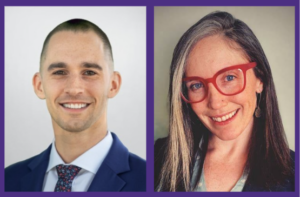 We would also like to recognize Jessie Rehms for her many contributions to the School of Nursing. During her tenure, she was instrumental in the development and expansion of contract-based research support services, helping build a sustainable model that has supported researchers across the School. Although no longer serving in this role, Jessie continues to contribute her expertise through ad hoc proposal reviews and consultation.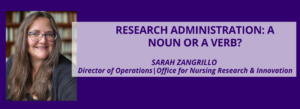
 In many ways, research administrators are among the most curious and diligent people on campus. They are lifelong learners, problem solvers, translators, connectors, and stewards. They thrive in complexity, ask thoughtful questions, and consistently seek ways to make the research process more understandable and accessible for those they support.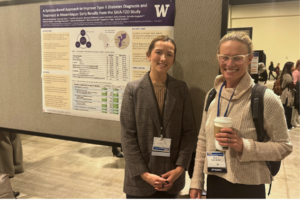
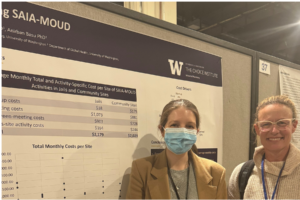
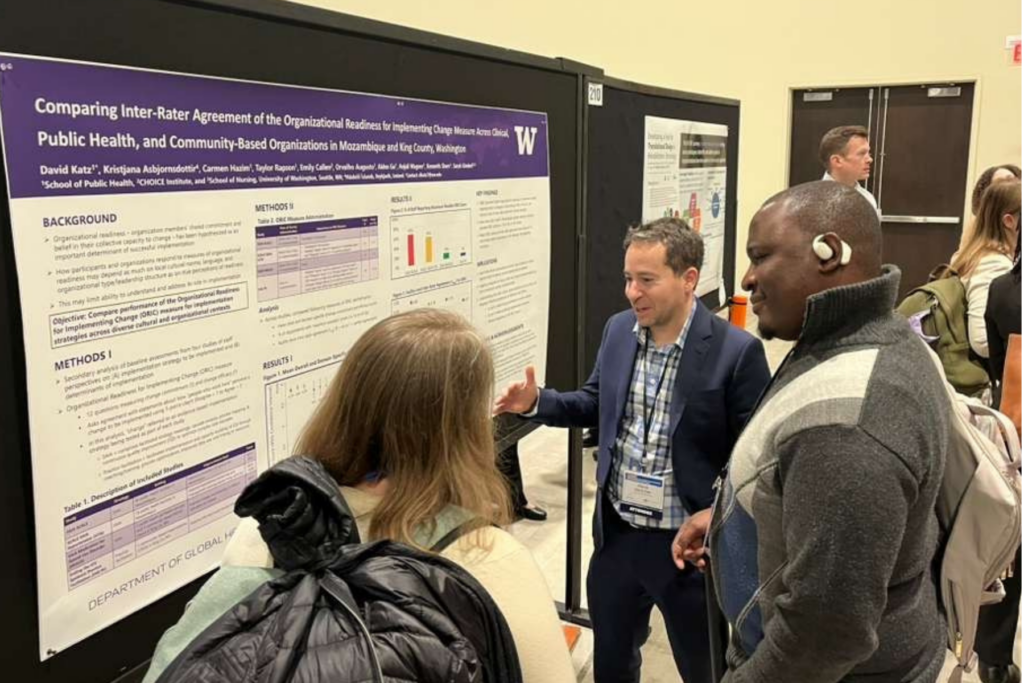
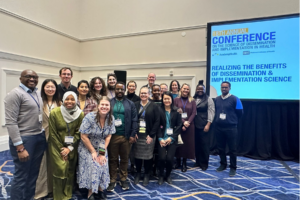
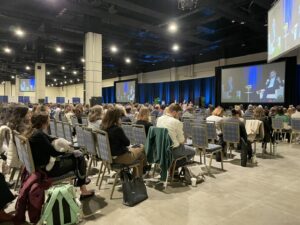 Conference in December 2025, where I connected with funders, researchers and practitioners advancing the translation of evidence-based practices into real-world settings. The sessions deepened my understanding of current trends and methods in implementation science and sparked new ideas for my own work in this space.


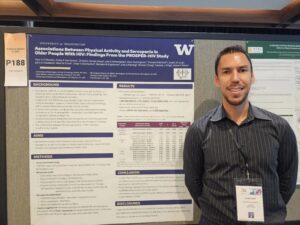
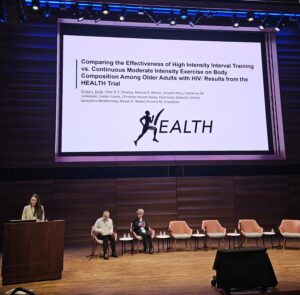
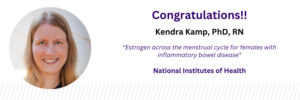
 To better understand this connection, we will compare women with IBD to two other groups: women without digestive conditions and women with irritable bowel syndrome (IBS), a related but different condition. Participants will track their symptoms daily across one menstrual cycle, helping us understand their day-to-day experience. At key points in the cycle—when estrogen is higher and when it is lowest—participants will provide blood, stool and vaginal samples and complete an intestinal ultrasound to measure inflammation in the gut. By combining biological measures with daily symptom tracking, this study will provide one of the most detailed pictures to date of how hormones, inflammation and symptoms are connected.
 This is my last column for the Office for Nursing Research & Innovation’s
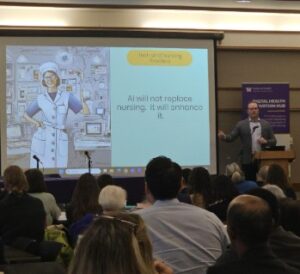 Hosted by the UW School of Nursing’s Office for Nursing Research & Innovation (ONR&I), the Digital Health Innovation Hub (DHIH) and the Washington HIMSS Chapter, the summit brought together nationally recognized leaders from across nursing, industry, policy and digital health to move beyond hype and focus on practical implementation and responsible innovation.
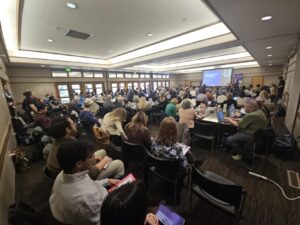 “The energy in the room was incredible,” said Allison Webel, Associate Dean for Research and Innovation at the UW School of Nursing. “This summit demonstrated that nurses are not just adapting to AI, they are helping lead how it is designed, implemented and evaluated in real-world care settings.”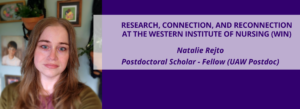
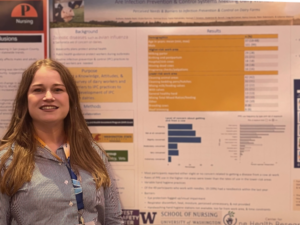 My primary goal in attending WIN was to share research grounded in community partnerships and a framework that recognizes the interconnectedness of human, animal and environmental health. I also looked forward to learning about others’ research, networking and innovations in nursing education. However, the most meaningful takeaway for me was the sense of connection, reconnection and community with nurses and nurse scientists from across the country.
 Bringing together today’s and tomorrow’s leaders from healthcare, nursing, academia, industry, policy and technology, the


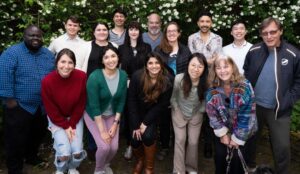

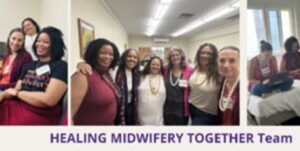 of the UW School of Nursing’s scientific mission. This year, as the importance of that work faced scrutiny, our community didn’t waver—we doubled down. We reaffirmed our commitment to advancing the health of all women through rigorous science, because we know this truth: when we invest in women’s health, everyone benefits. Dive into our No. 3 most-read story, part one of a powerful two-part series,
  as NIH’s unexpected policy shift: a new cap on grant submissions. While the idea had circulated for years, the official announcement came as a surprise to many: beginning with applications submitted for the Sept. 25, 2025 receipt date, investigators can submit no more than six new, renewal, resubmission or revision applications per calendar year. This change isn’t just procedural; it’s strategic. Researchers will need to rethink how and when they submit proposals, ensuring every application carries a clear purpose and impact. Adding to the buzz, NIH also signaled heightened scrutiny of artificial intelligence (AI) in grant writing, warning that AI-generated applications may be deemed noncompliant. Our community sees this as more than a limitation; it’s an opportunity to elevate the quality and value of every submission. Explore our most-read article of 2025 to learn what this means for investigators: