She Lived in Hope
The Life and Legacy of Verna Hill,
UW School of Nursing Alumna and Nurse Leader
BORN IN HOPE
Verna Hill was born February 25, 1927, in Hope, Arkansas, to Amelia Jamison and Frank Ray Ward, and she lived her entire life in alignment with the name of her hometown. As a daughter and sister, and eventually as a nurse, scholar, community leader, wife, mother, and trailblazer, Verna Hill chose, again and again, to shape the world she lived in. Actively, deliberately, and with love. Not because she had an abundance to give from, or some unique approach to power, but because she understood, early and deeply, that was the point.
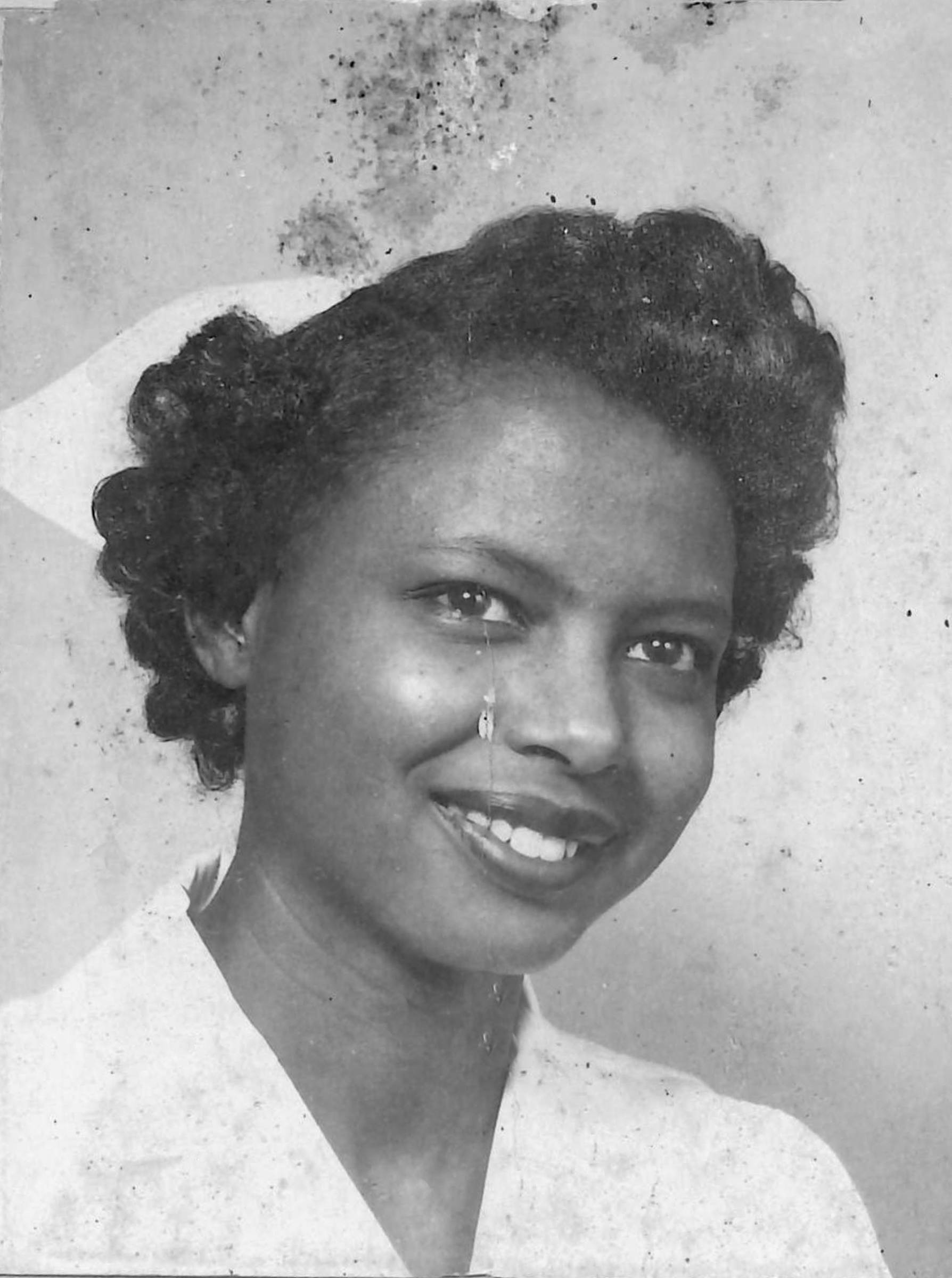
Verna Hill
ROOTED IN SOMETHING REAL
Verna’s story begins, as so many profound Black American stories do, in the South. While her parents and elder siblings labored as sharecroppers, she helped raise her younger siblings, doing so with what her community would later recognize as characteristic grace. Even then, she was not just fulfilling the role. She was becoming.
Sharecropping was a system designed to extort and exhaust, leaving families with little to no time or money for the labor they’d given. Still, when Sunday came, her parents gathered what they had and brought it to their church and their community.
They offered their time, resources, and their presence, recognizing something essential: that many small offerings gathered in faith could become enough.
This was not a lesson Verna was taught once and forgot. It was sewn into her, the way thread becomes fabric.
As a student carrying weights much bigger than her hands, her academic performance suffered in the fourth grade, and when she was held back from entering the fifth grade that year, she did not shrink. The following year, she was sitting at the top of her class, rising into an affirmation that would quietly anchor the rest of her life: that a setback is not a verdict. That the attempt to grow, even after stumbling, is itself a form of excellence.
She carried that understanding like a lantern.
EDUCATION THAT FOUGHT HER, AND FOUGHT FOR HER
Verna Hill arrived at the University of Washington with a dream and the will to pursue it, relentlessly. What she encountered was a university that could not decide whether it wanted her there, including faculty who made that explicit, and a system of anti-Black segregation that made it almost impossible.
And yet, there was always Hope.
Where some chose to lower her grades and create barriers to entry, others helped her secure housing.
When an illness attempted to knock her completely off track academically, she was able to use her time in a hospital, to learn and engage with the people and system she hoped to be a part of one day.
Verna’s experiences as a student at the University of Washington were not unique to the realities of being the first, only, or different in an arena shaped by bias. Her approach to it was indicative of each and every other trailblazer whose path coursed through the heinousness of Black Codes and Jim Crow. She found the cracks in the walls attempting to block her and made her way through them, graduating with her Bachelor of Science in Nursing in 1954.
“When I think about what Verna Hill’s life means for the UW School of Nursing, I think about what nursing education is really for. It is not just about clinical competency; it is about preparing people to care for their communities with the fullness of who they are. Mrs. Hill understood that, and her legacy lives in every graduate who is prepared to ask: who is being left out, and what can I build for them?”
— Dr. Hilaire Thompson, Executive Dean, University of Washington School of Nursing
Hope is how Verna got to Washington.
Determination is what led her to become a UW School of Nursing alumna.
CARE AS A WAY OF BEING IN THE WORLD
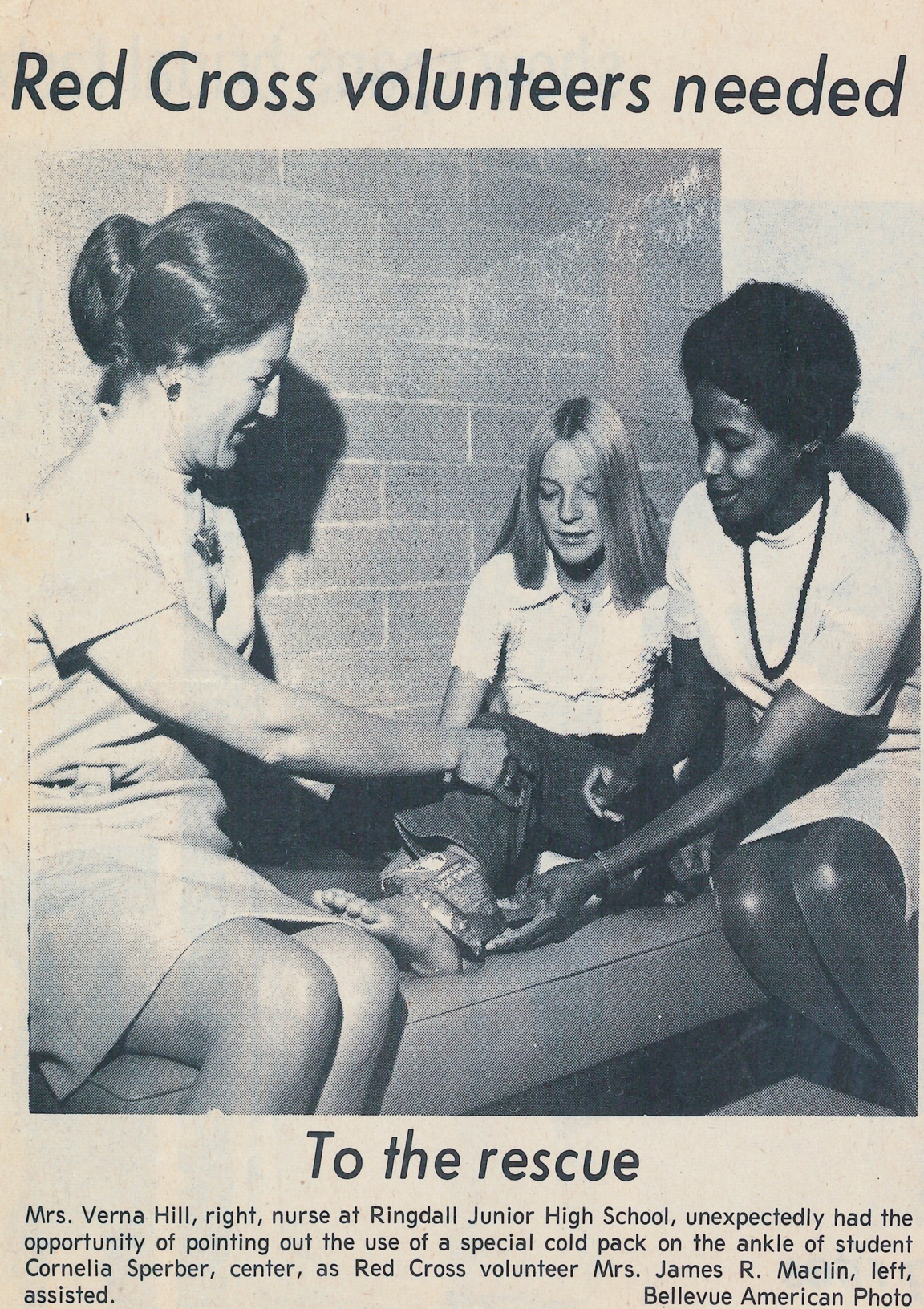
Verna Hill was a woman for whom care was not a profession. It was a philosophy. A posture. A way of moving through every room she entered. When teams and patients attempted to refuse the care of a Black nurse, she refused to let the smallness of others determine the size of her compassion. When presented with an opportunity to lead a public health project after taking time off to care for her family, Verna started a Teenage Parent Program that enabled students who wanted to continue pursuing education while growing a family to do so. Her belief in imagining people as well and whole, while life continued to move with them, is what healthcare is all about.
As a graduate student at the UW School of Nursing, focused on psychosocial and mental health nursing, Verna continued to deepen her understanding of the whole human being, including the social world and systemic forces humans reside within that shape wellness or the lack thereof. The knowledge she gleaned propelled her into state and international work as an ambassador representing Washington State and the United States in domestic and foreign affairs.
As a delegate for the State of Washington at the Regional National White House conference on Families, she was selected as one of 25 healthcare professionals to visit the People’s Republic of China to share healthcare information with representatives there.
Verna Hill’s care extended across borders. It crossed oceans. Because she had always understood that the need does not stop at the edge of what is convenient to reach. It pushes forth asking: “What would it look like to reimagine care so that it fits into the actual shape of people’s lives?”
“Verna Hill’s unwavering commitment to community and justice continues to illuminate the path for all of us working to dismantle inequities in nursing. At the Manning Price Spratlen Center for Antiracism in Nursing, her legacy strengthens our resolve to imagine- and build, what is possible. As we look back over her life, we honor her as a nurse who understood that care is both an act of resistance and an act of love”.
— Dr. Joycelyn R. Thomas, Director of the Manning Price Spratlen Center for Anti-Racism & Equity in Nursing
This is what it looks like when a nurse understands that health is not only what happens in a healthcare setting.
LEGACY AND THE ARCHITECTURE OF MUTUAL AID
As past President and an active, 44-year member, Verna Hill continued to build on the legacy she began in her childhood at the Mary Mahoney Professional Nurses Organization. Named for Mary Eliza Mahoney, the first African American woman to graduate from an American nursing program in 1879, the Mary Mahoney Professional Nurses Organization (MMPNO) was founded in Seattle in 1949 as a home and an anchor for Black nurses navigating a profession that was not always designed to hold them.
Scholarships for the next generation.
Mentorship for nurses who needed to see themselves reflected in a leader.
A community of practice and belonging for those who had been told that they did not belong.
These were the tenets of the Mary Mahoney Professional Nurses Organization, and, as her life work has shown, they were the core values of Verna Hill. Her longtime investment in the MMPNO and Washington State Nurses Association as the Chair of Minority Affairs and her broader community leadership were expressions of lessons she’d learned as a child and those she’d come to realize as a growing adolescence into adulthood and as a professional in public health: you build the thing that people need, and you make sure that what you learned does not leave the world when you do.
“Ms. Hill was a proud graduate of the UW School of Nursing, and she credited the school with her education because the faculty recognized her knowledge and skill, awarding her grades that reflected her expertise. The Mary Mahoney Professional Nurses Organization is deeply grateful for her support of students in public health, where she helped shape their learning experiences in maternal and mental health care. The time students spent with Ms. Hill allowed them to gain expertise in a safe and supportive environment. We celebrate her today and always.”
— Frankie Manning, Board Member, Mary Mahoney Professional Nurses Organization
Verna Hill’s legacy did not leave the world. It is in the successes and smiles of her family, and in the care the community receives from those she mentored. It is in the agency that we acknowledge in this story of her life. Verna Hill looked at the world with full knowledge of what it might cost her and chose to become who she said she would, bringing her love for people and deep desire to care along with her. She decided to live into the promise of her birthplace, Hope, Arkansas, in every decade of her life, and we are all better for it.
THE BEACON STILL BURNS
Verna Hill passed peacefully in her sleep on January 28, 2026, one month before what would have been her 99th birthday. The University of Washington School of Nursing is honored to join her family and community in celebration of her life. As we do so, we challenge ourselves to reflect on what we can do today, as nurses, educators, staff, administrators, students, alumni, and members of the greater community, to continue elevating our own legacy of impact.
“Verna Hill lived a life that teaches us what it means to practice hope as an action, not just an idea. She understood that care is relational, community-rooted, and shaped by the systems we choose to challenge or change. As educators and nurses today, we carry forward her legacy by preparing students to see people fully and to build pathways that did not exist before them.”
— Dr. Suha Ballout, Associate Dean for Diversity, Equity, Inclusion, & Belonging, University of Washington School of Nursing
We are forever committed to preparing nurses who understand that their work does not begin or end at the walls of a clinical setting. That care is a practice of seeing people fully, asking what is missing, and building what should exist. We are committed to telling the stories of nurses like Verna Hill, not as an old, distant history, but as a living instruction.
Verna Hill was born in Hope.
She lived there her whole life.
And because she did, so can we.
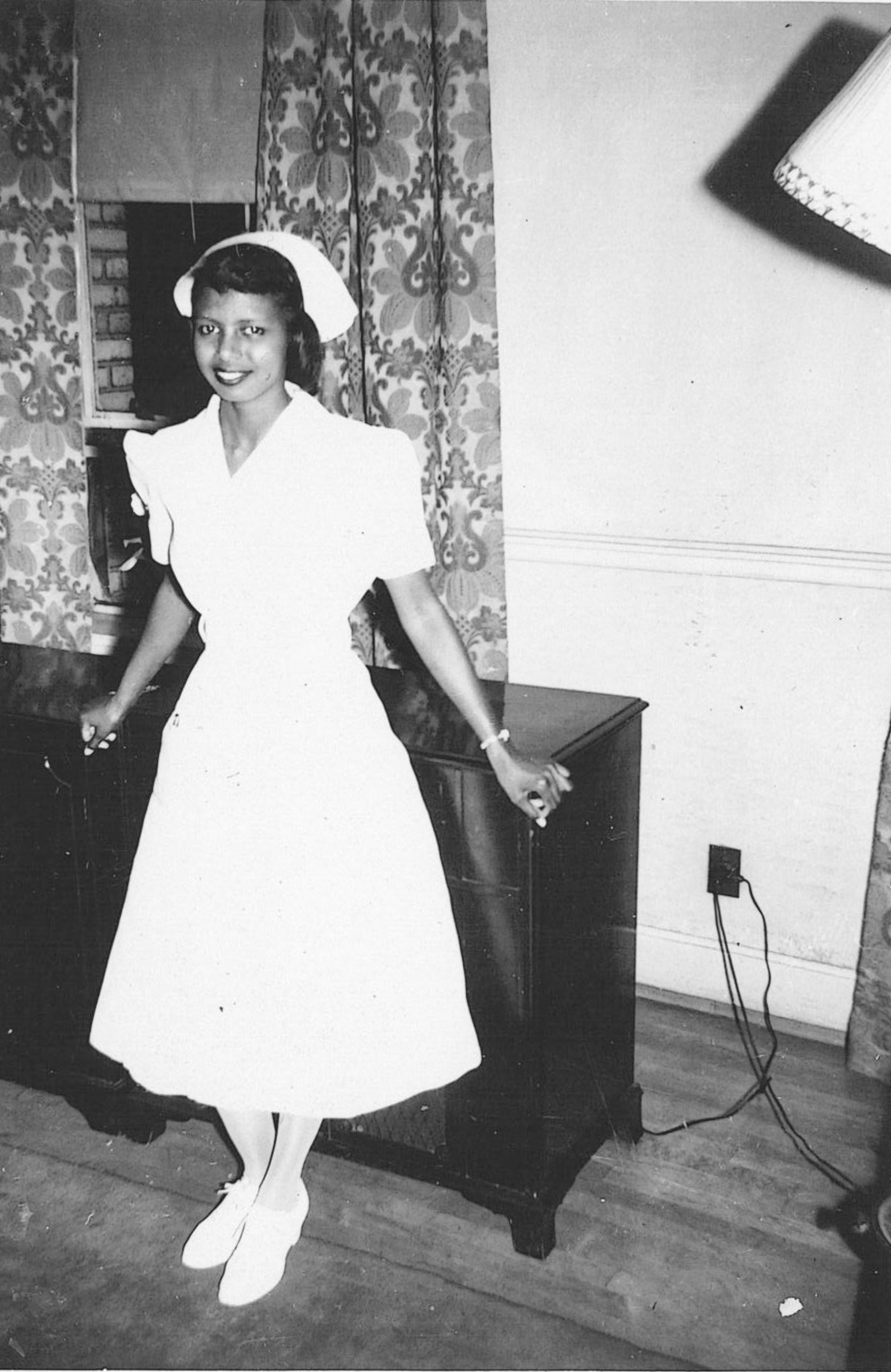
Verna Hill