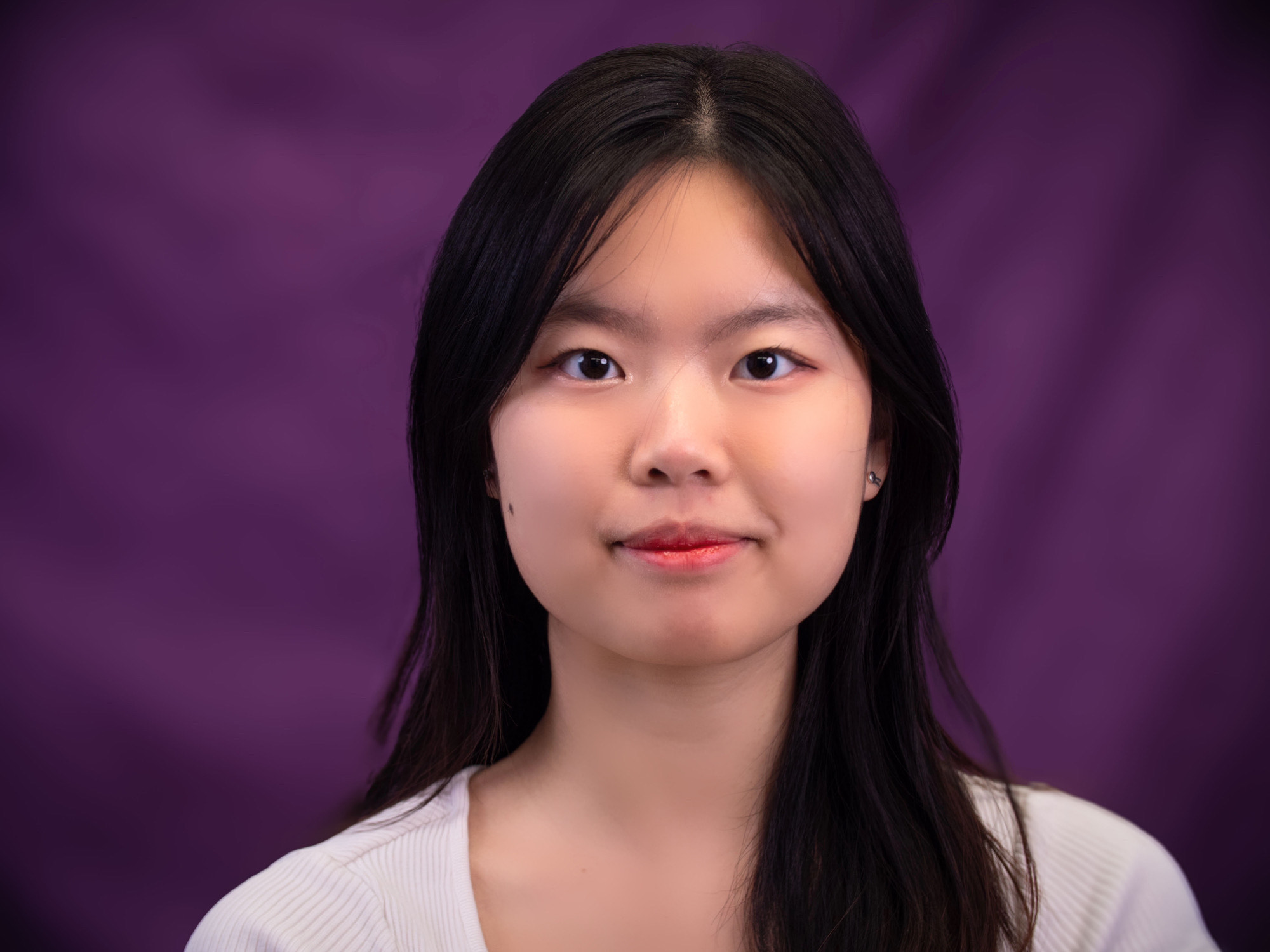
Wenchi Lai is a UW School of Nursing BSN student and one of the de Tornyay Center for Healthy Aging’s 2024–2025 Undergraduate Research Scholars. Her research project is “The effects of exercise training on symptoms experienced by older adults with HIV,” and her faculty mentor is Vitor Oliveira, PhD.
Why did you choose nursing?
I always knew I wanted to go into some health-related field because I enjoy taking care of people. I just didn’t know which one I wanted to go into until the COVID-19 pandemic. When I figured it out, I was a CNA in PACU [post-anesthesia care unit]. I started volunteering there, and getting to see the nurses during that time was kind of crazy. I found that nurses were the front-line workers and the ones really interacting with the patients. Seeing how much compassion and empathy they show for the people they care for, as well as their self-sacrifices in having to be at work regardless of what was happening, really inspired me. And after getting to follow them around more, I realized, oh, this is what I want to do.
What made you realize you wanted to do a research project?
Currently, I’m working in the ICU as a nurse tech, where a lot of patients have complications beyond medical control. Seeing these complex conditions made me realize I wanted to see what exactly we can do as nurses to change what is making them end up in hospitals in the first place. Research helps me learn more about why certain diseases develop the way they do or what habits people have that can contribute to their health outcomes.
Could you briefly describe the project you’re doing for the de Tornyay Center scholarship?
For my research project, I’m working primarily with older adults with HIV, with the goal of helping them lessen some of their symptom severity. Ultimately, we’re trying to see if high-intensity exercise will be beneficial and worth recommending for a healthier lifestyle. The primary symptom I’m looking at is fatigue, as it is one of the most severe aging symptoms the geriatric population may experience.
What made you interested in healthy aging research?
I think I have always worked with older populations. This year I’m also involved in UW’s Long-Term Care Externship program, which allows me to really interact with the elderly and get to know them on a deeper level. Getting to understand what they’re going through on a day-to-day basis really helped me see that I want to work with this population and try to help them as much as I can. I feel like they are a demographic that can get neglected or left behind in research or nursing care in general.
Why is this research that you’re doing important to do?
I personally think it’s very important because there may be other people with HIV who are struggling with some of these symptoms, and then they realize there’s a study with evidence and proof that you should be doing this exercise or why you should be following this routine, especially because high-intensity exercise is an activity that takes a lot of commitment.
If I’m personally searching stuff up, but nobody has research proof that says, “I should be doing this,” I think I would never even initiate it. But if I find out there are studies of people who tried it and it worked for them, I would be more inclined to take their recommendations. This is a big reason why our research study should be conducted and released.
While you’ve been working on this project, has there been anything that surprised you?
While I was shadowing the researchers, something that really surprised me was how involved the participants are in wanting to make a change because they might not know if their results are going to come out positively. However, they’re still trying to work and cooperate with the team every day, as well as following everything we’re expecting of them. I think that’s pretty impressive.
What past experiences have you had working with older adults?
In the PACU, most of the patients I work with are older adults who might need hip replacement, knee replacement or other common surgeries. Especially in the nursing home, I was able to see more specific age-related problems such as dementia and chronic health conditions. One thing I see that I love about aging care is how it includes the whole family. Beyond the individual, they have so many people they influenced throughout their lifespan who want to give back and help their loved ones go through the aging process. In my medical-surgical clinical, I also mainly worked in the geriatric medical-surgical unit. Getting that hands-on experience with the geriatric population and seeing all the different parts of their care made me want to lean toward seeing what aging does to the body and getting more hands-on experience with it.
What about those experiences made you think, “This is where I want to be”?
It was working with them and, honestly, just seeing their challenges being in the hospital. They’ll share their stories about how they’ve been impacted with me. It’s such a big transition from when you’re young and you can move around easily to not being able to move as easily as they once were able to. It’s reasonably frustrating for them because they used to be able to do all these things. Getting to hear about that made me think there must be something we can do as nurses, and even in nursing research, to help make that transition easier as their care team.