May is National Nurses Month
Please join us as we recognize the contributions of nurses and reflect on all they do to sustain the health of our communities. Check back regularly for updates.
If you’re SoN alumni, faculty, student or staff, stop by T-301 to celebrate Nurses Month!
Tuesday, May 7 – Doughnuts and Coffee: Start your day with a sweet treat. Join us for doughnuts and coffee from 8 a.m. – 12 p.m.
Wednesday, May 8 – Student Nurse Day Lunch: Students – lunch and dessert are on us! Stop by for food and fun beginning at 10 a.m.
Thursday, May 9 – Cafe Day: Fuel your day with delicious coffee drinks like lattes, macchiatos, cappuccinos, tea, hot chocolate or Italian sodas from 8 – 9 a.m. and 11 a.m. – 2 p.m.
Washington Center for Nursing (WCN)
Saturday, May 18, 11:30 a.m. – 3:30 p.m. at Burien Community Center
WCN’s Nurses of Color Coalition Symposium
On International Day of the Midwife, we recognize midwives providing comprehensive abortion care and support, empowering people to manage their reproductive health and providing education and contraception. They are truly champions of health and health care.
We’re proud to recognize the work of Associate Professor Molly Altman, who is working on a study exploring the birthing and family-building experiences of the queer and trans community in the U.S. and Canada.
“One of our hopes around this study is that once we get the results out, what it’s going to do is shine a light on how we really need to do better within our health care systems to support queer and trans families,” said Molly Altman, principal investigator. Learn more about the study.
Hear from Teaching Associate and Midwifery Program Track Lead Ellen Solis as she answers the question, “What is midwifery?”
May 6 – 12 – National Nurses Week
THANK YOU to all our #SchoolNurses making a difference in the lives of children every day! School nurses level the playing field, promoting health equity and providing care and support to all students to optimize student health and learning. Read more about some of our #HuskyNurses who are school nurses and the work they do.
Prabina Dahal, RN, MN ’20, DNP ’24
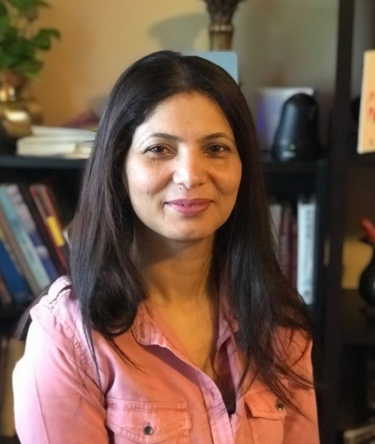
What’s one thing you want the world to know about school nurses?
It is difficult to point out one thing that a school nurse does, but I will be as succinct as possible. School nurses are the spine of any public school. They bridge the gap between health and education. When school nurses are available, educators and staff feel secure in continuing their work at school.
What’s your favorite thing about being a school nurse?
I make connections with parents, students, staff and other administrators on various health- and equity-related issues, and that is one of the roles I appreciate best.
Why did you become a school nurse?
When my kids were home due to COVID-19, I noticed they were losing the sense of having a school, friends and many other activities. It was impacting their behavior at home. I felt the urge to work in the school community so that I could provide evidence-based information to the staff, who then were hesitant to open the school. Today, I agree that choosing to be a school nurse was the best decision I made in my career.
Lynnette Ondeck, MEd, BSN ’02, RN, NCSN
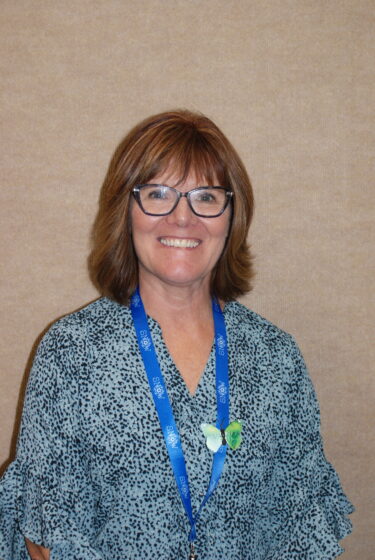
What’s one thing you want the world to know about school nurses?
School nursing is way more than band aids and icepacks. School nursing requires a vast array of knowledge from development through the lifespan (students can be as young as 3 and as old as 21 in public schools), infectious diseases, chronic disease management, first aid and an understanding of a wide variety of laws, including nursing and education laws. It requires being a good communicator both verbally and in writing while being culturally responsive.
What’s your favorite thing about being a school nurse?
My favorite part of my job comes down to two things: learning something new every day, whether from a student, a colleague or a parent, and teaching something new to someone every day. When I was in high school, I debated between being a teacher or nurse. Little did I know that by choosing to be a school nurse, I get to do both.
Why did you become a school nurse?
I became a school nurse when a colleague recommended that I apply for the position. I was reluctant, but when the district called and asked me to apply, I did. I didn’t know at the time that school nursing would become my passion. I quickly realized I loved it and made the choice to return to school to further my degree so that I could become a certified school nurse. While I love teaching kids about how to take care of their bodies, I also love teaching them to be advocates for themselves. Because of my passion for school nursing, I also became an advocate and leader in Washington state and nationally.
A few #HuskyNurse faculty and alumni worked on the Washington School Health Services Study.

- Mayumi Willgerodt, PhD, MPH, RN, FAAN, FNASN, Professor
- Benjamin White, PhD ’21, RN
- Kathleen Johnson, MN ’09, DNP ’13, RN, NCSN-E, PHNA-BC, FNASN, FAAN, Affiliate Faculty
- Annie Hetzel, BSN ’90, MSN, RN, NCSN
- Gail Fast, MN, RN
The project sought to:
- Describe the Washington state school nursing workforce, services and staffing models to inform district and state policy on school health services.
- Understand the ways in which school health teams work together to support students’ health efficiently.
- Explore emerging innovative approaches to health services delivery resulting from the COVID-19 pandemic to identify structures and processes that will improve school nursing practice.
International Nurses Day is celebrated annually around the world on May 12, the anniversary of the birth of Florence Nightingale, and is led by the International Council of Nurses (ICN). This year’s theme for International Nurses Day is “Our Nurses. Our Future. The economic power of care.”
Husky Nurse Professor Sarah Gimbel’s work, called the Systems Analysis and Improvement Approach (SAIA), empowers nurses to have a greater impact around the globe. Learn more about Sarah Gimbel’s SAIA research.