Midwives are essential. Now more than ever.
Nurse-midwives are among the most important and underutilized forces in maternal and reproductive healthcare. They provide comprehensive, relationship-centered care across the full reproductive lifespan — from prenatal visits and labor support to gynecological care, family planning, and beyond. In communities facing provider shortages, geographic barriers, and systemic inequities, midwives are often the difference between care that reaches people and care that doesn’t.
In Washington state, where maternal health disparities persist and access gaps continue to widen, nurse-midwives are not just helpful. They are necessary.
What midwifery is — and why it matters
Ellen Solis, DNP, CNM, FACNM, Specialty Director of the Nurse-Midwifery DNP program at the UW School of Nursing, has spent her career at the intersection of clinical practice, education, and advocacy. Hear her reflect on what midwifery means, and why this moment calls for more of it.
The next generation is already showing up
The maternal mortality and morbidity crisis in the United States is not a distant policy problem. It is happening in hospitals, clinics, and homes across Washington state — and it is happening unevenly, falling hardest on Black women, Indigenous women, and communities that have long been underserved by a healthcare system not designed with them in mind.
The students choosing nurse-midwifery today are choosing it with that reality in full view. They are bringing their clinical training, their lived experiences, and their deep commitment to equity into a field that needs all three. Meet two of them.
-
 Nia Imani Clark, BSN, RN
Nia Imani Clark, BSN, RN
-
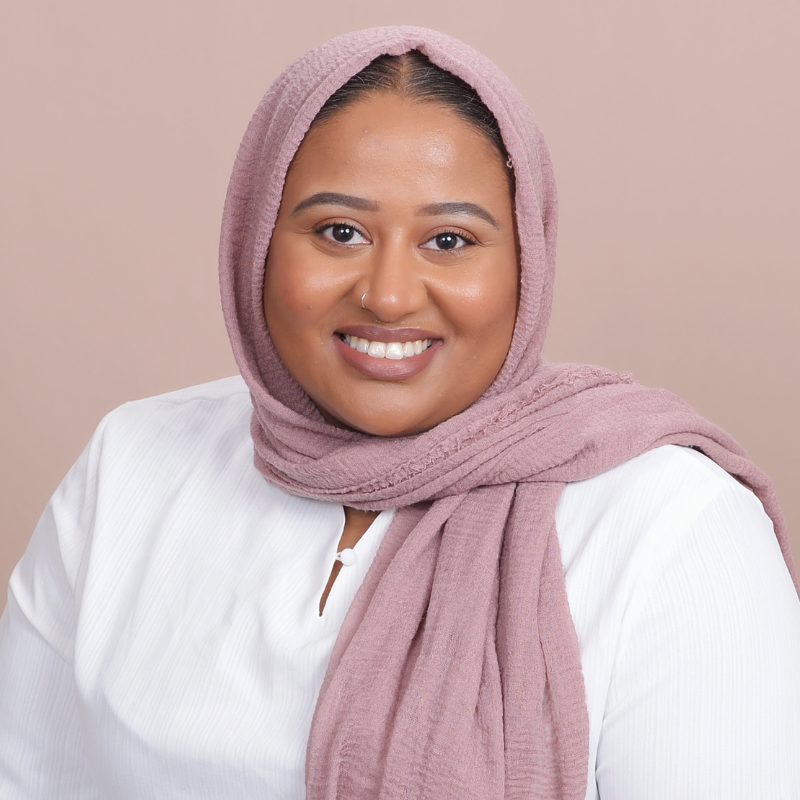 Hawi Ibrahim, BSN, RN, CLC
Hawi Ibrahim, BSN, RN, CLC
What midwifery looks like in practice
Midwifery is rarely a solo act. It is community work — built on relationships between nurses, midwives, medical assistants, doulas, and the patients at the center of it all. And sometimes, the impact of showing up with the right skills and the right instinct is bigger than anyone could have planned for.
At HealthPoint’s Kent Clinic in Kent, Washington, that reality played out in a way no one expected — and in a way that reflects exactly what community nursing is built to do.
Hands that Meet the Moment
When a patient went into labor at a primary care clinic, a UW-trained nurse midwife and her team proved what accessible, community-centered care can do.
Washington needs more nurse-midwives
The need is clear. The path is here. The UW School of Nursing’s Nurse-Midwifery DNP program prepares graduates to practice at the highest level of clinical care, with a deep grounding in reproductive justice, equity, and community-centered practice.
If midwifery is calling you, we want to hear from you.
Learn more about the Nurse-Midwifery DNP or connect with our graduate admissions team.